Saving Your Morning Brew: Climate Change, Coffee, and What You Can Do
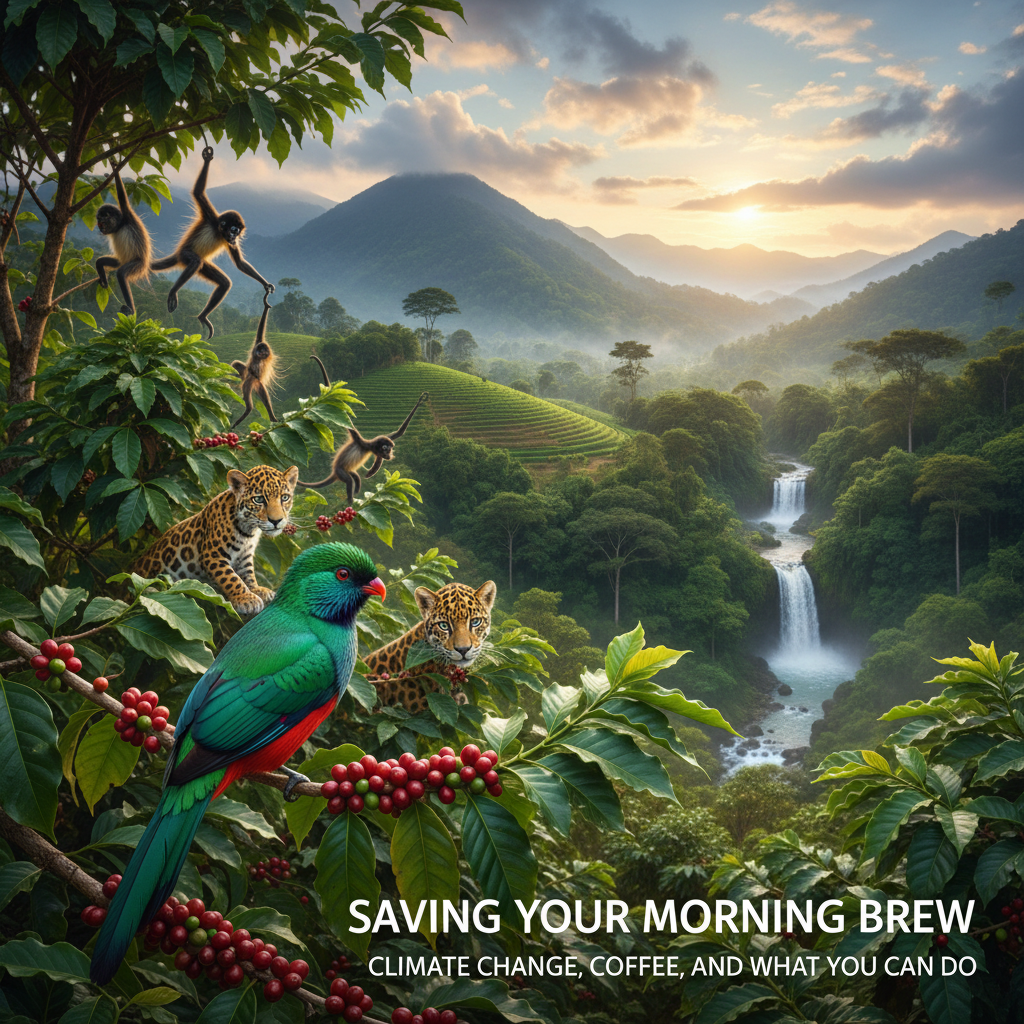
Key Takeaways
- Half of arabica coffee-growing regions could become unsuitable by 2050 due to climate change, impacting livelihoods and ecosystems.
- Solutions to cultivate climate-resilient coffee already exist, including new varieties, agroforestry, and sustainable farming practices.
- Accessible knowledge, like consolidated e-libraries, is crucial for empowering coffee farmers to adapt and thrive.
- Consumers can make a difference by choosing certified (Fair Trade, Organic, Rainforest Alliance) and ethically sourced coffee.
- Supporting brands committed to sustainability and advocating for climate action are vital steps in securing coffee's future.
The Unsettling Aroma of a Changing Climate: Coffee on the Brink
For many of us at GreenNest Living, the morning ritual of a steaming cup of coffee isn't just a habit; it's a moment of peace, a comforting start to the day, and for some, an essential kickstart to productivity. But what if this cherished daily brew were to become a luxury, or even a memory? Recent news from Mongabay paints a stark picture: roughly half of the world’s arabica coffee-growing regions could become unsuitable for cultivation by 2050 due to the accelerating effects of climate change. This isn't just a distant threat; it's a looming crisis that touches every aspect of the global coffee chain, from the smallholder farmer to your kitchen countertop.
The implications of a shrinking global coffee harvest extend far beyond a momentary caffeine withdrawal. We're talking about devastating economic impacts for millions of farmers and their communities in the Global South, loss of biodiversity in unique ecosystems, and a significant ripple effect through global markets. It's a sobering thought, but here's the silver lining, and what makes this news truly compelling for us at GreenNest Living: experts assert that solutions already exist. The knowledge to save coffee is out there, and in some cases, it's now accessible in a consolidated e-library. This shift from identifying a problem to actively highlighting available remedies is precisely the kind of proactive, empowering information our community thrives on.
Beyond the Bean: Why Coffee's Future Matters to Everyone
When we talk about the vulnerability of arabica coffee to climate change, we're discussing the most popular and commercially valuable coffee species, renowned for its delicate flavor and aroma. As temperatures rise and rainfall patterns become erratic, these delicate plants struggle. Extreme weather events – prolonged droughts, intense downpours, and increased prevalence of pests and diseases – are already impacting yields and quality across traditional coffee belts in Latin America, Africa, and Asia.
The socio-economic consequences are profound. Millions of smallholder farmers rely solely on coffee cultivation for their livelihoods. A decline in production means lost income, increased poverty, and potential social instability in regions already facing numerous challenges. Environmentally, the drive to find new suitable lands can lead to deforestation, further exacerbating climate change and biodiversity loss. Many coffee farms are nestled within biodiverse forest ecosystems, and their demise would disrupt these delicate balances. So, while your personal desire for a morning cup might drive some concern, the broader humanitarian and ecological stakes are undeniably higher.
A Library of Hope: Unlocking Coffee's Resilient Future
The good news, as highlighted by the Mongabay report, is that we're not starting from scratch in the face of this challenge. A wealth of scientific research and traditional ecological knowledge already exists, offering a roadmap for more resilient and sustainable coffee farming. The consolidation of this knowledge into accessible resources, like the mentioned e-library, is a critical step. These solutions often focus on:
-
Developing Climate-Resilient Varieties:
Breeding and propagating coffee varieties that are better adapted to higher temperatures, drought, and disease, while maintaining desirable flavor profiles.
-
Implementing Agroforestry Systems:
Integrating coffee plants with diverse shade trees and other crops. This practice, often called shade-grown coffee, mimics natural forest ecosystems, improving soil health, enhancing biodiversity, providing natural pest control, and making coffee farms more resistant to climate shocks.
-
Sustainable Farming Practices:
Promoting organic cultivation, efficient water management, soil conservation techniques, and responsible land use to reduce environmental impact and build farm resilience.
-
Empowering Farmers with Knowledge and Resources:
Providing farmers with training, access to improved seeds, financial support, and market linkages to adopt these sustainable practices effectively. This includes connecting them to the very e-libraries and knowledge bases that hold the keys to their future.
The collective effort of scientists, NGOs, governments, and industry players is crucial to scaling these solutions and ensuring they reach the farmers who need them most.
Your Daily Ritual: Brewing a Sustainable Impact
As conscious consumers, we hold significant power to influence the trajectory of the sustainable coffee movement. Every purchase we make, every brand we support, sends a message down the supply chain. Here’s how you can make your daily cup a force for good:
-
Choose Certified Coffee: Look for certifications like Fair Trade, Rainforest Alliance, Organic, or Bird Friendly. These labels indicate that the coffee has been produced according to strict social, environmental, and economic standards, often including climate-resilient practices and fair wages for farmers.
-
Support Ethical Roasters and Brands: Research companies that demonstrate a genuine commitment to sustainability, transparency, and direct trade relationships with farmers. Many specialty coffee roasters are at the forefront of this movement, paying premium prices for high-quality, sustainably grown beans.
-
Educate Yourself: Learn about where your coffee comes from, the challenges faced by coffee farmers, and the sustainable solutions being implemented. Resources like the Mongabay article itself, and the e-libraries it references, are excellent starting points. Understanding the story behind your coffee deepens your appreciation and commitment to its future.
-
Reduce Waste: While not directly related to coffee cultivation, reducing your environmental footprint as a consumer is part of the sustainable living ethos. Use reusable cups, compost your coffee grounds, and minimize packaging waste. Every small action contributes.
-
Advocate for Climate Action: Ultimately, addressing the root cause of the coffee crisis—climate change—requires systemic change. Support policies and politicians who prioritize climate action, renewable energy, and environmental protection. Your voice matters.
Cultivating Change: A Collective Responsibility for Coffee's Future
The news about coffee’s vulnerability to climate change is a powerful wake-up call. It reminds us that our daily pleasures are inextricably linked to global environmental health and social equity. But the message that solutions already exist, now compiled and accessible, is one of profound hope and opportunity. It means we are not powerless in the face of this challenge.
At GreenNest Living, we believe in empowering our readers with knowledge and actionable steps. By consciously choosing sustainable coffee, supporting ethical practices, and advocating for broader climate action, we can collectively ensure that the rich aroma and comforting taste of our morning brew continue to be enjoyed for generations to come. Let's make sure that the knowledge to save coffee doesn't just exist in an e-library, but is actively put into practice, one thoughtful cup at a time.
Original source
GreenNest Living Editorial
Author, Digital Entrepreneur & AI Creator
More from Wildlife & Nature News
- The Silent Drain: Sand Scarcity Threatens Global Ecosystems — May 13, 2026
- Celestial Glimpse: Earth's Glow, Our Lost Night Skies — May 11, 2026
- Google's UK Datacentre Emissions Understated by Factor of Five — May 10, 2026
- Cosmic Beacon: Earth's Glow Inspires Global Stewardship — May 9, 2026
- Amazon Tipping Point: Deforestation, Warming Threaten Rainforest by 2040s — May 8, 2026