Snowdrops: Tiny Harbingers, Big Lessons in Resilience & Hope
Key Takeaways
- Snowdrops are early spring bloomers, symbolizing hope and renewal.
- They exhibit remarkable resilience, pushing through snow and harsh conditions.
- Their low-maintenance nature makes them ideal for sustainable garden design.
- Observing snowdrops helps us connect with nature's enduring cycles.
- They offer early nectar for pollinators, supporting biodiversity.
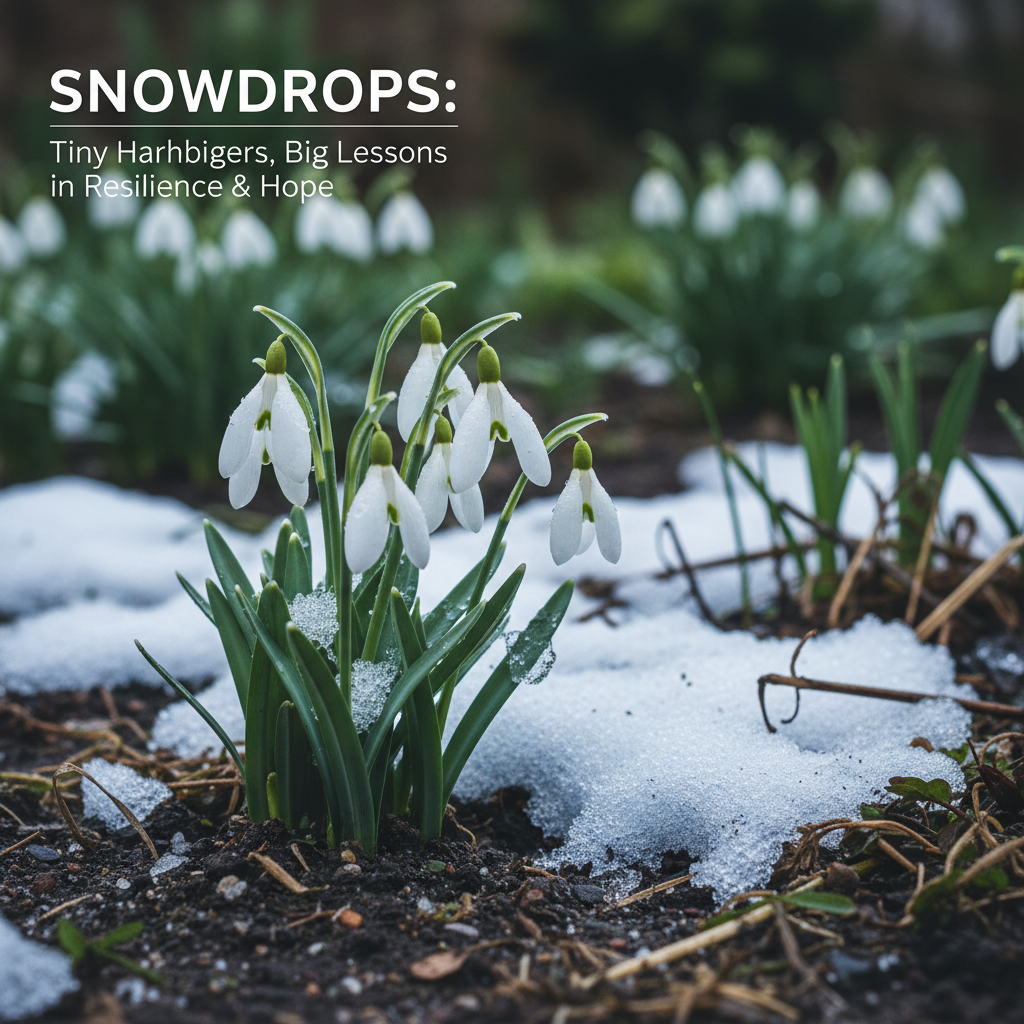
As the chill of winter lingers and the garden sleeps, a quiet miracle often unfolds beneath our noses. Suddenly, seemingly from nowhere, delicate white bells emerge, pushing through frozen earth and brown leaf litter. These are the snowdrops, nature’s earliest promise of renewal, offering not just beauty but profound lessons in resilience precisely when we need them most.
TL;DR: Key Facts
- Snowdrops (Galanthus) are among the first flowers to bloom, signaling the end of winter.
- They display remarkable resilience, pushing through snow and frozen ground.
- Their white, bell-shaped flowers bring unexpected beauty to the bleakest months.
- They symbolize hope, persistence, and the inevitable return of spring.
What Happened
In the quiet, often overlooked months of late winter, when the garden seems barren and life appears paused, snowdrops make their annual, surprising appearance. They are truly unexpected guests, forcing their way up through layers of old leaves or even through fresh snow, undeterred by the lingering cold.
These tenacious plants first show as vibrant green shoots, quickly followed by tightly clasped white buds. As days lengthen and temperatures ever so slightly soften, these buds gracefully unfurl into their characteristic svelte, white bells, nodding gently in the winter air. Even if another blanket of snow descends, the snowdrops merely pause, ready to continue their growth and bloom once the frosty veil melts away, embodying an unwavering determination to thrive.
Why It Matters
For GreenNest Living readers, the humble snowdrop offers far more than just early spring charm; it provides a powerful metaphor and practical guidance for sustainable living and gardening. Their innate resilience speaks volumes about selecting plants that are truly adapted to their environment. By choosing hardy, naturalizing species like snowdrops, we create gardens that demand less intervention, less water, and fewer resources, fostering a more self-sustaining ecosystem. This aligns perfectly with our mission to live harmoniously with nature, rather than constantly battling it.
Furthermore, snowdrops highlight the importance of observing and working with nature's cycles. Their appearance reminds us that growth and renewal are always at play, even in seemingly dormant periods. This deepens our connection to the land and encourages patience and foresight in our gardening practices, from planting bulbs in the fall for spring display to understanding the natural rhythms of our local climate. They also serve an early, vital role in supporting emerging pollinators, offering a crucial nectar source when little else is available, contributing to local biodiversity from the earliest days of the growing season.
Finally, the sheer hope and joy that snowdrops bring cannot be overstated. In an era marked by environmental challenges, finding moments of natural beauty and resilience can be incredibly restorative. These tiny flowers are a powerful reminder that life persists, beauty endures, and hope is always on the horizon. By welcoming them into our gardens, we cultivate not just plants, but a resilient spirit within ourselves and our communities, fostering a deeper appreciation for the simple, enduring miracles of the natural world.
What You Can Do
Here's how you can embrace the spirit of snowdrops in your own life and garden:
- Plant for Resilience: In autumn, plant snowdrop (Galanthus nivalis) bulbs in well-drained soil in partial shade. They naturalize well, meaning they'll spread and multiply over time with minimal effort.
- Observe Nature's Cycles: Take time to notice the subtle shifts in your garden throughout the year. The emergence of snowdrops is a perfect cue to anticipate and plan for the growing season ahead.
- Embrace Early Bloomers: Diversify your garden with other early spring flowering bulbs and plants to extend the season of interest and provide early sustenance for pollinators.
- Practice “Leave the Leaves”: Instead of raking away all leaf litter in autumn, leave some in garden beds. This provides natural insulation for plants like snowdrops, enriches the soil, and offers habitat for beneficial insects.
- Choose Adapted Plants: Prioritize plants that are well-suited to your local climate and soil conditions. Resilient, native, or well-adapted species require less care and contribute more to local ecosystems.
- Cultivate Patience: Let the snowdrop's unhurried emergence teach you the value of patience. Great gardens and a sustainable lifestyle are built over time, with consistent, mindful effort.
FAQs
Q: When is the best time to plant snowdrop bulbs?
A: The ideal time to plant snowdrop bulbs is in the fall, typically from September to November, before the ground freezes. This allows them to establish roots over winter and bloom in late winter/early spring.
Q: Do snowdrops require a lot of maintenance?
A: No, snowdrops are wonderfully low-maintenance. Once established, they naturalize readily and generally thrive with little intervention. They prefer partial shade and moist, well-drained soil.
Q: Can snowdrops survive heavy snow or freezing temperatures?
A: Absolutely. Snowdrops are renowned for their hardiness. Their delicate appearance belies their ability to push through snow and withstand freezing temperatures, often blooming even under a fresh blanket of white.
Sources
This article is based on reporting by Gardenista.
Original source
Gardenista
Author, Digital Entrepreneur & AI Creator
More from Garden & Plants
- LA Oasis: Modern Spanish Colonial Design for Sustainable Living — May 13, 2026
- Flowering Shrubs: The Underrated Backbone of Your Eco-Garden — May 11, 2026
- Native Wisteria: Blooming Beauty, Boosting Biodiversity — May 10, 2026
- Embracing the Subtle Beauty of Shade Gardens — May 9, 2026
- Ground Covers: The Low-Maintenance Path to a Greener Yard — May 8, 2026