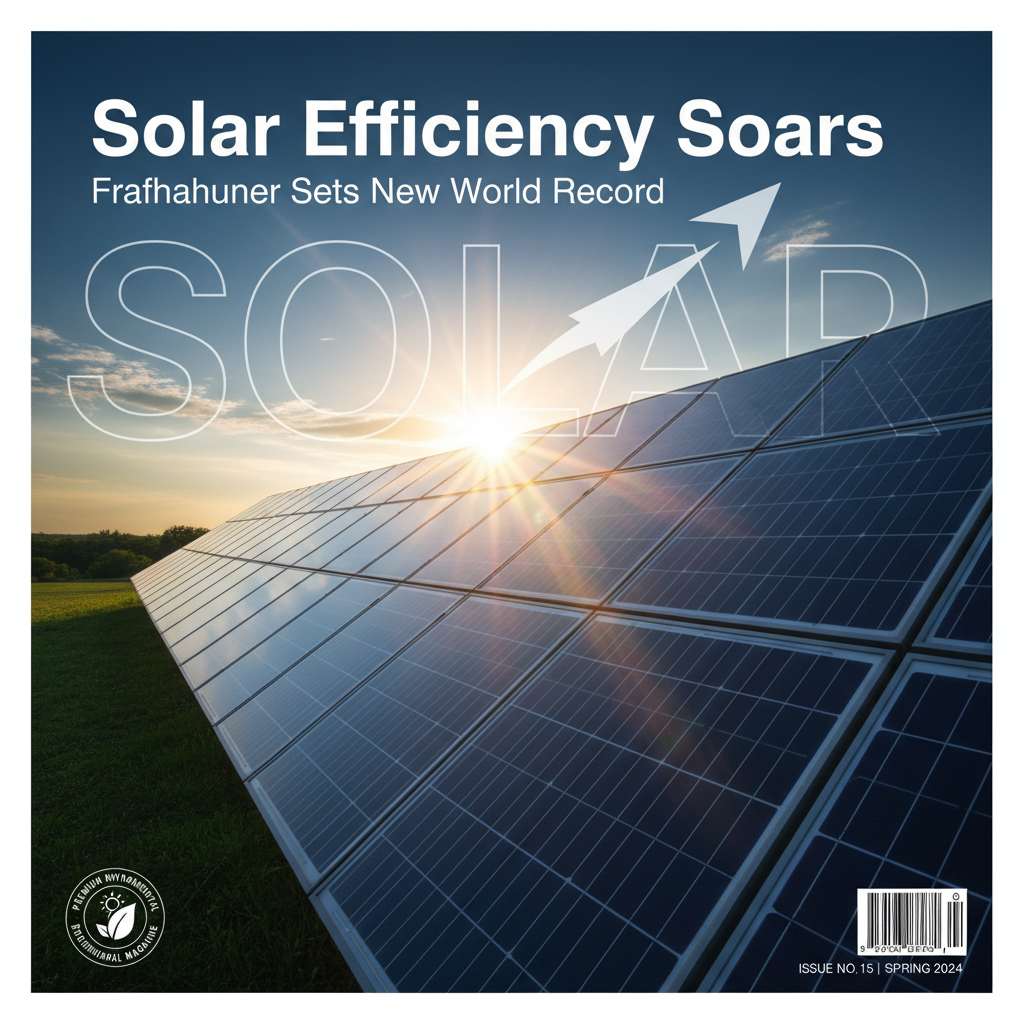
Solar Efficiency Soars: Fraunhofer Sets New World Record
Key Takeaways
- Fraunhofer ISE achieved a world record 34.4% solar module efficiency.
- The breakthrough was accomplished using a III-V germanium solar PV module.
- Higher efficiency means more power from less space, critical for diverse applications.
- This innovation accelerates the global transition to clean, sustainable energy.
- Advanced research in solar technology continues to push the boundaries of what's possible.
The quest for more efficient renewable energy isn't just an academic pursuit; it's a critical race against climate change and global energy demands. This week, the Fraunhofer Institute for Solar Energy Systems (ISE) announced a groundbreaking new world record in solar module efficiency, hitting an astounding 34.4 percent. This isn't just a technical achievement; it's a powerful signal that the pace of green innovation is accelerating, promising a faster, more effective transition to a sustainable future for everyone.
TL;DR: Key Facts
- Fraunhofer Institute for Solar Energy Systems (ISE) achieved a new world record for solar module efficiency.
- The record efficiency stands at an impressive 34.4 percent.
- This was achieved using a III-V germanium solar PV module.
- The solar cells integral to the module were developed by AZUR SPACE Solar Power GmbH.
- The breakthrough significantly advances the potential for greater solar energy capture from smaller areas.
What Happened
The Fraunhofer Institute for Solar Energy Systems (ISE), a renowned leader in solar power research, has once again etched its name in the annals of renewable energy history. The institute recently announced a new world record for solar module efficiency, reaching an extraordinary 34.4 percent. This achievement was made possible through their advanced III-V germanium solar PV module, underscoring years of dedicated research and development in photovoltaics.
This breakthrough is not an isolated event but rather part of Fraunhofer ISE’s continuous "solar record march," consistently pushing the boundaries of what is achievable in solar energy conversion. The specialized solar cells at the heart of this record-breaking module were developed by AZUR SPACE Solar Power GmbH, recognized as the world's leading manufacturer of space-qualified solar cells. This collaboration and technological synergy highlight the complex and innovative ecosystem driving progress in high-efficiency solar technology, particularly within the Multi-junction High-Concentrator PV Cells and Modules (MCPV) project.
Why It Matters
For GreenNest Living readers and the broader "Green Tech" movement, this record-breaking efficiency is nothing short of revolutionary. Higher efficiency directly translates to more electricity generated per square meter, making solar power viable in locations with limited space, such as densely populated urban environments or smaller residential rooftops. Imagine producing significantly more energy from the same footprint, drastically reducing the land area required for large-scale solar farms and easing integration into existing infrastructure. This breakthrough moves us closer to a future where solar energy is not only abundant but also incredibly compact and versatile.
Beyond space constraints, increased efficiency also impacts the overall cost-effectiveness and material usage of solar installations. While cutting-edge III-V germanium modules are currently more complex and costly than standard silicon panels, breakthroughs at the high end often trickle down, informing future developments in more conventional technologies. It means less material (silicon, glass, frames) is needed to achieve a given energy output, reducing resource consumption and manufacturing impact over time. This innovation accelerates our journey towards energy independence and provides a powerful tool in the fight against climate change, making renewable energy solutions more attractive, accessible, and impactful across various applications. It underscores the critical role of continuous research and development in unlocking the full potential of green technologies and securing a sustainable future.
What You Can Do
- Stay Informed: Keep abreast of advancements in solar technology. Understanding the latest breakthroughs helps you make informed decisions for your home and advocate for better policies.
- Evaluate Your Solar Options: If you're considering solar for your home, research the latest high-efficiency panels available in the consumer market. While record-breaking tech may not be commercial yet, consumer-grade efficiency is constantly improving.
- Advocate for R&D Funding: Support policies and elected officials who champion robust funding for renewable energy research and development. Continued investment in institutes like Fraunhofer ISE is crucial for future breakthroughs.
- Optimize Your Energy Consumption: The most efficient energy is the energy you don't use. Implement energy-saving measures at home to reduce your overall demand, complementing any solar installation.
- Engage with Your Community: Discuss the benefits of solar energy with friends, family, and neighbors. Collective awareness and adoption accelerate the transition to renewables.
- Support Companies with Sustainable Practices: When making purchasing decisions, favor companies that invest in green technologies and sustainable supply chains, indirectly supporting the ecosystem that fosters such innovations.
Ciro's Take
As an environmental advocate, news like Fraunhofer ISE's latest solar efficiency record truly electrifies me. It's a tangible manifestation of human ingenuity tirelessly working to solve our planet's most pressing challenges. For too long, the narrative has often focused on the insurmountable obstacles, but breakthroughs like this remind us of the incredible potential within "Green Tech." It’s not just about slightly better panels; it’s about fundamentally reshaping our energy landscape, making clean power a more compelling and accessible choice for everyone, everywhere. This record isn't just numbers on a page; it’s a beacon of hope, proving that with continued dedication and scientific pursuit, a truly sustainable future is not just a dream, but an increasingly achievable reality.
FAQs
Q: What does 34.4% efficiency mean for me as a homeowner?
A: While this specific III-V germanium module is currently designed for specialized applications and not yet widely available for residential use, this breakthrough signifies the leading edge of solar research. It means future consumer-grade solar panels will likely benefit from these advancements, eventually offering higher power output from smaller areas, requiring less roof space for the same energy production, and potentially lowering overall costs over time.
Q: Is this high-efficiency technology available for purchase today?
A: The 34.4% efficient module achieved by Fraunhofer ISE is a research prototype, pushing the boundaries of what's possible. Technologies like III-V germanium cells are typically found in niche applications like satellites or concentrated photovoltaics due to their complexity and cost. However, lessons learned from these high-performance cells often inform and inspire improvements in the more common silicon-based panels used in homes and businesses, leading to a steady increase in their efficiency.
Q: How does this efficiency compare to standard solar panels?
A: Standard commercial solar panels typically range in efficiency from 17% to 22% for monocrystalline silicon panels. High-end residential panels might reach up to 23-24%. Therefore, 34.4% represents a significant leap, nearly double the efficiency of many standard panels, highlighting the incredible potential for future advancements in solar energy conversion.
Sources
This article is based on reporting by CleanTechnica.
Original source
CleanTechnica
Author, Digital Entrepreneur & AI Creator
More from Green Tech
- GM Banks on Sodium-Ion for Grid Energy Storage Future — June 12, 2026
- Global Banks Fuel Climate Crisis: Trillions Back Fossil Fuels — June 11, 2026
- US Grid: Solar & Storage Power 90%+ of New Capacity — June 10, 2026
- EU's EV Backpedal: A Costly Setback for Grid Stability — June 9, 2026