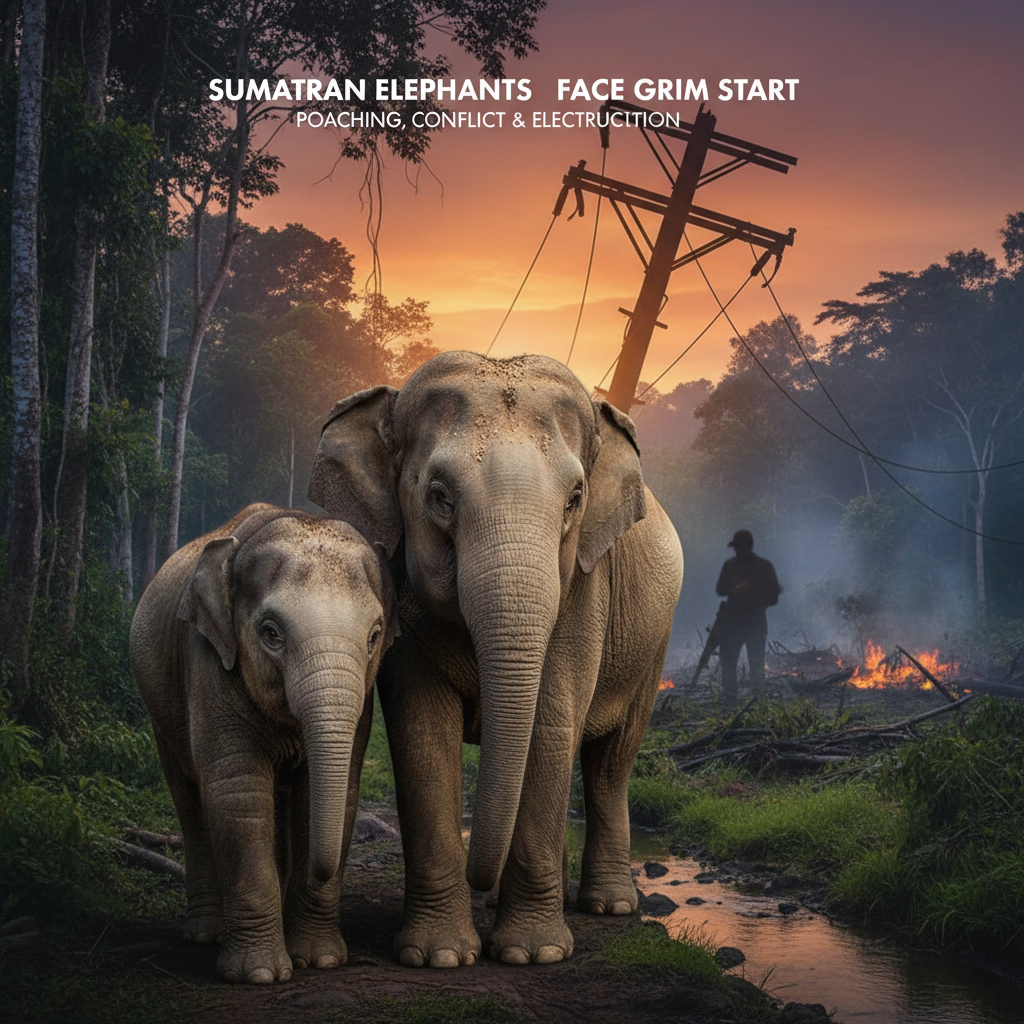
Sumatran Elephants Face Grim Start: Poaching, Conflict & Electrocution
Key Takeaways
- A Sumatran elephant died from electrocution in Central Aceh, indicating escalating threats.
- Deaths are linked to electrocution, human-wildlife conflict, and poaching, marking a grim start to the year.
- Sumatran elephants are critically endangered, facing severe population decline.
- Habitat loss from agricultural expansion is a primary driver of human-elephant conflict.
- Urgent, multi-faceted conservation efforts are vital to save the remaining populations and their forest homes.
The plight of critically endangered Sumatran elephants has taken a grim turn, with recent reports detailing multiple deaths from electrocution, conflict with humans, and poaching. This urgent situation underscores the escalating pressures on one of Asia's most magnificent species, pushing them closer to the brink of extinction and demanding immediate global attention.
These incidents serve as a stark reminder of the delicate balance between human development and wildlife survival, particularly in biodiverse regions like Sumatra.
TL;DR: Key Facts
- A Sumatran elephant was recently found dead from electrocution in Central Aceh, Indonesia, adding to a series of similar incidents.
- This fatality highlights the ongoing threats of electrocution, human-wildlife conflict, and poaching that plague the species.
- Sumatran elephants are classified as critically endangered, with their population drastically declining over the past decades.
- Habitat loss and fragmentation, primarily driven by agricultural expansion (like palm oil plantations), are increasing human-elephant encounters and escalating conflict.
- Urgent, multi-faceted conservation efforts are crucial to protect the remaining elephant populations and their vital forest habitats.
What Happened
In a disturbing start to the year, a Sumatran elephant was discovered dead from electrocution in Indonesia's Central Aceh district in late February. This tragic event marks the latest in a series of mortalities for the critically endangered species, where electric fences intended to deter wildlife from plantations often become deadly traps for these majestic animals.
Officials in Aceh province have confirmed the incident, highlighting a distressing pattern that includes not only electrocution but also increasing human-wildlife conflict and persistent poaching. These elephants, whose natural habitats are shrinking rapidly, frequently wander into human settlements or agricultural areas in search of food, leading to often fatal clashes with local communities. In some cases, these encounters result in retaliatory killings or accidental deaths.
Adding to these perils is the relentless threat of poaching, primarily driven by the illegal ivory trade. Despite international bans and conservation efforts, the demand for elephant tusks continues to fuel a black market, making every remaining Sumatran elephant a target. These combined pressures paint a dire picture for a species already teetering on the edge of survival.
Why It Matters
The escalating crisis facing Sumatran elephants is far more than just the tragic loss of individual animals; it signifies a profound ecological breakdown with far-reaching consequences. As a keystone species, elephants play a critical role in maintaining the health and biodiversity of their rainforest ecosystems. They are known as 'gardeners of the forest,' dispersing seeds over vast areas, creating pathways, and influencing forest structure. Their disappearance would unravel intricate ecological webs, leading to declines in other species and a significant loss of forest resilience.
This situation also serves as a stark barometer for the broader state of biodiversity on our planet. The threats faced by Sumatran elephants – habitat destruction for agriculture, human-wildlife conflict, and illegal poaching – are emblematic of challenges confronting countless species worldwide. It underscores the urgent need for sustainable development practices that prioritize coexistence rather than conflict with nature.
Furthermore, the fate of these elephants highlights our collective global responsibility. These are not merely animals in a distant land; they are part of our shared natural heritage. Their survival depends on international cooperation, ethical consumer choices that avoid products linked to deforestation, and a renewed commitment to conservation. Protecting Sumatran elephants is not just about saving a species; it's about safeguarding the health of our planet and affirming our commitment to a future where both humans and wildlife can thrive.
What You Can Do
As conscious consumers and global citizens, we have the power to make a difference:
- Support Reputable Conservation Organizations: Donate to or volunteer with organizations dedicated to Sumatran elephant conservation and anti-poaching efforts, such as the Wildlife Conservation Society (WCS), World Wide Fund for Nature (WWF), or local Indonesian NGOs.
- Choose Sustainable Products: Opt for products certified as sustainable, especially those containing palm oil. Look for certifications like RSPO (Roundtable on Sustainable Palm Oil) to ensure your purchases don't contribute to habitat destruction.
- Advocate for Stronger Protections: Contact your elected officials to express support for policies that protect natural habitats, combat illegal wildlife trade, and promote responsible land use planning in biodiversity hotspots.
- Educate and Raise Awareness: Share information about the plight of Sumatran elephants with your friends, family, and social networks. The more people who understand the issue, the greater the pressure for change.
- Minimize Your Environmental Footprint: Reduce your overall consumption, conserve energy, and support renewable resources. Every action to lessen environmental impact helps alleviate pressure on vulnerable ecosystems worldwide.
FAQs
Q: Why are Sumatran elephants critically endangered?
A: Sumatran elephants are critically endangered primarily due to rapid habitat loss and fragmentation caused by deforestation for agriculture (especially palm oil), infrastructure development, and human encroachment. This, combined with poaching for ivory and human-elephant conflict, has drastically reduced their populations.
Q: What are the main threats mentioned in the news that contribute to elephant deaths?
A: The key threats highlighted are electrocution from power lines or electric fences, human-elephant conflict (leading to retaliatory killings or accidental deaths), and poaching for their tusks in the illegal ivory trade.
Q: How does habitat loss directly affect these elephants and lead to conflict?
A: As their forest homes are cleared, elephant populations become isolated, restricting their movement and access to food and water. This forces them into closer contact with human settlements and plantations, inevitably leading to conflict as elephants seek sustenance in agricultural areas, often with fatal consequences for both humans and elephants.
Sources
This article is based on reporting by Mongabay.
Original source
Mongabay
Author, Digital Entrepreneur & AI Creator
More from Wildlife & Nature News
- The Silent Drain: Sand Scarcity Threatens Global Ecosystems — May 13, 2026
- Celestial Glimpse: Earth's Glow, Our Lost Night Skies — May 11, 2026
- Google's UK Datacentre Emissions Understated by Factor of Five — May 10, 2026
- Cosmic Beacon: Earth's Glow Inspires Global Stewardship — May 9, 2026
- Amazon Tipping Point: Deforestation, Warming Threaten Rainforest by 2040s — May 8, 2026