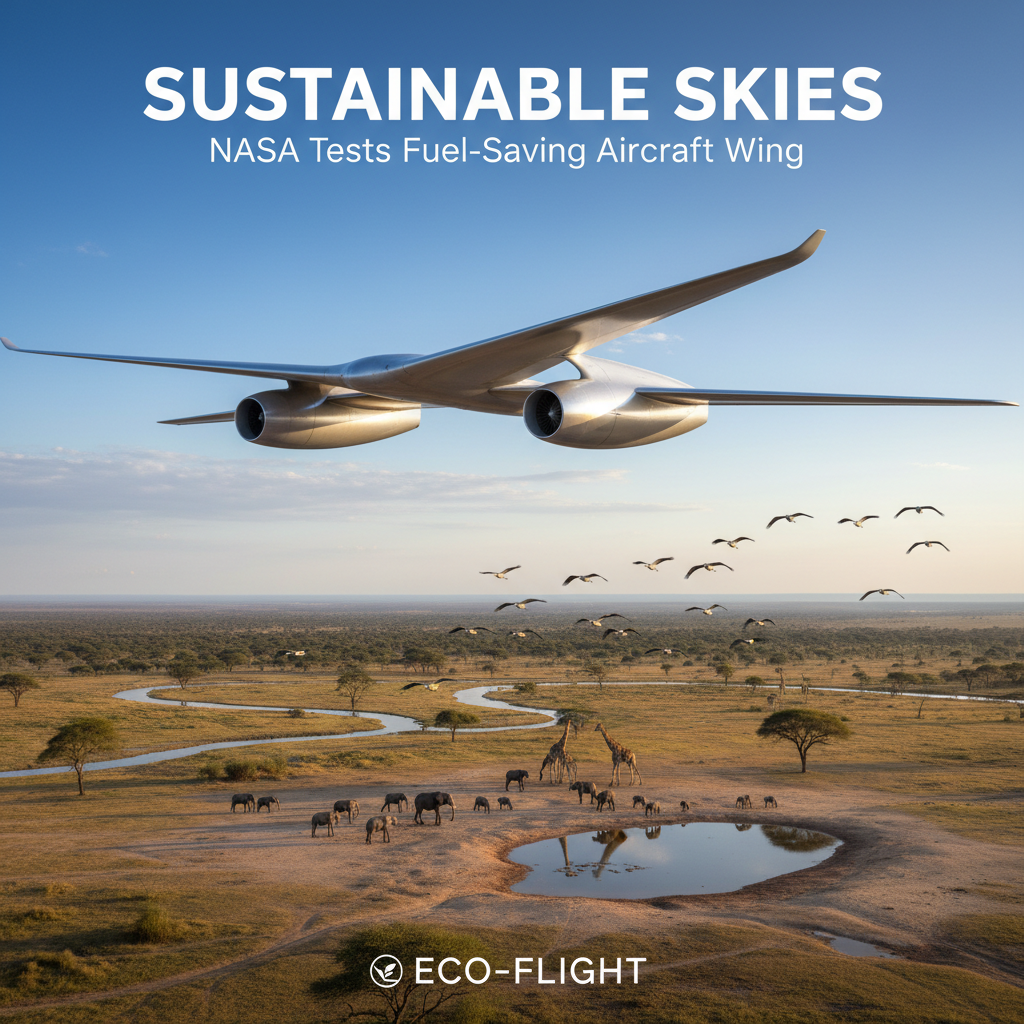
Sustainable Skies: NASA Tests Fuel-Saving Aircraft Wing
Key Takeaways
- NASA completed the first flight test of a scale-model wing with enhanced laminar flow design.
- The primary goal is to reduce aerodynamic drag, leading to lower fuel consumption.
- This innovation aims to significantly cut fuel costs for future commercial aircraft.
- The test flight took place on January 29 at NASA’s Armstrong Flight Research Center.
- An F-15B research aircraft was utilized for this crucial test.
In an era where the environmental impact of air travel is under increasing scrutiny, breakthrough innovations are more critical than ever. NASA has just taken a significant leap forward, completing the first flight test of a scaled-model wing designed to revolutionize aircraft efficiency. This development isn't just about technological advancement; it's a pivotal step towards mitigating the aviation industry's carbon footprint, directly impacting our planet's delicate ecosystems and the quality of life for all.
For GreenNest Living readers, this news represents a tangible hope for a more sustainable future in one of the most challenging sectors to decarbonize. It highlights how cutting-edge research can translate into real-world environmental benefits, making greener skies a closer reality.
TL;DR: Key Facts
- NASA completed the first flight test of a scale-model wing with enhanced laminar flow design.
- The primary goal is to reduce aerodynamic drag, leading to lower fuel consumption.
- This innovation aims to significantly cut fuel costs for future commercial aircraft.
- The test flight took place on January 29 at NASA’s Armstrong Flight Research Center in Edwards, California.
- An F-15B research aircraft was utilized for this crucial test.
What Happened
NASA successfully conducted the inaugural flight test of a groundbreaking scale-model wing designed to enhance laminar flow, a critical step towards more fuel-efficient aviation. The test, carried out on January 29 at NASA’s Armstrong Flight Research Center in Edwards, California, utilized one of the agency’s F-15B research aircraft as a flying testbed.
Laminar flow refers to the smooth, uninterrupted movement of air over an aircraft's surface, which significantly reduces drag. By meticulously designing the wing to maintain this optimal airflow, engineers aim to minimize the resistance an aircraft experiences as it moves through the air. Less drag directly translates to less power required for flight, which in turn means lower fuel consumption and operational costs for airlines. This initial flight test represents a vital validation of the design principles and sets the stage for further development towards integrating this technology into commercial aviation.
Why It Matters
For readers of GreenNest Living, this isn't just another piece of aerospace news; it's a direct and impactful development for wildlife and nature conservation. Commercial aviation is a substantial contributor to global greenhouse gas emissions, primarily carbon dioxide (CO2). These emissions are a major driver of climate change, which in turn poses severe threats to ecosystems, biodiversity, and natural habitats worldwide. From melting polar ice caps affecting arctic wildlife to altered weather patterns disrupting agricultural cycles and marine life, the environmental consequences are profound and far-reaching.
A wing design that significantly reduces fuel consumption offers a powerful solution to this challenge. Lower fuel burn means fewer CO2 emissions per flight, directly contributing to the global effort to decarbonize the atmosphere. This innovation can help slow the rate of global warming, thereby protecting vulnerable species and their habitats from extreme weather events, sea-level rise, and ecosystem degradation. It also reduces other pollutants associated with aircraft engines, improving air quality around airports and flight paths, which benefits both human health and local ecosystems.
Furthermore, this kind of technological advancement can inspire future sustainable design across various industries. It demonstrates a commitment to integrating environmental responsibility with technological progress. By making air travel more sustainable, NASA is not only helping to preserve our planet's natural beauty and biodiversity but also paving the way for a future where economic growth and ecological stewardship can coexist more harmoniously. It's a reminder that even in highly complex sectors, innovation holds the key to a greener, more sustainable future for all.
What You Can Do
- Stay Informed and Advocate: Keep abreast of advancements in green aviation and sustainable technologies. Support policies and initiatives that fund research and development into fuel-efficient designs and alternative fuels.
- Consider Your Travel Choices: When planning air travel, investigate airlines that actively invest in newer, more fuel-efficient fleets or offer carbon offset programs. While not a perfect solution, offsets can support projects that reduce emissions elsewhere.
- Support Sustainable Innovations: Show your support for agencies like NASA and private companies that are pioneering eco-friendly solutions. Consumer demand and public interest can drive further investment in these critical areas.
- Reduce Your Overall Carbon Footprint: Reflect on your daily energy consumption, transportation habits, and waste generation. Every individual action, from reducing driving to choosing renewable energy, contributes to the larger goal of climate stability.
- Engage in Local Conservation: Support local wildlife and nature conservation efforts. A healthier local environment builds resilience against broader climate impacts and reminds us of what we are working to protect on a global scale.
FAQs
Q: What is 'laminar flow' and why is it important for aircraft?
A: Laminar flow refers to the smooth, undisturbed movement of air over an aircraft's surface. When airflow is laminar, it creates less friction or drag, meaning the aircraft needs less power and thus less fuel to maintain speed and altitude.
Q: How much fuel could this technology potentially save?
A: While specific figures for this particular scaled wing design aren't provided in the initial announcement, laminar flow technology is generally expected to lead to significant reductions in fuel consumption. Previous research and development in this area suggest potential savings of 10-20% or more, which would translate into substantial environmental and economic benefits across commercial fleets.
Q: When can we expect to see this technology implemented in commercial aircraft?
A: The news states this design is for 'future commercial aircraft,' indicating it's still in the research and development phase. Aerospace innovation often has a long timeline from testing to full commercial integration, involving further extensive testing, certification, and manufacturing processes. It could be several years, possibly a decade or more, before these advanced wings are standard on passenger jets.
Sources
This article is based on reporting by NASA Breaking News.
Original source
NASA Breaking News
Author, Digital Entrepreneur & AI Creator
More from Wildlife & Nature News
- The Silent Drain: Sand Scarcity Threatens Global Ecosystems — May 13, 2026
- Celestial Glimpse: Earth's Glow, Our Lost Night Skies — May 11, 2026
- Google's UK Datacentre Emissions Understated by Factor of Five — May 10, 2026
- Cosmic Beacon: Earth's Glow Inspires Global Stewardship — May 9, 2026
- Amazon Tipping Point: Deforestation, Warming Threaten Rainforest by 2040s — May 8, 2026