Sustainable Stonework: Tom Eaglestone on Reusing Garden Materials
Key Takeaways
- Ecological designer Tom Eaglestone champions reusing materials in gardens.
- Stonework and hard landscaping are crucial for defining garden structure.
- Defined hardscaping enables successful "wilder planting" without chaos.
- This practice is central to creating truly ecological and sustainable gardens.
In an era where environmental consciousness is paramount, our gardens offer a powerful opportunity to practice sustainability. This week, insights from ecological garden designer Tom Eaglestone highlight a crucial, yet often overlooked, aspect of green landscaping: the thoughtful reuse of existing materials. It's not just about what we plant, but how we build the very foundations of our outdoor havens, ensuring longevity and ecological balance.
TL;DR: Key Facts
- Ecological garden designer Tom Eaglestone emphasizes the strategic reuse of materials in garden design.
- He highlights the critical role of stonework and hard landscaping in defining and structuring a garden.
- Thoughtful hardscaping enables "wilder planting" while maintaining a sense of order and design.
- Reusing materials is presented as a fundamental practice for creating truly ecological gardens.
What Happened
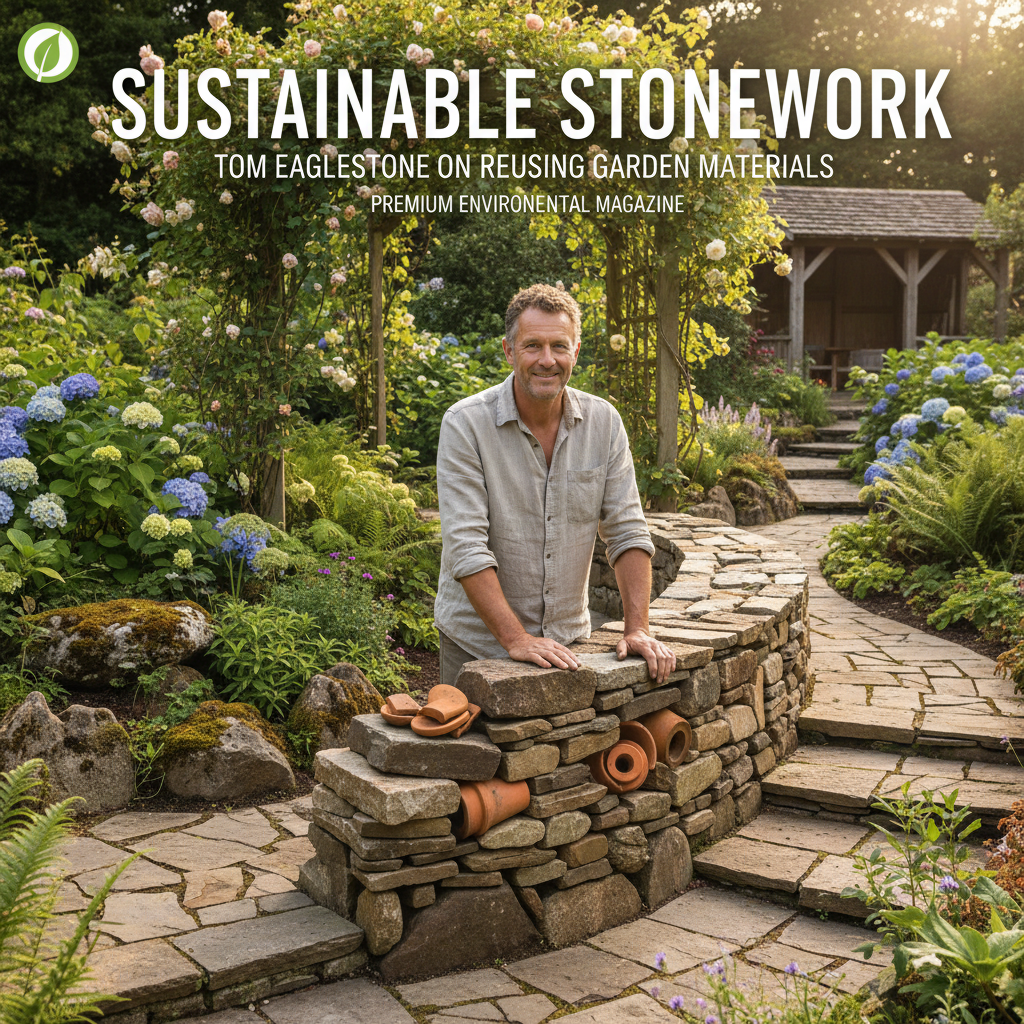
A recent feature on Gardenista brought to light the expertise of ecological garden designer Tom Eaglestone, based in Bath, whose approach centers on the profound impact of hard landscaping and material reuse. Eaglestone's perspective suggests that a talent for stonework is far more than a decorative flourish; it is a foundational element that dictates the success or failure of a garden's overall design and ecological function.
According to Eaglestone, the structural backbone provided by elements like stone walls, paths, and borders is essential. These "crisp edges" serve to signify that "here is a garden," even when juxtaposed with deliberately wilder, more naturalistic planting schemes. This interplay of defined structure and organic growth is key to creating a garden that feels both intentional and ecologically vibrant, preventing a wild space from appearing merely unkempt and ensuring harmonious coexistence.
The core of Eaglestone's message, as interpreted by GreenNest Living, lies in the principle of circularity within garden design. Rather than importing new, often energy-intensive materials, his methodology champions the integration of preexisting resources. This not only minimizes waste and reduces the environmental footprint but also imbues a garden with a sense of history and unique character, demonstrating that true beauty and ecological integrity can go hand-in-hand with resourcefulness and mindful planning.
Why It Matters
For GreenNest Living readers, Eaglestone's insights are particularly resonant because they bridge the gap between aesthetic garden design and profound environmental responsibility. In an age of increasing resource scarcity and a burgeoning awareness of our environmental footprint, the conscious choice to reuse materials in our gardens becomes a powerful act of sustainability. It's a tangible way to reduce demand for new products, thereby decreasing the energy, water, and raw materials consumed in manufacturing and transportation. By looking at what’s already available—whether on-site or from local salvage—we significantly lower the carbon footprint of our outdoor projects, contributing directly to a healthier planet.
Beyond the immediate environmental benefits, Eaglestone's emphasis on hard landscaping reveals a deeper ecological principle. Well-designed, reused stonework isn't just inert material; it can become living habitat. The nooks and crannies of a dry stone wall offer essential shelter for beneficial insects, small mammals, and even reptiles, contributing significantly to local biodiversity. These robust structures also play a crucial role in managing water flow, preventing soil erosion, and creating diverse microclimates that can support a wider range of plant species, enhancing the overall resilience and health of the garden ecosystem. This approach transforms hardscaping from a purely functional or decorative element into an active, life-supporting component of the garden's ecology.
Furthermore, this philosophy encourages a fundamental shift in mindset from consumption to creativity. It challenges us to see beauty and potential in discarded or forgotten materials, fostering a sense of ingenuity and resourcefulness that is at the very heart of sustainable living. Embracing reused materials allows for the creation of unique, character-filled gardens that tell a story, moving beyond generic designs to spaces that reflect a deeper connection to place and planet. It empowers gardeners to become active participants in a circular economy, proving that ecological design can be both beautiful, profoundly impactful, and uniquely personal.
What You Can Do
Here’s how you can embrace the principles of reusing preexisting materials for your own ecological garden:
- Conduct a Garden Material Audit: Before buying anything new, meticulously survey your own garden and property. Look for old bricks, broken paving slabs, discarded timber, natural stones, or even robust pottery shards that could be repurposed for paths, borders, raised beds, or decorative features. You might be surprised by what treasures you already possess that are ripe for a new life.
- Explore Local Salvage and Reclamation Yards: These often overlooked resources are treasure troves of characterful and sustainable materials. Visit local architectural salvage yards, building demolition sites (always with permission), or even online marketplaces and community groups for reclaimed bricks, flagstones, railway sleepers, or even old ceramic tiles. Be prepared to inspect materials for quality and suitability, and don't hesitate to negotiate.
- Learn Basic Hardscaping Techniques: Even fundamental skills in dry stone walling, laying reclaimed pavers, or constructing simple timber borders can open up a world of possibilities for your garden. Look for local workshops, community college courses, or reputable online tutorials (e.g., from organizations like the Dry Stone Walling Association) to gain confidence and expertise. Starting with a small, manageable project, like an edging or a small path, is an excellent way to learn and build proficiency.
- Integrate Materials Functionally and Aesthetically: Don’t just place reused items randomly. Think about how they can serve a dual purpose, combining utility with beauty. Old bricks can form a crisp, defining border for a flowerbed, allowing for "wilder planting" within a controlled edge. Reclaimed railway sleepers can create robust and visually appealing raised vegetable beds. Large flat stones can become charming stepping stones through a lawn or meadow, purposefully linking different areas of the garden.
- Consult an Ecological Garden Designer: For larger projects or if you feel overwhelmed by the possibilities, consider engaging an ecological garden designer. Professionals like Tom Eaglestone specialize in sustainable practices and can offer invaluable advice on material sourcing, structural integrity, and how to integrate reused elements seamlessly into a cohesive and ecologically rich design that not only meets your vision but also complements your local environment.
- Embrace Imperfection and Character: One of the beauties of using reclaimed materials is their inherent character, often bearing the delightful marks of time and previous use. These natural imperfections add depth, history, and a unique aesthetic that new, uniform materials often lack. Celebrate these unique qualities as they contribute to the authentic story and genuine charm of your sustainable garden space.
FAQs
Q: What types of preexisting materials are best for garden reuse?
A: Stone (cobbles, flagstones, river rock), bricks, timber (sleepers, planks – ensure untreated for organic gardens), broken pottery or ceramics for mosaic paths, and even old metal elements like gates or railings (if safe and rust-treated) are excellent choices. Focus on durable, non-toxic materials that will withstand outdoor conditions.
Q: Is it always cheaper to reuse materials than to buy new?
A: Not necessarily, but often yes. While some highly sought-after antique materials can be expensive, many common salvaged items are significantly cheaper or even free. The biggest savings often come from reducing or eliminating purchase costs and potentially lower transportation costs if materials are sourced locally. However, factor in your time for cleaning and preparing materials.
Q: How do I ensure reused materials are safe and durable for my garden?
A: For timber, always avoid chemically treated wood (e.g., creosote-soaked railway sleepers) in areas where food is grown or children play; opt for untreated or naturally rot-resistant wood. For stone and bricks, check for structural integrity—avoid severely cracked or crumbling pieces for load-bearing structures. Always clean materials thoroughly to remove any potential contaminants, and ensure they are stable and properly installed when used for paths, walls, or other features to prevent hazards and ensure longevity.
Sources
This article is based on reporting by Gardenista.
Original source
Gardenista
Author, Digital Entrepreneur & AI Creator
More from Garden & Plants
- LA Oasis: Modern Spanish Colonial Design for Sustainable Living — May 13, 2026
- Flowering Shrubs: The Underrated Backbone of Your Eco-Garden — May 11, 2026
- Native Wisteria: Blooming Beauty, Boosting Biodiversity — May 10, 2026
- Embracing the Subtle Beauty of Shade Gardens — May 9, 2026
- Ground Covers: The Low-Maintenance Path to a Greener Yard — May 8, 2026