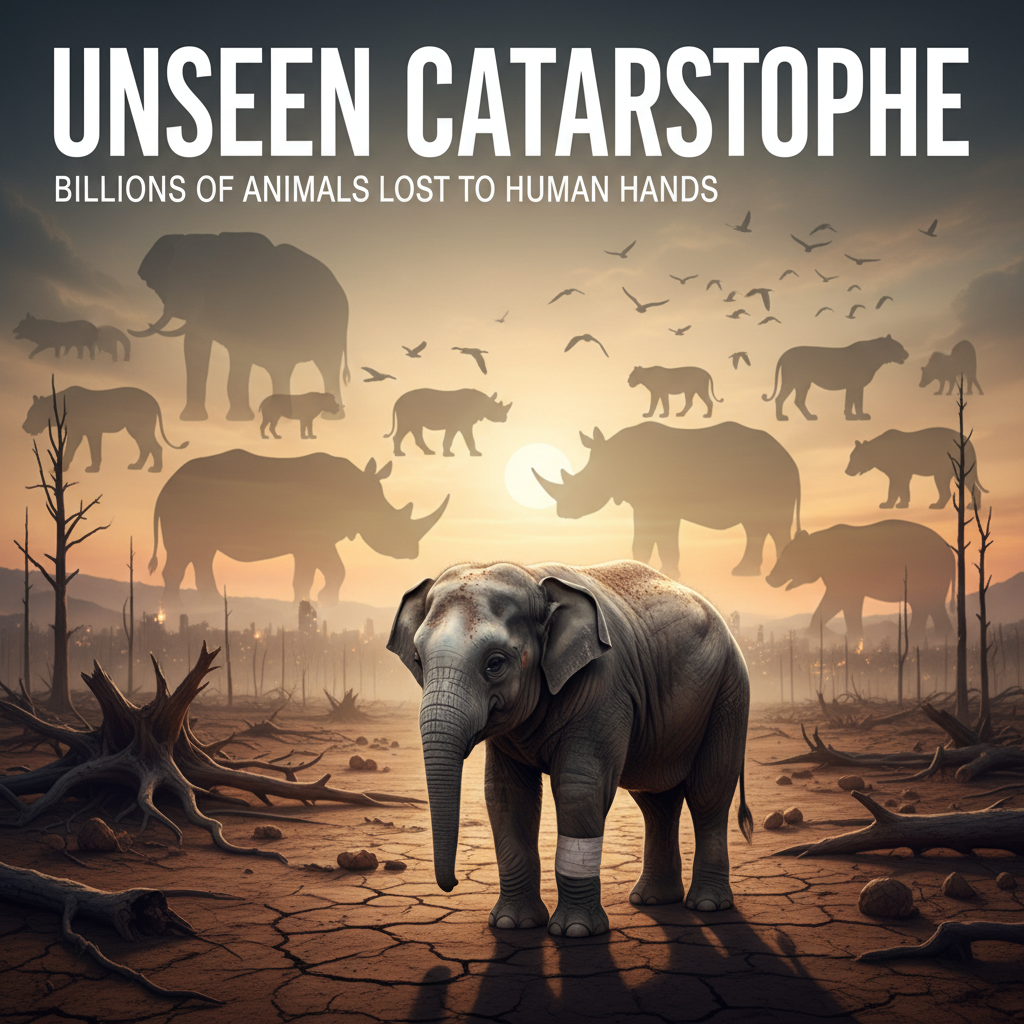
Unseen Catastrophe: Billions of Animals Lost to Human Hands
Key Takeaways
- Human activities caused billions of animal deaths in 2025, largely unnoticed by the public.
- Major drivers include habitat destruction, pollution, climate change, and overexploitation.
- These 'quiet' losses devastate ecosystems, reduce biodiversity, and threaten essential services for human survival.
- Individual actions like conscious consumption, waste reduction, and carbon footprint reduction are vital.
- Advocacy for policy change and supporting conservation efforts are critical for large-scale impact.
The Silent Toll: A Call to Action from GreenNest Living
At GreenNest Living, we often celebrate the beauty and resilience of nature, offering insights into how we can live harmoniously with our planet. But sometimes, news emerges that forces us to confront a stark and uncomfortable truth. A recent report from The Animal Reader, an independent news platform dedicated to animal and environmental news, brought precisely such a revelation: in 2025, human activity was responsible for the deaths of billions of animals worldwide, many of these tragedies unfolding “quietly, far from public attention.”
This isn't merely a statistic; it’s a profound indictment of our current trajectory and a desperate plea from the natural world. While we might focus on charismatic megafauna or dramatic environmental disasters, this report underscores a relentless, pervasive loss occurring on a scale almost too vast to comprehend. It’s a wake-up call that demands our immediate and sustained attention.
Unpacking the 'Human Activity' Behind the Losses
When we hear “human activity,” it’s easy to feel detached, as if it’s a problem for governments or corporations alone. But the truth is, our collective choices, driven by consumerism, agriculture, industrialization, and energy demands, fuel this relentless decline. The billions of animal deaths reported by The Animal Reader stem from a multitude of interconnected factors:
- Habitat Destruction: The relentless conversion of forests, wetlands, and grasslands into agricultural lands, urban sprawl, and infrastructure projects directly displaces and kills countless animals. When a forest is razed for palm oil plantations, every creature within it – from insects and birds to mammals – faces immediate threat, starvation, or death.
- Pollution: Our oceans are choking on plastic, our rivers are contaminated with industrial waste and agricultural run-off, and our air is thick with pollutants. Animals ingest plastics, get entangled in debris, suffer from chemical poisoning, and their delicate physiological systems are disrupted by persistent toxins. Light and noise pollution also disrupt migratory patterns and communication, leading to increased mortality.
- Climate Change: Rising global temperatures lead to extreme weather events, ocean acidification, altered seasons, and shifting habitats. Animals struggle to adapt to these rapid changes, leading to mass die-offs, reduced reproductive success, and ultimately, extinction for many species.
- Overexploitation: Unsustainable fishing practices, illegal wildlife trade, and unregulated hunting decimate populations at rates far exceeding their ability to reproduce. This isn't just about specific target species; bycatch in fisheries alone accounts for millions of marine animal deaths annually.
- Direct Conflict: As human populations expand, encounters with wildlife become more frequent. Roadkill, retaliatory killings by farmers protecting livestock, and the unintended consequences of pest control measures contribute significantly to this silent toll.
These aren't isolated incidents but a complex web of anthropogenic pressures, each compounding the impact of the others. The fact that these deaths often occur “quietly, far from public attention” is perhaps the most unsettling aspect, allowing the crisis to deepen without sufficient societal response.
Why These 'Quiet' Losses Matter So Profoundly
The invisibility of these billions of deaths doesn't diminish their catastrophic impact. Quite the opposite. When countless invertebrates, amphibians, fish, and small mammals vanish unnoticed, we lose critical threads in the intricate tapestry of life. These silent extinctions cascade through ecosystems, weakening them from within:
- Ecosystem Collapse: Every species plays a role. The loss of pollinators means reduced crop yields. The disappearance of insect-eating birds can lead to agricultural pest outbreaks. The decline of keystone species can trigger the collapse of entire ecosystems.
- Loss of Biodiversity: Biodiversity is the Earth's insurance policy. A rich variety of life ensures ecosystems are resilient and can adapt to change. Each lost species is a permanent loss of genetic information and ecological function, making the planet less stable and less capable of sustaining life, including human life.
- Impact on Human Well-being: Healthy ecosystems provide essential services: clean air and water, fertile soil, climate regulation, and even medicines. The quiet loss of animal life is a direct assault on the very systems that support human civilization.
- Ethical Imperative: Beyond utilitarian value, there is an inherent moral responsibility to protect the diversity of life on Earth. As the dominant species, our actions have consequences for all others, and ignoring widespread suffering and loss is an ethical failure.
Turning the Tide: Actionable Steps for GreenNest Living Readers
The scale of the problem can feel overwhelming, but despair is not an option. As readers of GreenNest Living, you are already attuned to the urgency of sustainable living. Here’s how we can collectively address this silent catastrophe:
- Rethink Your Plate: Industrial animal agriculture is a massive driver of habitat destruction and pollution. Reduce your consumption of meat and dairy, and opt for sustainably sourced, plant-based, or ethically raised options when possible.
- Combat Consumption: Every product has an ecological footprint. Choose durable, repairable goods. Support companies with verifiable ethical and sustainable supply chains. Reduce, reuse, recycle, and refuse unnecessary purchases.
- Mind Your Waste: Prevent plastic pollution by avoiding single-use plastics. Dispose of waste responsibly and advocate for better waste management systems in your community.
- Support Conservation: Donate to reputable conservation organizations working on the front lines to protect habitats and endangered species. Volunteer your time if you can.
- Advocate for Policy Change: Engage with your elected officials. Support legislation that protects wildlife, expands protected areas, regulates pollution, and promotes sustainable land use. Vote for leaders committed to environmental protection.
- Educate and Share: Talk about these issues with friends, family, and colleagues. Share articles like this one. Increased awareness is the first step towards collective action.
- Reduce Your Carbon Footprint: Transition to renewable energy, use public transport, cycle, or walk. Every kilowatt-hour saved and every gallon of fuel not burned reduces pressure on global ecosystems.
The report from The Animal Reader serves as a stark reminder: our planet is undergoing a profound and rapid transformation, much of it unseen. But by acknowledging these quiet losses, understanding their causes, and committing to meaningful action, we can shift the narrative from a silent catastrophe to a resounding movement for life. Let's ensure that future reports speak of recovery, not further decline.
Original source
GreenNest Living Editorial
Author, Digital Entrepreneur & AI Creator
More from Wildlife & Nature News
- The Silent Drain: Sand Scarcity Threatens Global Ecosystems — May 13, 2026
- Celestial Glimpse: Earth's Glow, Our Lost Night Skies — May 11, 2026
- Google's UK Datacentre Emissions Understated by Factor of Five — May 10, 2026
- Cosmic Beacon: Earth's Glow Inspires Global Stewardship — May 9, 2026
- Amazon Tipping Point: Deforestation, Warming Threaten Rainforest by 2040s — May 8, 2026