Wellington's Ocean Crisis: Raw Sewage & Wildlife at Risk
Key Takeaways
- Millions of litres of raw sewage discharged into Wellington's ocean for over two weeks.
- Popular beaches closed, public health warnings issued due to severe contamination.
- Eyewitnesses report visible ecological impact and distress to local wildlife.
- Crisis stems from ongoing infrastructure issues, leading to widespread public anger.
- Threats include long-term harm to marine life, water quality, and human health.
Wellington, New Zealand, is grappling with an environmental crisis that underscores the urgent need for robust urban infrastructure. For weeks, millions of litres of raw sewage have been pouring directly into the ocean, turning popular beaches into public health hazards and devastating local marine ecosystems. This ongoing catastrophe serves as a stark reminder of the delicate balance between urban development and environmental stewardship.
TL;DR: Key Facts
- Millions of litres of raw sewage have been continuously discharged into Wellington's ocean for over two weeks.
- The sewage spill has forced the closure of popular beaches, with public health warnings issued to residents.
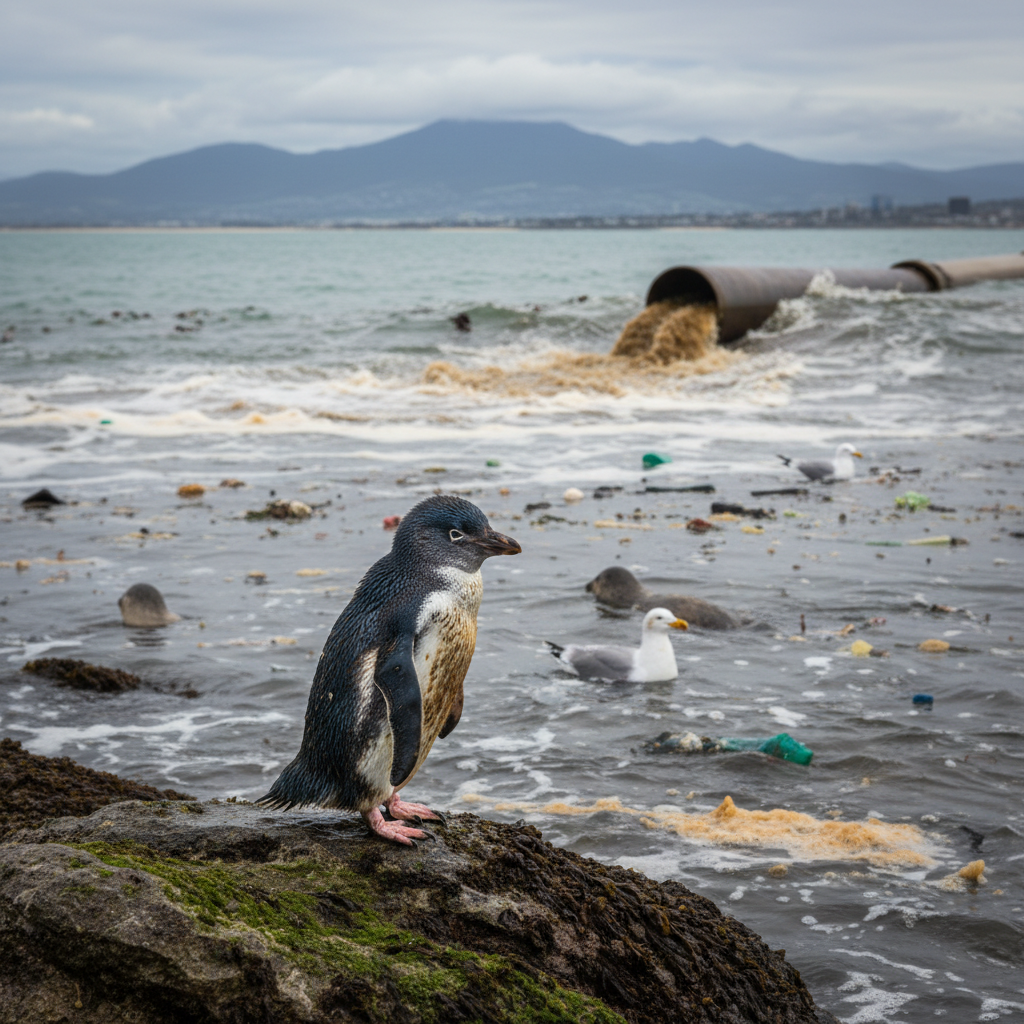
- Eyewitnesses report gulls feeding on human waste and a visible impact on the coastline.
- The crisis is due to ongoing infrastructure issues, leading to widespread public anger and frustration.
- The long-term environmental and public health impacts are a major concern for the city and its surrounding marine ecosystem.
What Happened
For more than two weeks, New Zealand's capital city, Wellington, has been experiencing a severe environmental catastrophe as its aging sewage system continues to discharge millions of litres of untreated human waste directly into the Pacific Ocean. This ongoing pollution has transformed the city's once-pristine coastlines into an ecological nightmare, forcing the closure of popular beaches and waterfront areas. Public health authorities have issued stringent warnings, advising residents to avoid contact with the contaminated waters.
The crisis began over two weeks ago, and despite ongoing efforts, the situation has persisted, fueling significant public outrage. Residents report a palpable sense of abandonment and frustration, exacerbated by the visible signs of pollution along their beloved coast. Warning signs are now commonplace, cautioning against swimming, fishing, or even touching the water. The sight of marine gulls scavenging amongst human waste underscores the severity of the ecological damage. This isn't an isolated incident; it points to systemic vulnerabilities in the city's essential services, leaving residents to question the reliability of their environmental protections and the accountability of those responsible for managing critical infrastructure. The financial and reputational costs for Wellington are mounting, but more importantly, the environmental toll on its unique marine biodiversity could be long-lasting.
Why It Matters
This unfolding disaster in Wellington is far more than just a local incident; it's a potent symbol of a global challenge: the severe strain modern urban centers place on natural environments, particularly our precious waterways and coastal ecosystems. For GreenNest Living readers, this isn't just "Wildlife & Nature News"—it's a critical, real-world case study in how infrastructure failures directly translate into immediate and devastating ecological harm. Millions of litres of raw sewage introduce a dangerous cocktail of harmful bacteria, viruses, and excess nutrients into marine environments. This deadly influx leads to critical oxygen depletion (a process known as eutrophication), which can rapidly create vast "dead zones" where most marine life cannot survive. Furthermore, it causes disease outbreaks among fish, shellfish, and other marine organisms, and facilitates the potential bioaccumulation of toxins and pathogens up the delicate marine food chain, ultimately threatening species from plankton to apex predators. The visual of seagulls feeding on human waste is not only disturbing but also highlights how quickly pollution impacts even common wildlife, disrupting natural behaviors and spreading disease vectors.
Beyond the direct ecological devastation, the public health aspect of such a spill cannot be overstated. Closed beaches, which were once vibrant community hubs for recreation and relaxation, now carry grim warnings against swimming, surfing, or even fishing. This cuts off crucial human connections to nature, impacting mental and physical well-being and reducing opportunities for outdoor activity. It also raises concerns about contaminated seafood reaching markets, posing a direct threat to human health. This crisis powerfully highlights the urgent need for sustainable urban planning that prioritizes robust, resilient infrastructure—systems capable of not only handling the demands of a growing population but also adapting to the increasing pressures of climate change, such as more frequent and intense rainfall events that can overwhelm older, inadequate systems. The palpable anger and frustration of Wellington residents serve as a powerful reminder that communities worldwide expect and deserve clean, healthy environments. Environmental degradation ultimately erodes public trust in governance and significantly diminishes the overall quality of life. This incident should serve as a wake-up call, prompting every city, regardless of its size or perceived modernity, to scrutinize its own wastewater management practices and invest proactively in environmental protection and infrastructure resilience to prevent such catastrophes from recurring.
What You Can Do
- Advocate for Infrastructure Investment and Oversight: Actively contact your local, regional, and national representatives and policymakers. Emphasize the critical importance of investing in the modernization and rigorous maintenance of wastewater treatment facilities and aging urban infrastructure. Demand transparency and accountability regarding these essential public services.
- Support and Engage with Local Conservation Groups: Volunteer your time, donate, or simply stay informed through local environmental organizations dedicated to protecting coastal environments, monitoring water quality, and advocating for marine health in your region. Their work is vital for sustained environmental vigilance.
- Consciously Reduce Your Household Water Consumption: Every drop counts. By minimizing your daily water usage through shorter showers, efficient appliances, and mindful gardening, you reduce the overall volume of wastewater entering the system. This lessens the burden on treatment plants, especially during peak times or periods of heavy rainfall, which often lead to overflows.
- Practice Responsible Waste Disposal: Commit to never flushing anything down the toilet other than human waste and toilet paper. Be extremely careful about what goes down your drains; avoid pouring fats, oils, and grease (FOG) into sinks, as these are major culprits for causing blockages and contributing to sewage overflows.
- Educate Your Community and Share Knowledge: Become an advocate for clean water. Share information about the profound impacts of ocean pollution and the critical importance of robust, healthy water management systems with your friends, family, neighbors, and on social media. Informed communities are empowered communities.
- Participate in and Organize Local Beach Clean-ups: If and when it is safe to do so, join organized local efforts to clean up coastal areas. Removing visible pollution not only mitigates immediate environmental harm but also raises public awareness about the ongoing challenges and collective responsibility for our oceans.
FAQs
Q: What are the immediate environmental impacts of raw sewage in the ocean?
A: Raw sewage introduces harmful bacteria (like E. coli), viruses, and excess nutrients into marine ecosystems. This can lead to oxygen depletion (eutrophication), create "dead zones," spread disease among marine life, and contaminate seafood, making it unsafe for consumption.
Q: How does this affect marine wildlife specifically?
A: Marine wildlife can ingest harmful pathogens, suffer from oxygen deprivation, and become ill or die. Birds feeding on contaminated areas, fish exposed to polluted waters, and even larger mammals are all at risk, disrupting the entire food web.
Q: What causes these large-scale sewage spills in urban areas?
A: Common causes include aging and inadequate infrastructure that can't cope with population growth or heavy rainfall, blockages from improper waste disposal, and system failures due to lack of maintenance or climate change impacts like increased storm intensity.
Sources
This article is based on reporting by The Guardian Environment.
Original source
The Guardian Environment
Author, Digital Entrepreneur & AI Creator
More from Wildlife & Nature News
- The Silent Drain: Sand Scarcity Threatens Global Ecosystems — May 13, 2026
- Celestial Glimpse: Earth's Glow, Our Lost Night Skies — May 11, 2026
- Google's UK Datacentre Emissions Understated by Factor of Five — May 10, 2026
- Cosmic Beacon: Earth's Glow Inspires Global Stewardship — May 9, 2026
- Amazon Tipping Point: Deforestation, Warming Threaten Rainforest by 2040s — May 8, 2026