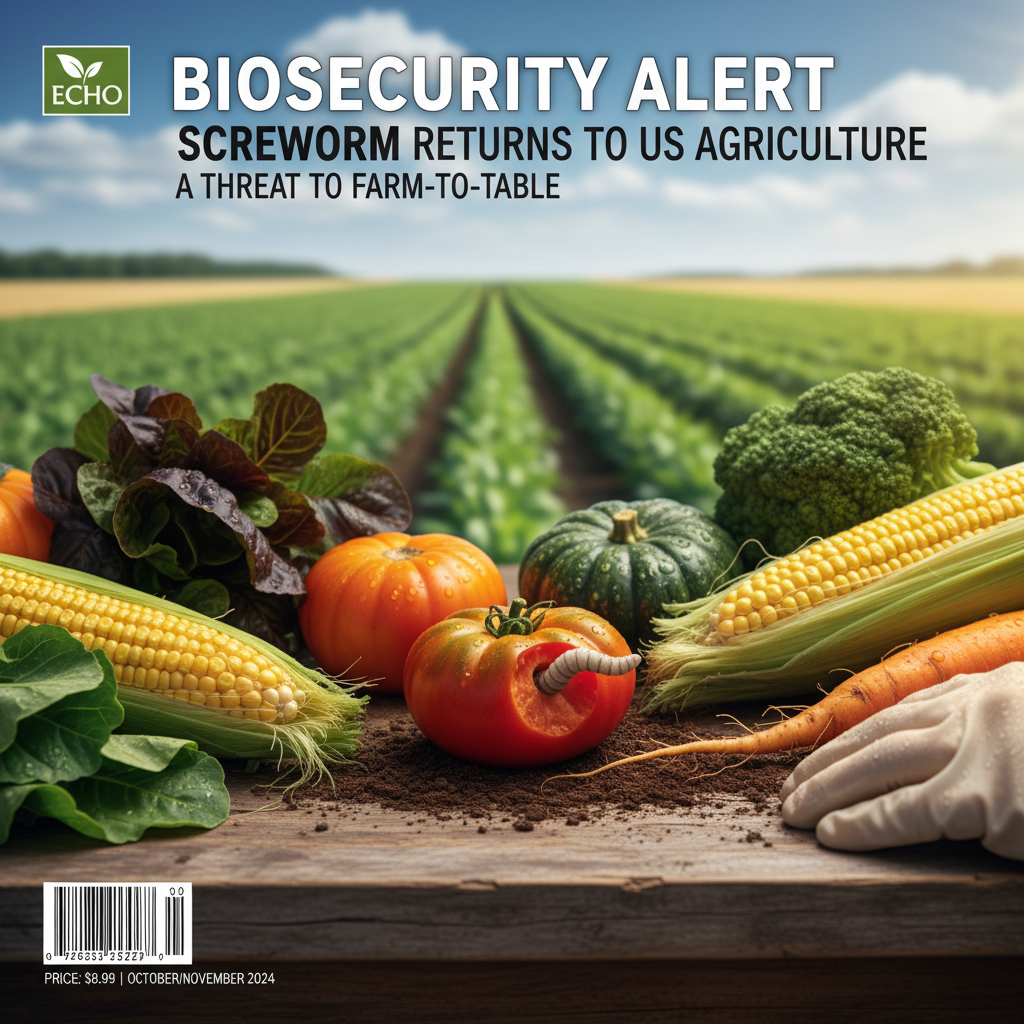
Biosecurity Alert: Screwworm Returns to US Agriculture
Key Takeaways
- New World screwworm (NWS) detected in U.S. after 60-year absence.
- USDA urges ranchers to take immediate precautions to protect livestock.
- NWS larvae infest living tissue of warm-blooded animals, causing severe harm.
- The initial eradication of NWS was a major biosecurity triumph, making its return a significant concern.
- Outbreak poses threats to both agricultural economy and native wildlife populations.
Biosecurity Alert: Screwworm Returns to US Agriculture
A silent, insidious threat, once vanquished from American soil, has made a chilling return. The re-emergence of the New World screwworm (NWS) fly after more than 60 years of eradication is not just an agricultural setback; it's a stark warning about the fragility of our ecosystems and the constant vigilance required to protect our food supply and native wildlife. This development demands immediate attention from ranchers, policymakers, and every concerned citizen.
TL;DR: Key Facts
- The New World screwworm (NWS) fly has been detected in the U.S. for the first time since the 1960s.
- The U.S. Department of Agriculture (USDA) is urging cattle ranchers to implement strict precautions to prevent further spread.
- Screwworms are parasitic larvae that infest open wounds in warm-blooded animals, causing severe injury or death.
- The initial eradication of NWS from the U.S. was a monumental triumph in pest control, making its return a significant concern.
- The outbreak poses a serious threat to the livestock industry, as well as to native wildlife populations.
What Happened
On June 5, 2026, the federal government issued an urgent alert following the first domestic detection of the New World screwworm (NWS) fly in the United States since the 1960s. This parasitic insect, notorious for its devastating impact on livestock, was officially confirmed by the U.S. Department of Agriculture’s (USDA) Animal and Plant Health Inspection Service (APHIS).
The USDA is now actively working with local authorities and has communicated directly with cattle ranchers across the nation, emphasizing the critical need for heightened vigilance and immediate precautionary measures. The re-appearance of NWS represents a significant biosecurity challenge, decades after an intensive and successful eradication program was believed to have permanently removed the pest from American territory. The focus is currently on containment and preventing widespread establishment, which could have dire consequences for the agricultural sector.
Why It Matters
The return of the New World screwworm is far more than just a nuisance for farmers; it's a bellwether for the complex interplay between our food systems, the environment, and global interconnectedness. Historically, NWS eradication in the U.S. was hailed as a monumental success, achieved through groundbreaking Sterile Insect Technique (SIT) programs. Its reappearance now signals a critical vulnerability, potentially stemming from increased global trade, climate shifts impacting pest ranges, or other yet-undetermined pathways.
For our food and environment, the implications are profound. Economically, a widespread outbreak could cripple the livestock industry, leading to significant financial losses for ranchers, increased meat prices for consumers, and potential disruptions in the food supply chain. Environmentally, the screwworm isn't selective; it preys on all warm-blooded animals. This means native wildlife, including deer, bears, and even endangered species, are at severe risk. An uncontrolled infestation could devastate wildlife populations, disrupting delicate ecosystems and potentially necessitating broad, ecologically challenging control measures.
Beyond the immediate crisis, this event underscores the vital importance of robust biosecurity protocols and sustained funding for agencies like USDA APHIS. It highlights how past victories against invasive species are not permanent, and continuous vigilance is crucial in a world where global travel and trade can quickly introduce new threats. This incident serves as a stark reminder that the health of our food systems is intrinsically linked to the health of our natural environment, and overlooking one inevitably impacts the other.
What You Can Do
- For Livestock Owners/Farmers: Immediately inspect all animals for any wounds, however small, and look for signs of larvae (maggots). Report any suspicious infestations or sick animals to your local veterinarian or the USDA APHIS office without delay.
- Practice Enhanced Biosecurity: Implement stringent biosecurity measures on your farm, including restricted access, proper waste management, and quarantining new animals.
- Stay Informed: Keep abreast of official USDA advisories, quarantine zones, and recommended control measures. Participation in community alerts and educational programs can be vital.
- Support Biosecurity Funding: Advocate for strong federal and state funding for agricultural biosecurity programs and research into pest eradication and prevention.
- Understand Your Role: Recognize that invasive species can enter through various pathways. If traveling internationally, be diligent about not transporting agricultural products or live animals that could harbor pests.
- Educate Others: Share accurate information about the screwworm threat with your community to foster collective awareness and responsibility.
Ciro's Take
As someone deeply invested in the health of our planet and the sustainability of our food, the news of the New World screwworm's return sends a chill down my spine. This isn't just about cattle; it's a powerful and unwelcome reminder that the ecological victories we celebrate are never truly permanent, especially in our interconnected world. It forces us to confront the vulnerability of our food systems and the delicate balance of nature. This incident underscores the absolute necessity of robust, consistently funded biosecurity measures and a proactive stance on invasive species, rather than a reactive scramble. We must view this not merely as an agricultural challenge, but as a critical environmental bellwether, demanding collective action and unwavering commitment to protect our animals, our food, and our wild spaces for generations to come.
FAQs
Q: What exactly is the New World Screwworm?
A: The New World screwworm (Cochliomyia hominivorax) is the larva (maggot) of a parasitic fly. Unlike most maggots, which feed on dead tissue, screwworm larvae infest the living flesh of warm-blooded animals, including livestock, pets, and wildlife, causing severe wounds, disease, and often death if untreated.
Q: How was the screwworm originally eradicated from the U.S.?
A: The screwworm was successfully eradicated from the U.S. in the 1960s primarily through the Sterile Insect Technique (SIT). This method involved raising millions of screwworm flies in laboratories, sterilizing the males with radiation, and then releasing them into affected areas. When sterile males mated with wild females, no offspring were produced, eventually leading to a collapse of the wild population.
Q: What are the immediate risks posed by its return?
A: The immediate risks are significant economic losses for the livestock industry due to animal illness and death, increased veterinary costs, and potential trade restrictions. Furthermore, native wildlife populations, particularly deer and other large mammals, are highly vulnerable, which could lead to ecological disruption and a need for intensive control efforts.
Sources
This article is based on reporting by Civil Eats.
Original source
Civil Eats
Author, Digital Entrepreneur & AI Creator
More from Food & Environment
- AI & Your Plate: Navigating the Future of Food as Medicine — June 5, 2026
- Agroforestry: Greener Farms, Stronger Ecosystems, Brighter Future — June 4, 2026
- Ocean's Untapped Riches: Iceland Pioneers Zero-Waste Seafood — June 3, 2026
- Poultry Farmers Left Vulnerable: USDA Delays Fair Pay Rule — June 2, 2026