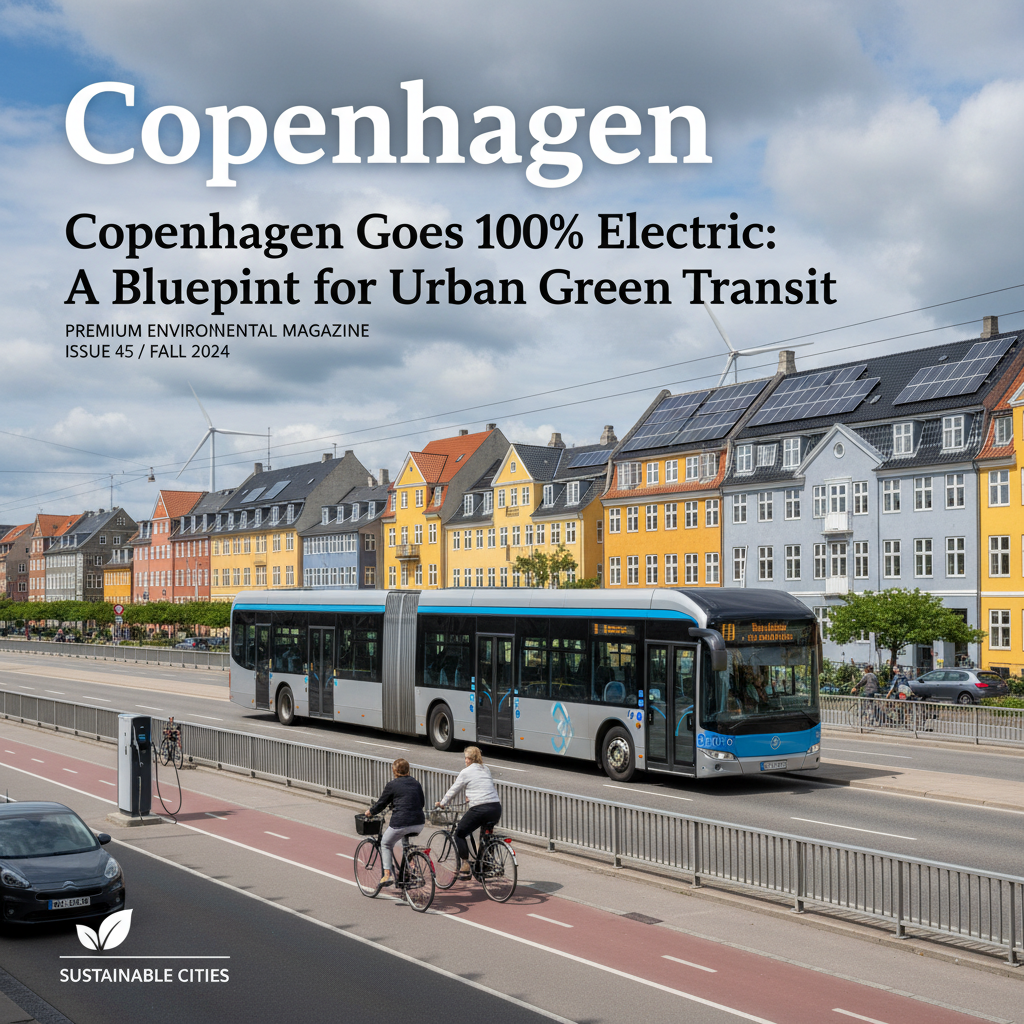
Copenhagen Goes 100% Electric: A Blueprint for Urban Green Transit
Key Takeaways
- Copenhagen's entire city bus fleet is now 100% electric, a major urban sustainability achievement.
- Fleet electrification of public transport has a disproportionately large positive impact on emissions and air quality.
- This success validates the viability of electric vehicle technology for heavy-duty applications.
- The initiative drastically reduces urban air and noise pollution, directly improving public health and quality of life.
- Copenhagen provides a scalable blueprint for other global cities aiming to decarbonize their transportation.
OPENING PARAGRAPH
This week, Copenhagen achieved a remarkable milestone, announcing that 100% of its city buses are now electric. This isn't just a local success story; it's a powerful statement to the world that comprehensive, sustainable urban transportation is not only possible but actively happening, right now.
This achievement signals a profound shift in how cities can tackle climate change, improve air quality, and enhance the daily lives of their residents, making it a critical moment for anyone invested in a greener future.
TL;DR: Key Facts
- Copenhagen has successfully transitioned its entire municipal bus fleet to electric vehicles, achieving 100% electrification.
- This represents a significant leap forward in green transportation, particularly focusing on large fleet vehicles.
- Fleet electrification, especially for public transit, has a far greater impact on emissions and air quality than individual electric cars due to high mileage and demanding usage.
- Copenhagen's success provides a tangible model for other global cities aiming to decarbonize their transportation sectors.
- This initiative drastically reduces urban air pollution and noise, directly improving the quality of life for city dwellers.
What Happened
The Danish capital, Copenhagen, has made headlines by announcing the complete electrification of its city bus fleet. This means every single public bus navigating the city's routes now runs on electricity, completely eliminating tailpipe emissions from this vital sector of urban transport.
While much public and media attention rightly focuses on the growing adoption of electric vehicles for personal transportation, the electrification of large fleet vehicles like buses often goes under-reported, despite its immense environmental significance. Fleet vehicles typically cover far more miles annually and are subject to more rigorous daily use than private cars. Consequently, electrifying a public bus fleet like Copenhagen's leads to a disproportionately larger reduction in greenhouse gas emissions and local air pollutants.
This achievement is the culmination of strategic planning, significant infrastructure investment, and a clear commitment from the city to meet its ambitious climate goals. It moves beyond pilot programs or partial transitions, representing a full-scale systemic change in public transportation for a major European capital.
Why It Matters
Copenhagen's electric bus fleet isn't merely an environmental win; it's a beacon for the entire Green Tech sector and a tangible example of sustainable living in action. Firstly, it underscores the maturity and viability of electric vehicle technology for heavy-duty applications. Skepticism often surrounds the range, charging infrastructure, and performance of large electric vehicles, but Copenhagen's success unequivocally demonstrates that these challenges are surmountable with dedicated effort and investment. This provides crucial data and confidence for other municipalities and private logistics companies looking to transition their own fleets.
Secondly, the impact on urban environments and public health is profound. Diesel buses are significant contributors to local air pollution, emitting nitrogen oxides (NOx) and particulate matter that are detrimental to respiratory and cardiovascular health. By removing these emissions from the city's streets, Copenhagen is offering its citizens cleaner air, reducing rates of pollution-related illnesses, and fostering a healthier living environment. Furthermore, electric buses are significantly quieter than their diesel counterparts, leading to a reduction in noise pollution – a often-overlooked factor that greatly enhances urban quality of life and reduces stress for residents.
Finally, this initiative positions Copenhagen as a global leader in urban sustainability and provides a scalable blueprint. It showcases how cities can proactively reduce their carbon footprint, diminish reliance on volatile fossil fuel markets, and improve energy independence. This comprehensive shift promotes further innovation in charging technologies, battery storage, and smart grid solutions, driving the green tech market forward and creating new economic opportunities in sustainable infrastructure and services. It sends a clear message: what Copenhagen can do, other cities can, and should, aspire to.
What You Can Do
Here are practical steps you can take to support and advocate for similar green transportation initiatives in your community:
- Support Public Transit: Use your local public transportation system whenever possible. Higher ridership numbers can strengthen the case for greater investment in greener, more efficient fleets like electric buses.
- Advocate for Electrification: Contact your local city council members, mayor, and public transportation authorities. Express your support for transitioning local bus, school, and municipal fleets to electric vehicles. Share Copenhagen's success as a case study.
- Educate Your Network: Share articles and information about the benefits of electric public transport with friends, family, and on social media. Help dispel myths and build public demand for green tech solutions.
- Participate in Local Planning: Attend public meetings or join community groups focused on urban planning, sustainability, or transportation. Lend your voice to push for infrastructure that supports electric fleets, such as charging stations and dedicated lanes.
- Support Green Businesses: Patronize businesses that are making efforts to electrify their own delivery or service fleets. This shows market demand for sustainable logistics.
- Vote with the Environment in Mind: When election time comes, research candidates' stances on climate action, sustainable infrastructure, and investments in green technology. Support those who prioritize these initiatives.
FAQs
Q: What are the main benefits of electric buses compared to traditional diesel buses?
A: Electric buses produce zero tailpipe emissions, significantly improving urban air quality and reducing greenhouse gas contributions. They are also much quieter, reducing noise pollution, and typically have lower long-term operating costs due to reduced fuel and maintenance expenses.
Q: Can other cities, especially those not as environmentally progressive as Copenhagen, replicate this success?
A: Yes, while it requires political will and investment, Copenhagen's success provides a tangible model. Many manufacturers offer electric bus solutions, and the technology is proven. Cities can start with pilot programs and scale up, leveraging federal or national grants and public-private partnerships to facilitate the transition.
Q: Is charging infrastructure a significant challenge for electrifying entire bus fleets?
A: It is a critical component that requires careful planning and investment, but it's not insurmountable. Solutions include depot charging overnight, on-route fast charging at termini, and smart grid integration. As technology advances, charging solutions become more efficient and cost-effective, making large-scale fleet electrification increasingly feasible.
Sources
This article is based on reporting by CleanTechnica.
Original source
CleanTechnica
Author, Digital Entrepreneur & AI Creator
More from Green Tech
- UK Electric Buses Transform into Grid Powerhouses with V2G — May 13, 2026
- Ocean-Powered AI: Panthalassa's Bold Vision for Sustainable Compute — May 12, 2026
- Winnipeg Powers Up: 250 EV Chargers Accelerate Sustainable Living — May 11, 2026
- Philippines' Wind Power Dream Hinges on Port Infrastructure — May 10, 2026
- Aviation's Carbon Blind Spot: Ryanair's Soaring Emissions Exposed — May 9, 2026