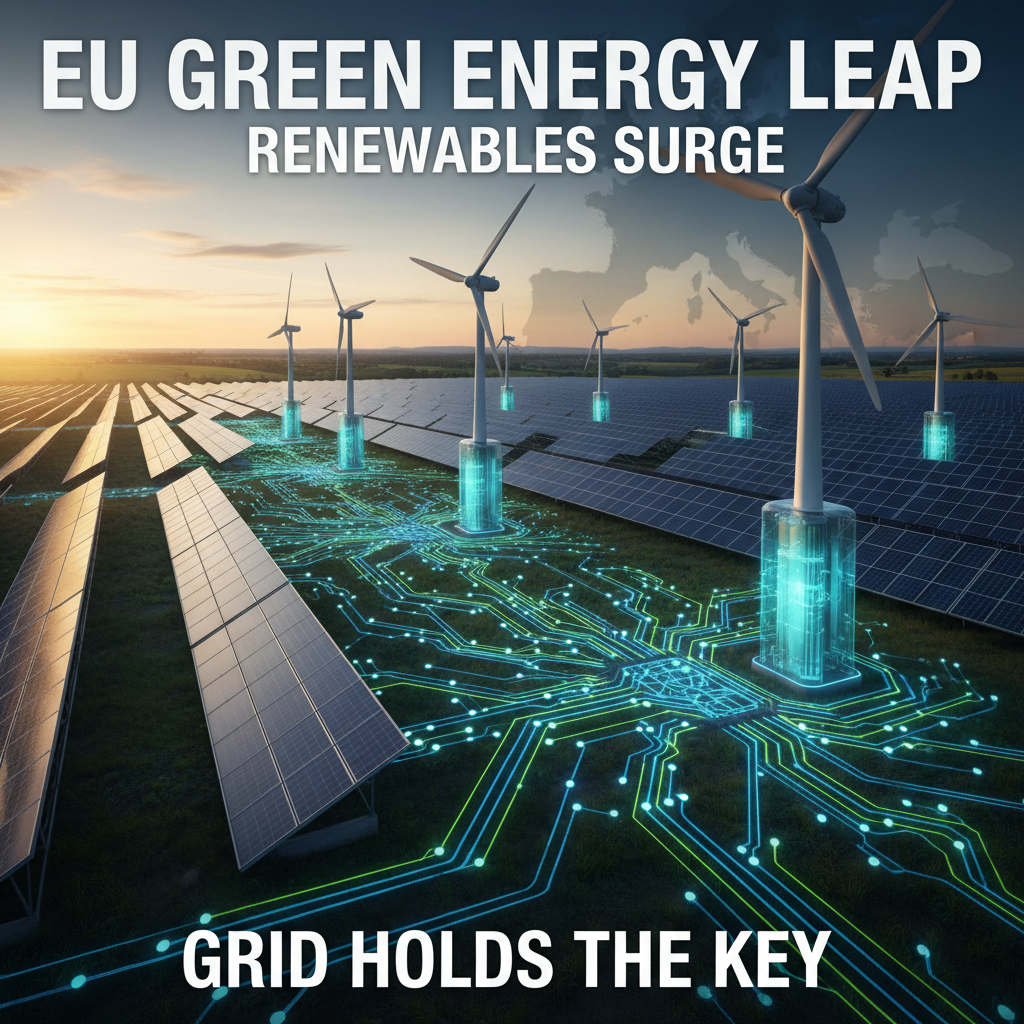
EU Green Energy Leap: Renewables Surge, Grid Holds the Key
Key Takeaways
- Solar and wind now generate more electricity than fossil fuels in the EU.
- This marks a significant and rapid step towards clean energy for the region.
- Experts warn that the existing power grid is 'outdated' for this transition.
- Grid modernization is crucial to effectively integrate and distribute variable renewable energy.
- The challenge of upgrading the grid presents a major opportunity for Green Tech innovation.
A monumental shift is underway in Europe's energy landscape, marking a pivotal moment in the global fight against climate change. For the first time, renewable energy sources like solar and wind have generated more electricity than fossil fuels across the European Union. This incredible achievement signals a rapid acceleration towards a clean energy future, but it also casts a spotlight on a critical challenge that could determine the ultimate success of this transition: our aging power grids.
This news isn't just a statistic; it's a testament to decades of innovation, policy push, and investment in green technology. Yet, as we celebrate this milestone, experts are sounding the alarm that the very infrastructure meant to deliver this clean power to our homes and businesses is struggling to keep pace, presenting a significant hurdle that Green Tech must now overcome.
TL;DR: Key Facts
- Solar and wind energy have collectively surpassed fossil fuels as the primary electricity source in the EU.
- This milestone indicates a rapid progression towards a clean energy future within the European Union.
- Despite this positive trend, experts warn that the existing power grid infrastructure is "outdated."
- The current grid may not be adequately equipped to handle the increasing influx and variability of renewable energy.
- Upgrading and modernizing the power grid is now a critical challenge for sustained clean energy growth.
What Happened
In a groundbreaking development, the European Union has achieved a significant milestone in its clean energy transition: electricity generated from solar and wind power now exceeds that from fossil fuels. This represents a monumental shift, indicating that the EU is indeed moving "rapidly" towards a future powered by sustainable sources. The data reflects years of concerted effort in developing and deploying renewable energy technologies across the continent.
This achievement is a direct result of substantial investments in renewable infrastructure, supportive policies, and a growing public demand for cleaner energy. It underscores the commercial viability and increasing efficiency of solar and wind technologies, positioning them as central pillars of the EU's energy mix. The transition away from fossil fuels is not just an environmental imperative but is increasingly becoming an economic reality.
However, alongside this triumph, a significant challenge has emerged. Energy experts and the source material highlight that while the generation capacity of renewables has surged, the existing power grid infrastructure is described as "outdated" and struggling to keep up. This means that the full potential of these clean energy sources might be hampered if the grid cannot efficiently integrate, distribute, and stabilize the variable output from solar and wind farms.
Why It Matters
This news is a game-changer for the Green Tech landscape, shifting our focus from merely *generating* clean energy to *managing* and *delivering* it efficiently. The fact that renewables now outpace fossil fuels in the EU is a resounding endorsement of green technology's potential. It proves that a sustainable future isn't a distant dream but an achievable reality, driven by innovation in solar panels, wind turbines, and their associated technologies. It should inspire further investment and research into next-generation renewable solutions, making them even more efficient and affordable.
However, the warning about the "outdated" grid is where the next frontier for Green Tech truly lies. Our traditional power grids were designed for a centralized system, where large fossil fuel plants generated consistent power. Renewables, by their nature, are decentralized and variable. This demands a complete overhaul in how we manage electricity – from smarter sensors and AI-driven predictive analytics to advanced energy storage solutions like grid-scale batteries and even hydrogen, and robust digital security measures. This challenge isn't a setback; it's an unprecedented opportunity for Green Tech innovation to create smarter, more resilient, and truly sustainable energy systems.
For GreenNest Living readers, this means the conversation around sustainable energy expands beyond simply installing solar panels. It now encompasses the entire ecosystem that supports clean energy. Investing in grid modernization and smart energy solutions will be crucial for maintaining energy security, stabilizing costs, and ensuring that every unit of renewable energy generated can reach its destination without waste. This pivotal moment calls for a renewed focus on holistic energy solutions that integrate generation, storage, and distribution seamlessly.
What You Can Do
- Support Policy for Grid Modernization: Advocate for local, national, and EU-level policies that prioritize investment in smart grid technology, energy storage, and improved transmission infrastructure. Your voice helps shape the future.
- Consider Home Energy Management: Explore smart home devices and systems that help you manage your energy consumption more efficiently, especially during peak hours. This reduces strain on the grid and can save you money.
- Look into Battery Storage Solutions: If you have solar panels, consider adding a home battery system. This stores excess renewable energy for later use, increasing your energy independence and helping to stabilize local grids.
- Engage with Community Energy Projects: Join or support local initiatives focused on community-owned renewables or microgrids. These smaller, localized grids can enhance resilience and reduce reliance on the larger, sometimes bottlenecked, national grid.
- Reduce Overall Energy Consumption: The simplest and most effective step is to reduce your personal energy footprint. Every watt saved lessens the demand on the grid, making it easier to integrate renewable sources.
- Educate and Share: Talk to friends, family, and colleagues about the importance of grid modernization and smart energy solutions. Raising awareness is key to fostering collective action and support for these vital Green Tech advancements.
FAQs
Q: What exactly makes a power grid "outdated" for renewables?
A: An outdated grid was built for one-way power flow from large, centralized fossil fuel plants. It struggles with the two-way flow, variability, and decentralized nature of renewable sources like solar and wind, leading to potential instability and inefficiencies if not upgraded with smart technology.
Q: How does grid modernization relate to "Green Tech"?
A: Grid modernization is a core Green Tech challenge. It involves implementing advanced technologies such as smart meters, AI-driven energy management systems, high-capacity energy storage, improved transmission lines, and cybersecurity to make the grid more resilient, efficient, and capable of integrating massive amounts of renewable energy.
Q: Will an upgraded grid make my electricity more expensive?
A: While there are initial investment costs for grid upgrades, in the long term, a modernized grid can lead to more stable and potentially lower electricity prices by reducing waste, improving efficiency, and leveraging cheaper renewable energy. It also reduces costs associated with grid failures and fossil fuel price volatility.
Sources
This article is based on reporting by Euronews Green.
Original source
Euronews Green
Author, Digital Entrepreneur & AI Creator
More from Green Tech
- UK Electric Buses Transform into Grid Powerhouses with V2G — May 13, 2026
- Ocean-Powered AI: Panthalassa's Bold Vision for Sustainable Compute — May 12, 2026
- Winnipeg Powers Up: 250 EV Chargers Accelerate Sustainable Living — May 11, 2026
- Philippines' Wind Power Dream Hinges on Port Infrastructure — May 10, 2026
- Aviation's Carbon Blind Spot: Ryanair's Soaring Emissions Exposed — May 9, 2026