Europe's Forests At Risk: Green Tech's Role in Resilience
Key Takeaways
- Over 200,000 hectares of European forests face annual disturbance by 2100.
- This risk is committed, persisting even if global warming stops due to past emissions.
- Forests are vital carbon sinks and biodiversity hotspots, making their protection crucial.
- Green technologies are essential for monitoring, adaptation, and enhancing forest resilience.
- Individual actions and policy advocacy are vital for supporting forest conservation.
Imagine a future where vast swathes of Europe's iconic forests are under constant threat, not just from present-day warming, but from the lingering echoes of past emissions. This isn't a distant nightmare; it's a sobering reality scientists are warning us about right now. The implications for biodiversity, climate regulation, and our collective well-being are profound, making proactive engagement and innovative solutions more critical than ever.
TL;DR: Key Facts
- More than 200,000 hectares of European forests are projected to be disturbed annually by 2100.
- This significant threat persists even if global warming is completely halted.
- The study highlights the long-term, embedded consequences of historical greenhouse gas emissions.
- Forest disturbances include increased risk of pest outbreaks, diseases, and extreme weather events.
- The findings underscore the urgent need for robust adaptive strategies and continuous ecological monitoring.
What Happened
A recent study, highlighted by Euronews Green, paints a stark picture for Europe's vital forest ecosystems. Scientists are sounding the alarm, projecting that over 216,000 hectares – an area larger than London – of European forests could face significant annual disturbance by the year 2100. This is not a 'worst-case scenario' contingent on unchecked emissions, but a baseline risk that is expected to manifest even if global warming were to cease today.
The research emphasizes the concept of 'committed warming,' illustrating that past emissions have already locked in certain environmental changes. Forests, with their long lifespans and slow response times, are particularly susceptible to these delayed effects. This means that even with ambitious climate action now, Europe's forests will continue to experience heightened vulnerability to threats like pest infestations, diseases, droughts, and increasingly severe storms as the century progresses.
Why It Matters
For readers of GreenNest Living, this news transcends mere statistics; it's a direct challenge to the health of our planet and our vision for sustainable living. Forests are not just collections of trees; they are the lungs of Europe, critical carbon sinks, biodiversity hotspots, and essential regulators of water cycles and local climates. Their large-scale disturbance directly impacts air quality, water resources, and the stability of ecosystems we rely upon.
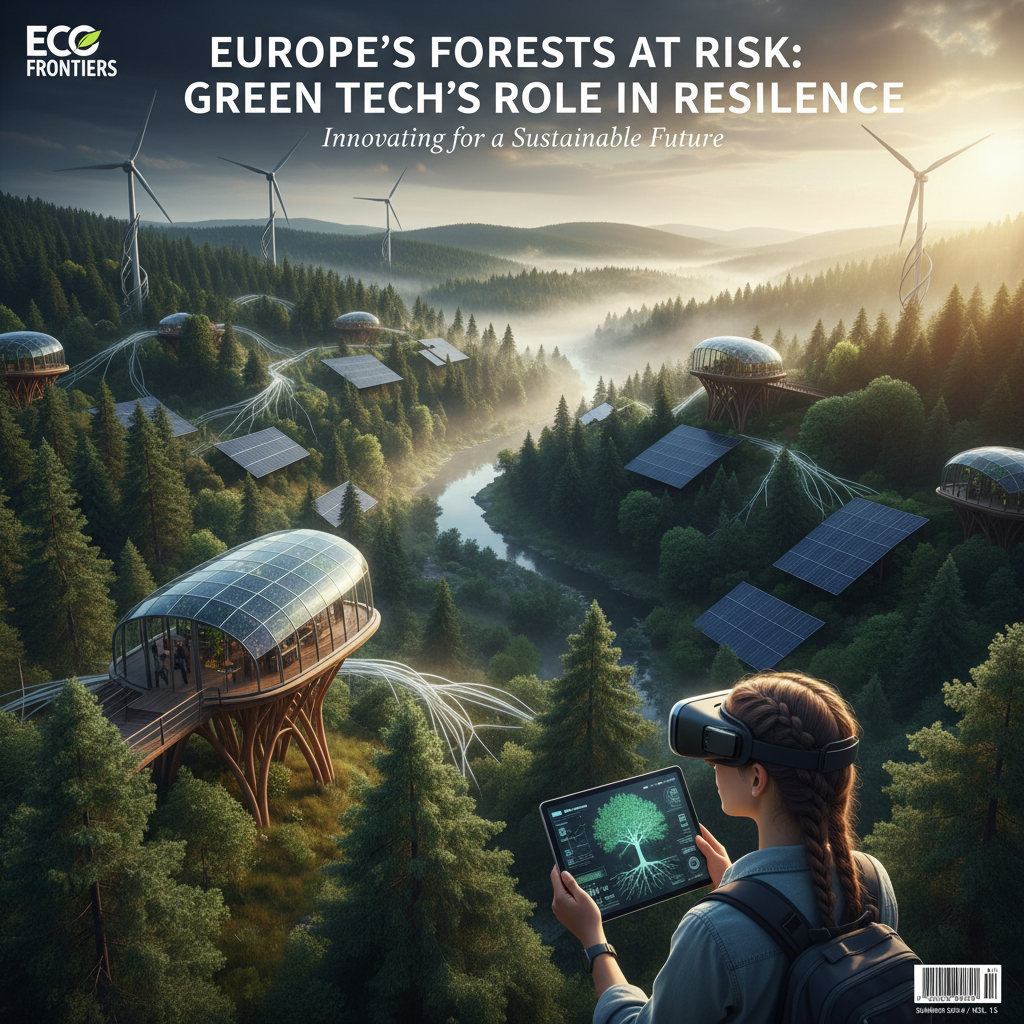
This is where the intersection with 'Green Tech' becomes profoundly important. The long-term, committed nature of this threat means we cannot simply rely on reducing future emissions; we must actively build resilience and adapt. Green technologies offer powerful tools to achieve this. Advanced environmental monitoring, utilizing satellite imagery, drone technology, and AI-driven data analytics, can provide early warnings of pest outbreaks, disease spread, and drought stress, allowing for targeted and timely interventions. Imagine sensors embedded in forests communicating real-time health data, or AI algorithms predicting future risk zones based on climate models and historical data.
Furthermore, Green Tech extends to biotechnology and sustainable forestry practices. Research into developing more climate-resilient tree species through genetic engineering or selective breeding, combined with precision forestry techniques, can help cultivate forests better equipped to withstand changing conditions. Innovations in water management technology, such as smart irrigation systems for young trees or nature-based solutions for water retention, will be crucial in mitigating drought impacts. Ultimately, this scientific warning isn't just about a problem; it's a clarion call for accelerated innovation and deployment of green technologies to protect our natural heritage and ensure a truly sustainable future.
What You Can Do
As conscious citizens and advocates for sustainable living, your actions can contribute significantly to forest resilience:
- Support Sustainable Forestry: When purchasing wood products or paper, look for certifications like FSC (Forest Stewardship Council) or PEFC (Programme for the Endorsement of Forest Certification) to ensure they come from responsibly managed forests.
- Reduce Your Carbon Footprint: Continue to make choices that lower your personal greenhouse gas emissions – from energy consumption at home to transportation and diet. Every reduction helps mitigate future climate impacts.
- Advocate for Stronger Policies: Contact your local and national representatives to express support for policies that protect forests, invest in ecological restoration, and fund green technology research and implementation.
- Participate in Local Initiatives: Volunteer for local tree-planting efforts, forest clean-ups, or organizations dedicated to conservation and sustainable land management in your area.
- Educate and Share: Inform friends, family, and your community about the long-term challenges facing forests and the importance of supporting green solutions. Knowledge is power.
- Consider Green Investments: Look into ethical investment opportunities that support companies innovating in green technologies for environmental monitoring, sustainable agriculture, and ecological restoration.
FAQs
Q: What does 'disturbed' mean in the context of forest health?
A: Forest disturbance refers to events that cause significant changes to the forest structure or function. This can include outbreaks of pests and diseases, severe droughts, wildfires, or damage from extreme weather events like high winds or ice storms. The study implies an increased frequency and intensity of such events.
Q: Why does the risk persist even if global warming halts?
A: This is due to 'committed warming' and the slow response of ecosystems. The greenhouse gases already in the atmosphere will continue to warm the planet for decades, even if emissions stopped today. Forests, being long-lived systems, respond slowly to these cumulative changes, making them vulnerable to the delayed effects of past climate shifts.
Q: How can Green Tech specifically help European forests adapt to these long-term threats?
A: Green Tech provides crucial tools for adaptation. This includes advanced satellite and drone-based monitoring for early detection of stress, AI-powered predictive models for risk assessment, biotechnology for developing climate-resilient tree species, precision forestry techniques for optimal resource management, and sustainable water technologies to combat drought impacts. These innovations enable proactive management rather than reactive firefighting.
Sources
This article is based on reporting by Euronews Green.
Original source
Euronews Green
Author, Digital Entrepreneur & AI Creator
More from Green Tech
- UK Electric Buses Transform into Grid Powerhouses with V2G — May 13, 2026
- Ocean-Powered AI: Panthalassa's Bold Vision for Sustainable Compute — May 12, 2026
- Winnipeg Powers Up: 250 EV Chargers Accelerate Sustainable Living — May 11, 2026
- Philippines' Wind Power Dream Hinges on Port Infrastructure — May 10, 2026
- Aviation's Carbon Blind Spot: Ryanair's Soaring Emissions Exposed — May 9, 2026