Europe's Fossil Fuel Gamble: Lessons from Asia's Green Leap
Key Takeaways
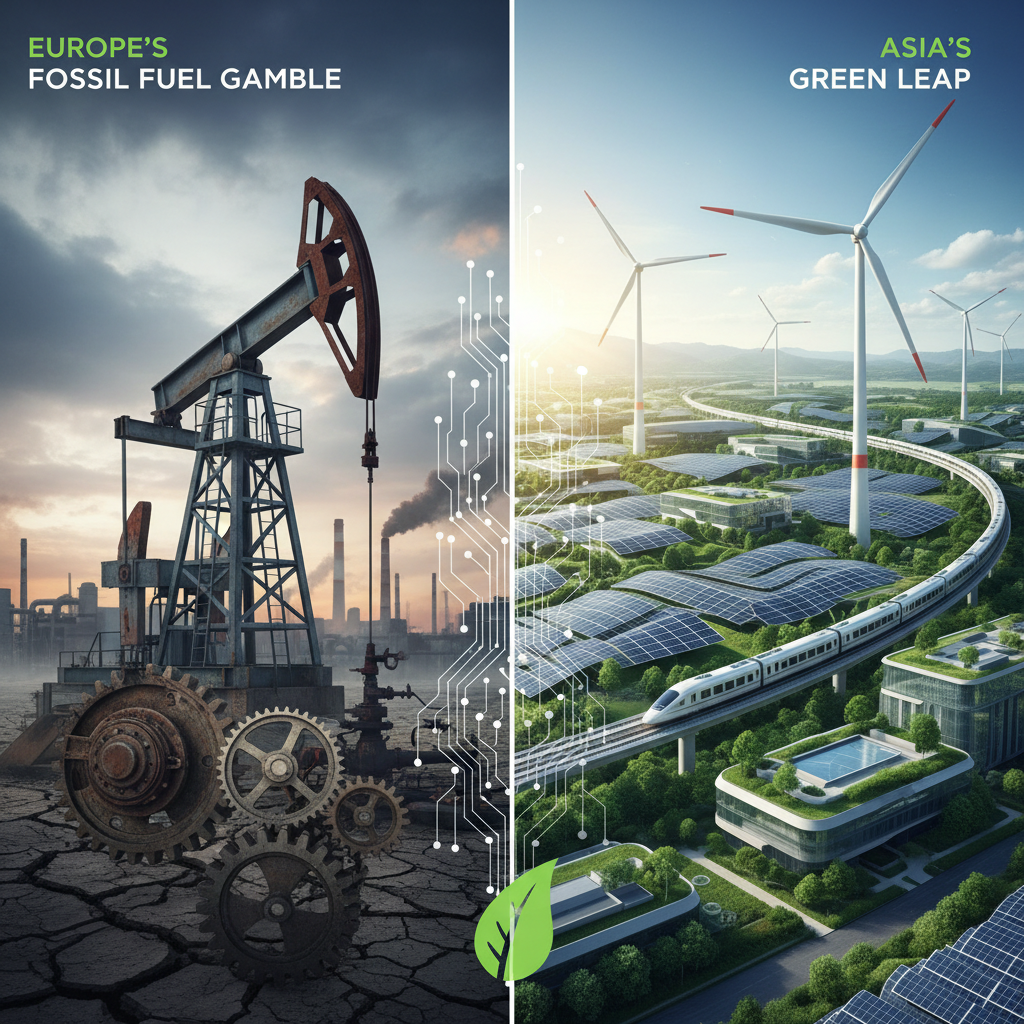
- Europe focused on fossil fuels in 2022, while India and China prioritized renewable energy.
- Countries investing in renewables are proving more resilient to global fuel crises.
- Experts criticize Europe's 'wrong lesson' by doubling down on traditional fuels.
- Green Tech is crucial for national economic security and energy independence.
- Early adoption of renewables offers a competitive advantage in the global green economy.
The global energy landscape is in constant flux, marked by price volatility and supply chain disruptions. In this precarious environment, recent expert analysis sheds crucial light on the divergent energy strategies of global powers. The stark comparison between Europe's recent reliance on fossil fuels and the significant renewable energy investments made by India and China offers a powerful, real-time lesson in economic resilience and strategic foresight.
TL;DR: Key Facts
- In 2022, while some European nations increased their reliance on traditional fossil fuels, India and China significantly ramped up investments in renewable energy.
- Experts contend that Europe 'learned the wrong lesson' from the energy crisis, prioritizing short-term fossil fuel solutions over long-term green alternatives.
- Countries that prioritized renewable energy infrastructure are now demonstrating greater resilience and stability amidst ongoing global fuel crises.
- Strategic investment in green tech is emerging not just as an environmental imperative, but as a critical component of national economic security and energy independence.
What Happened
According to recent reports, a notable divergence in global energy strategy has emerged, particularly in the wake of escalating fuel crises. While several European nations, grappling with immediate energy shortages and price surges, opted to double down on fossil fuel infrastructure and imports in 2022, major Asian economies took a different path. India and China, in contrast, made substantial investments in renewable energy technologies and infrastructure during the same period.
This strategic pivot by India and China was not merely an ideological stance but a pragmatic response aimed at securing future energy supply and mitigating the volatile impacts of the global fossil fuel market. Experts quoted in the report suggest that Europe's decisions reflected a 'wrong lesson' learned, focusing on reactive measures rather than accelerating the transition to sustainable energy sources that offer long-term stability and environmental benefits.
Why It Matters
This news is a pivotal moment for Green Tech, illustrating in no uncertain terms that investment in sustainable energy is not just an environmental ideal, but a pragmatic, economically astute strategy for national resilience and security. For GreenNest Living readers, this isn't just about polar bears or carbon emissions; it's about reliable energy bills, national stability, and the cutting edge of industrial innovation. When countries like India and China, with their massive energy demands, commit heavily to renewables like solar, wind, and storage solutions, it signals a global shift that transcends ideological lines.
The core message here is that Green Tech provides a shield against the unpredictable nature of geopolitics and global commodity markets. By generating energy domestically from inexhaustible sources, nations reduce their exposure to volatile international fossil fuel prices, supply chain disruptions, and the political leverage wielded by traditional energy producers. This move towards energy independence, powered by technologies like advanced solar panels, efficient wind turbines, smart grids, and battery storage, strengthens economies, creates new green jobs, and fosters innovation that can be exported globally. It's a testament to the fact that green investment today pays dividends in stability and prosperity tomorrow, proving that ecological responsibility and economic pragmatism are two sides of the same coin.
Furthermore, this narrative underscores the competitive advantage that early and sustained investment in Green Tech offers. Countries that build robust renewable energy sectors not only secure their own energy futures but also position themselves as leaders in the burgeoning global green economy. This includes manufacturing capabilities for renewable components, expertise in grid integration, and pioneering new energy solutions. For our readers, this is a call to recognize Green Tech not just as a solution to climate change, but as a fundamental pillar of modern national and household security.
What You Can Do
- Advocate for Policy Change: Contact your local and national representatives to express support for policies that incentivize renewable energy investment and infrastructure development.
- Support Green Energy Providers: Where available, switch to utility providers that offer 100% renewable energy options for your home or business.
- Invest in Home Efficiency & Renewables: Explore options for rooftop solar panels, improve home insulation, and upgrade to energy-efficient appliances to reduce your reliance on conventional grids.
- Educate and Share: Inform friends, family, and community members about the economic and stability benefits of renewable energy, helping to shift public perception.
- Demand Corporate Responsibility: Support businesses that prioritize sustainable practices, invest in green technologies, and commit to reducing their carbon footprint across their operations.
- Reduce Personal Consumption: Beyond switching sources, actively work to reduce your overall energy consumption by adopting mindful habits and optimizing energy use at home and work.
FAQs
Q: What specific types of renewable energy are India and China investing in?
A: Both nations are making significant strides in solar power, particularly utility-scale solar farms, and wind energy. China is also a major player in hydropower and has invested heavily in battery storage technology and electric vehicle infrastructure.
Q: How does renewable energy make a country more 'resilient'?
A: Resilience comes from several factors: reduced dependence on volatile international fossil fuel markets, stable domestic energy generation with predictable operating costs, and the creation of local green jobs and industries that strengthen the national economy against external shocks.
Q: Does this mean Europe is completely behind in renewable energy?
A: Not entirely. Many European nations have historically been leaders in renewable integration. However, the expert critique suggests that recent short-term responses to the energy crisis saw a temporary re-emphasis on fossil fuels, potentially slowing the pace of transition compared to the accelerated efforts in some Asian economies.
Sources
This article is based on reporting by Euronews Green.
Original source
Euronews Green
Author, Digital Entrepreneur & AI Creator
More from Green Tech
- UK Electric Buses Transform into Grid Powerhouses with V2G — May 13, 2026
- Ocean-Powered AI: Panthalassa's Bold Vision for Sustainable Compute — May 12, 2026
- Winnipeg Powers Up: 250 EV Chargers Accelerate Sustainable Living — May 11, 2026
- Philippines' Wind Power Dream Hinges on Port Infrastructure — May 10, 2026
- Aviation's Carbon Blind Spot: Ryanair's Soaring Emissions Exposed — May 9, 2026