France's Rail Revival: Vans on Tracks Offer Sustainable Transport Future
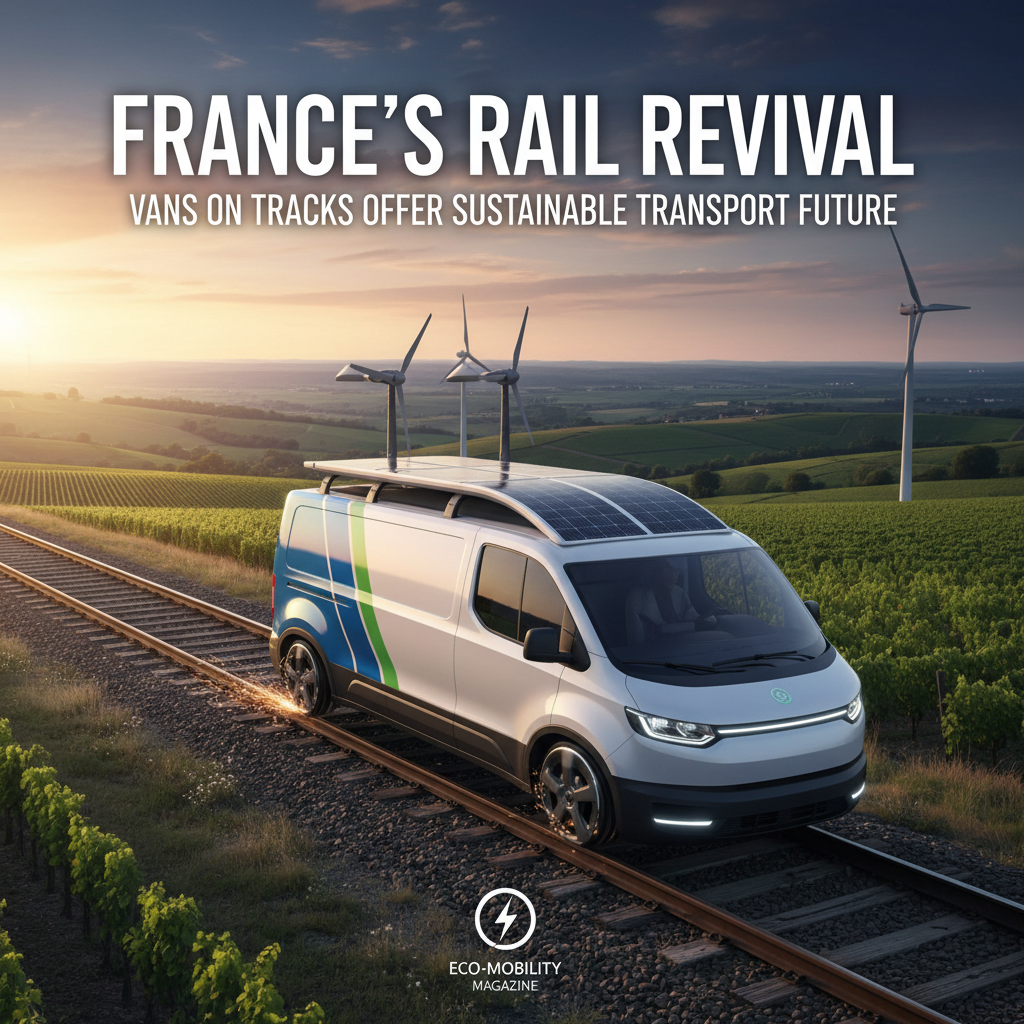
Key Takeaways
- A French company is converting vans to run on railway tracks, creating an 'Uber on rails' system.
- The initiative aims to revive 5,700 kilometres of disused small railway lines across France.
- This 'Green Tech' solution promotes sustainable, on-demand transport by repurposing existing infrastructure.
- It offers a cost-effective and environmentally friendly alternative to traditional public transport and new construction.
- The project has the potential to boost local economies, tourism, and connectivity in underserved rural areas.
Imagine a future where forgotten railway lines hum with activity, not with heavy locomotives, but with nimble, on-demand vehicles providing sustainable transport. This vision is rapidly becoming a reality in France, where an innovative company is transforming ordinary vans into ‘Ubers on rails’ to breathe new life into thousands of kilometres of disused tracks. This pioneering initiative offers a groundbreaking blueprint for sustainable mobility and resource repurposing that could redefine how we view local travel.
TL;DR: Key Facts
- A French company is pioneering a Green Tech solution by adapting vans to run on railway tracks.
- The goal is to revive approximately 5,700 kilometres of currently unused small railway lines across France.
- This 'Uber on rails' concept offers a flexible, on-demand, and sustainable public transport alternative.
- It repurposes existing infrastructure, reducing the need for new construction and its associated environmental impact.
- The initiative holds significant potential for boosting local economies, tourism, and connectivity in rural areas.
What Happened
France boasts an extensive network of railway lines, but a significant portion—around 5,700 kilometres of smaller, often rural, tracks—has fallen into disuse. These abandoned networks represent a forgotten asset, disconnected from modern transport needs and often left to decay. However, a forward-thinking French company is now challenging this paradigm, not by building new infrastructure, but by ingeniously repurposing what already exists.
The company's solution involves adapting standard vans, enabling them to operate safely and efficiently on these disused railway lines. This innovation effectively creates an 'Uber on rails' system, offering flexible, on-demand transport services where traditional heavy rail might be uneconomical or impractical. The concept moves away from fixed schedules and large, energy-intensive trains, opting instead for smaller, more agile vehicles that can cater to specific local demand.
This adaptation isn't just about moving people; it's about reimagining rural connectivity and sustainable logistics. By bringing these 'dead' lines back to life, the initiative aims to provide essential transport links to communities, facilitate eco-tourism, and potentially even offer new avenues for freight, all while leveraging a low-carbon mode of transport that reduces road congestion and emissions.
Why It Matters
This French 'Uber on rails' project is more than just a clever engineering feat; it's a powerful statement in the realm of Green Tech and sustainable living. In an era where new infrastructure projects often face scrutiny for their environmental footprint and cost, this initiative brilliantly exemplifies the principles of the circular economy. By repurposing 5,700 kilometres of existing railway lines, it avoids the vast environmental impact associated with new construction—think land use, material extraction, and construction emissions. This low-impact approach is a model for how we can achieve progress without starting from scratch, making it incredibly relevant for our GreenNest Living readers who value resourcefulness and sustainability.
Furthermore, this solution directly addresses several critical challenges facing modern society: sustainable mobility, rural revitalization, and carbon reduction. By offering an alternative to car-centric transport in areas often underserved by traditional public transit, it has the potential to significantly reduce individual carbon footprints. For GreenNest Living readers seeking to lessen their environmental impact, this system provides a glimpse into a future where essential travel is both convenient and eco-conscious. It fosters community connectivity, supports local economies through tourism and accessibility, and demonstrates how innovative thinking can turn perceived liabilities (abandoned lines) into valuable green assets. This isn't just about moving people; it's about moving towards a more resilient, connected, and sustainable way of life.
The 'Uber on rails' concept also aligns perfectly with the evolving demands of modern life – on-demand services, efficiency, and adaptability. Unlike fixed-route, fixed-schedule public transport that struggles in low-density areas, this flexible system can adjust to real-time needs, making sustainable transport viable even in remote regions. It represents a paradigm shift in how we approach transport solutions, favoring agility and environmental stewardship over brute force infrastructure development. It’s a compelling example of Green Tech enabling a more sustainable and equitable future.
What You Can Do
- Advocate for Infrastructure Reuse: Research abandoned rail lines or underutilized infrastructure in your own region and consider advocating for their repurposing for sustainable transport, cycling paths, or green corridors.
- Support Innovative Green Transport: Seek out and support companies or initiatives that are developing and implementing creative, low-impact transport solutions in your community or nationally.
- Explore Sustainable Travel Options: When planning trips, prioritize public transport, cycling, walking, or shared mobility services over private car use, especially for shorter distances.
- Engage Local Policy Makers: Contact your local representatives to express your interest in sustainable transport infrastructure and smart urban/rural planning that prioritizes repurposing and green technologies.
- Reduce Reliance on Personal Vehicles: Evaluate your daily commutes and consider how you might reduce your personal car usage through carpooling, electric bikes, or public transit where available.
- Educate and Share: Learn more about green transportation innovations and share these insights with friends, family, and community members to foster broader awareness and support.
FAQs
Q: What does "abandoned railway networks" mean in this context?
A: These refer to small, regional railway lines that are no longer actively used by traditional train services, often due to declining passenger numbers or changes in freight logistics, leaving them disused but potentially intact.
Q: How is this "Uber on rails" concept environmentally friendly?
A: It's eco-friendly primarily because it repurposes existing infrastructure, avoiding the carbon emissions and resource depletion associated with new construction. Additionally, smaller, lighter vans operating on rails can be more energy-efficient than large trains or a multitude of individual cars, reducing overall carbon footprint.
Q: Could this idea be applied in other countries beyond France?
A: Absolutely. Many countries have similar networks of disused or underutilized railway lines. The innovative approach of adapting vehicles to existing tracks offers a scalable and cost-effective model for sustainable transport revival that could be adopted globally.
Sources
This article is based on reporting by Euronews Green.
Original source
Euronews Green
Author, Digital Entrepreneur & AI Creator
More from Green Tech
- UK Electric Buses Transform into Grid Powerhouses with V2G — May 13, 2026
- Ocean-Powered AI: Panthalassa's Bold Vision for Sustainable Compute — May 12, 2026
- Winnipeg Powers Up: 250 EV Chargers Accelerate Sustainable Living — May 11, 2026
- Philippines' Wind Power Dream Hinges on Port Infrastructure — May 10, 2026
- Aviation's Carbon Blind Spot: Ryanair's Soaring Emissions Exposed — May 9, 2026