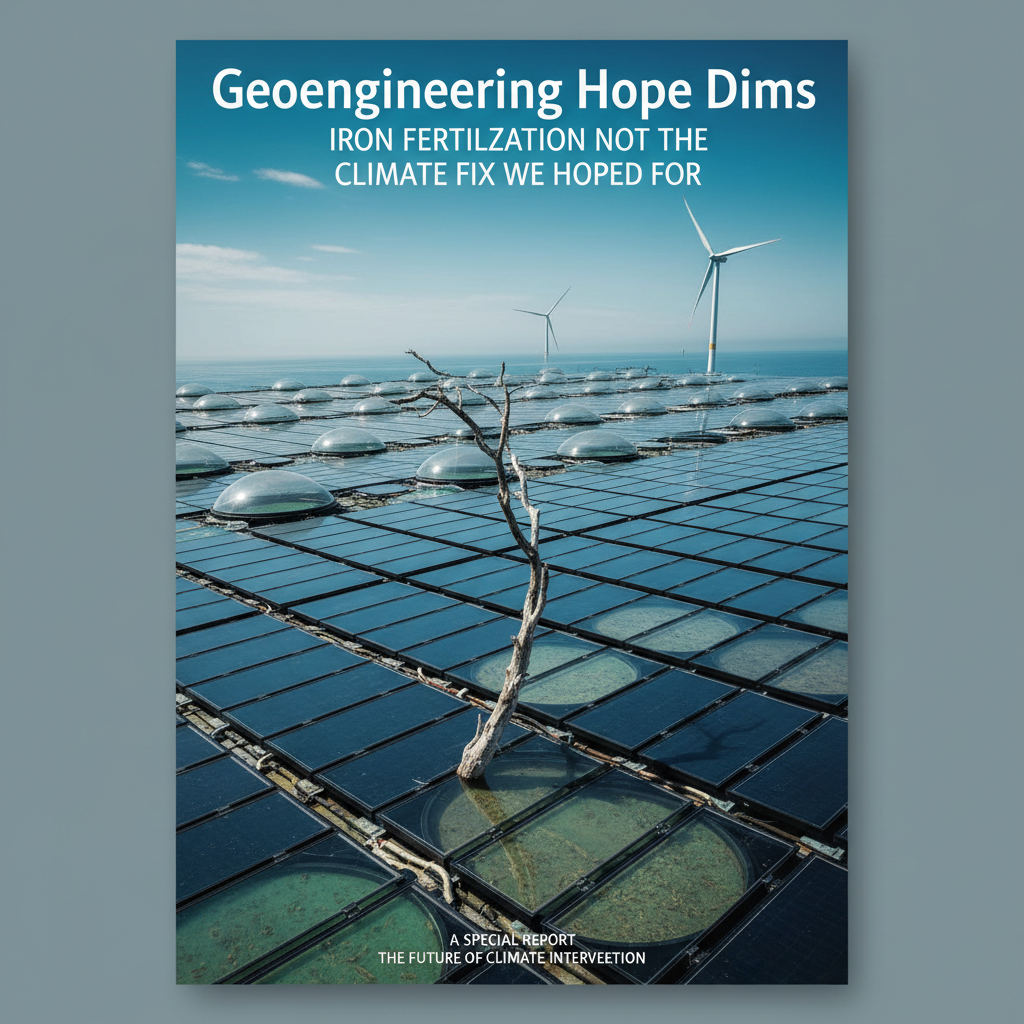
Geoengineering Hope Dims: Iron Fertilization Not the Climate Fix We Hoped For
Key Takeaways
- A long-held theory about glacier melt and ocean iron fertilization's role in slowing climate change has been debunked by new research.
- Iron fertilization, once seen as a hopeful geoengineering solution, is now shown to have negligible long-term impact on carbon sequestration.
- The findings emphasize the complex nature of Earth's climate systems and the unpredictability of large-scale interventions.
- This news reinforces the critical need to prioritize direct emissions reductions and invest in proven, sustainable green technologies.
- It encourages a critical view of 'quick fix' climate solutions and a focus on rigorous scientific validation for all proposed interventions.
In the urgent race against climate change, the promise of a technological silver bullet has often offered a glimmer of hope. However, a recent scientific revelation is forcing us to re-evaluate one such highly touted geoengineering solution. This news matters right now because it underscores the critical reality that there are no easy fixes for our planet's biggest challenge, pushing the onus back onto immediate, tangible actions.
TL;DR: Key Facts
- For years, a theory suggested that iron released from melting glaciers could fertilize oceans, boosting phytoplankton that absorb CO2.
- This "iron fertilization" was seen as a potential geoengineering method to naturally slow climate change.
- A new study has effectively debunked this theory, finding negligible long-term climate benefits.
- The research indicates that the introduced iron doesn't lead to significant, sustained carbon sequestration.
- This finding reinforces the urgent need to focus on direct emissions reduction rather than relying on unproven geoengineering solutions.
What Happened
For some time, a fascinating hypothesis had captured the attention of climate scientists and environmental enthusiasts alike: could the melting glaciers, a stark symbol of climate change, paradoxically offer a natural pathway to mitigate it? The theory posited that as glaciers receded, they would release iron-rich sediment into the oceans. This iron, a vital micronutrient, was expected to act as a powerful fertilizer for phytoplankton – microscopic marine plants that form the base of the ocean food web.
The allure of this idea lay in the phytoplankton's ability to absorb vast quantities of carbon dioxide from the atmosphere during photosynthesis. The hope was that by naturally stimulating these carbon-hungry organisms, glacier melt could initiate a powerful, self-sustaining process of carbon sequestration, effectively drawing down atmospheric CO2 and slowing global warming. This concept was considered a "glimmer of hope" amid rising emissions, suggesting a natural geoengineering mechanism.
However, this hopeful scenario has now been significantly challenged. A new study has seemingly debunked the theory, presenting compelling evidence that the impact of glacier-derived iron on ocean carbon capture is far less significant than previously assumed. The research suggests that while iron might indeed stimulate initial phytoplankton growth, this doesn't translate into a substantial or long-lasting removal of carbon from the atmosphere. Factors like the rapid sinking of iron particles before they can be fully utilized, or consumption by other organisms, may limit its effectiveness in long-term carbon sequestration. This scientific reassessment forces a critical re-evaluation of ocean fertilization as a viable climate solution.
Why It Matters
This scientific debunking is profoundly important for "Green Tech" and sustainable living for several key reasons. Firstly, it highlights the inherent complexities and often unpredictable outcomes of large-scale geoengineering proposals. While the human ingenuity behind such ideas is admirable, this study serves as a crucial reminder that the Earth's intricate systems don't always respond predictably to our interventions. It urges caution against over-reliance on hypothetical technological "fixes" that might offer an easy way out, potentially diverting resources and attention from more fundamental, proven solutions.
Secondly, this news redirects the narrative firmly back to the essential, yet challenging, path of direct emissions reduction. For years, the hope of geoengineering, including concepts like iron fertilization, offered a convenient way to imagine a future where we wouldn't have to drastically alter our energy consumption or industrial practices. With this hope diminished, the urgency to transition away from fossil fuels, embrace renewable energy, and improve energy efficiency becomes even more undeniable. It reinforces that genuine Green Tech innovation must focus on sustainable production, consumption, and carbon removal technologies that have undergone rigorous scientific scrutiny and proven efficacy, rather than speculative interventions.
Finally, for our readers at GreenNest Living, this means a renewed focus on practical, everyday actions and supporting policies that champion verified green technologies. It underscores that while technological advancements are crucial, they must be grounded in robust science and integrated into a broader strategy of systemic change. This isn't a setback for Green Tech as a whole, but rather a clarification of where our energies and investments truly need to be focused: on developing and deploying solutions that address the root causes of climate change, rather than searching for a magical antidote.
What You Can Do
- Advocate for Proven Solutions: Support policies and leaders who prioritize investment in established renewable energy sources (solar, wind), energy storage, and sustainable infrastructure, rather than unproven geoengineering schemes.
- Reduce Your Carbon Footprint: Implement personal changes in your daily life, such as improving home energy efficiency, choosing public transport or active travel, reducing meat consumption, and opting for products with lower embedded carbon.
- Support Rigorous Climate Research: Encourage funding for independent scientific research that thoroughly evaluates all proposed climate solutions, ensuring they are effective, safe, and free from unintended consequences.
- Question "Quick Fix" Narratives: Be critical of solutions that sound too good to be true. Understand that complex environmental problems require comprehensive and sustained efforts, not simple technological bandaids.
- Educate and Engage: Share accurate information about climate challenges and viable solutions with your community, friends, and family. Encourage informed discussion and action.
- Invest Sustainably: If you invest, consider ethical funds that support companies driving genuine environmental innovation and sustainable practices, avoiding those that perpetuate fossil fuel reliance.
FAQs
Q: What is ocean iron fertilization?
A: Ocean iron fertilization is a geoengineering concept that involves adding iron to the ocean's surface to stimulate the growth of phytoplankton. These microscopic marine plants absorb carbon dioxide from the atmosphere during photosynthesis, with the goal of sequestering carbon.
Q: Why was this theory considered a "glimmer of hope"?
A: It was hoped that by enhancing a natural process (phytoplankton carbon uptake), a relatively simple intervention could significantly reduce atmospheric CO2, potentially buying time or even reversing some effects of climate change without drastic societal changes.
Q: Does this study mean all geoengineering efforts are pointless?
A: Not necessarily. This study specifically debunks the effectiveness of iron fertilization as a significant climate solution. Other geoengineering approaches are being researched, but this finding highlights the critical need for robust, independent scientific validation and a thorough understanding of potential side effects for any such proposal.
Sources
This article is based on reporting by Euronews Green.
Original source
Euronews Green
Author, Digital Entrepreneur & AI Creator
More from Green Tech
- UK Electric Buses Transform into Grid Powerhouses with V2G — May 13, 2026
- Ocean-Powered AI: Panthalassa's Bold Vision for Sustainable Compute — May 12, 2026
- Winnipeg Powers Up: 250 EV Chargers Accelerate Sustainable Living — May 11, 2026
- Philippines' Wind Power Dream Hinges on Port Infrastructure — May 10, 2026
- Aviation's Carbon Blind Spot: Ryanair's Soaring Emissions Exposed — May 9, 2026