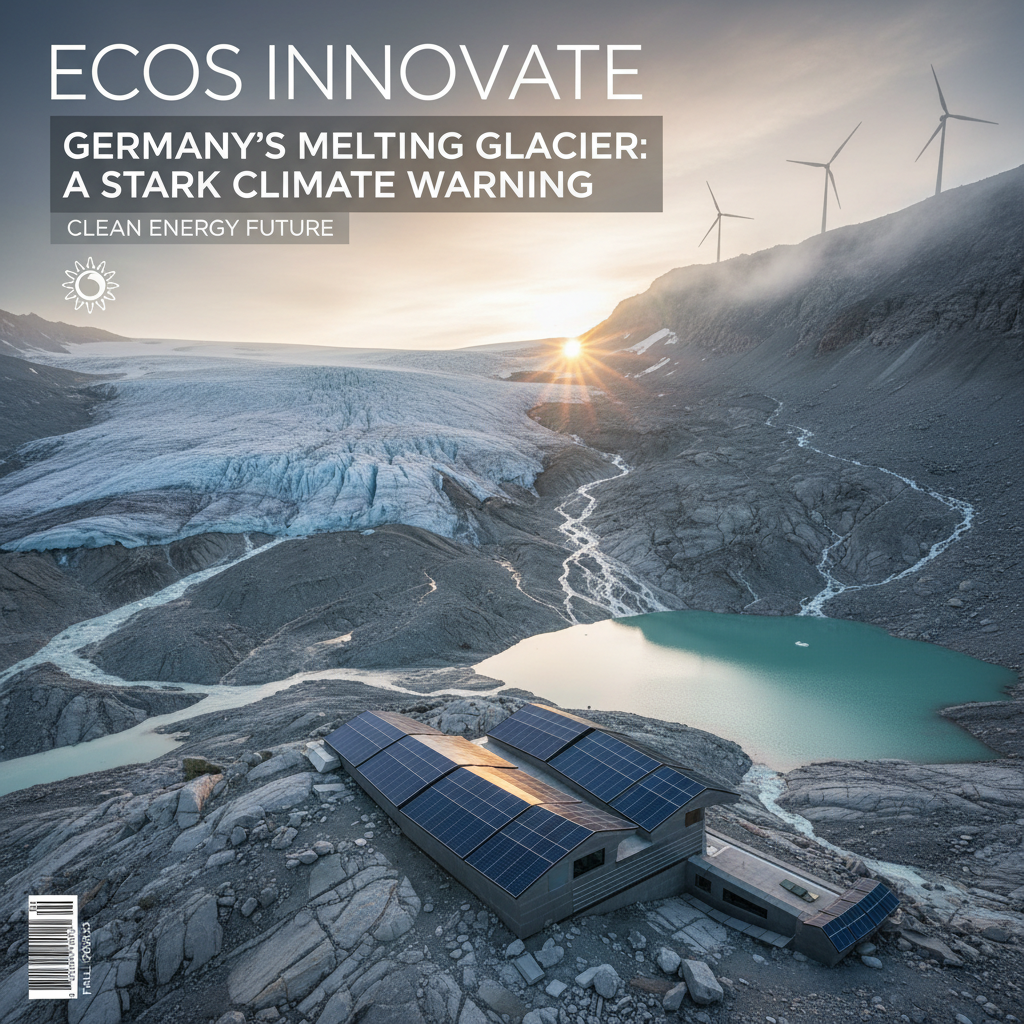
Germany's Melting Glacier: A Stark Climate Warning
Key Takeaways
- Germany's Zugspitze glacier is rapidly disappearing.
- A 50-year-old ski lift was removed due to glacier melt.
- Experts warn Bavaria's remaining glaciers could vanish within years.
- The event underscores the tangible effects of climate change in the Alps.
- It emphasizes the critical role of Green Tech in monitoring, mitigation, and adaptation.
The effects of climate change are no longer distant predictions; they are unfolding before our eyes, altering landscapes and forcing difficult decisions. The recent removal of a decades-old ski lift from Germany's highest mountain, the Zugspitze, serves as a poignant reminder of this reality, signaling an urgent call to action for sustainable living and innovative green technologies.
This incident isn't just about a disappearing tourist attraction; it's a critical environmental bellwether, underscoring the rapid decline of vital natural resources and the pressing need for human ingenuity to adapt, mitigate, and reverse these alarming trends.
TL;DR: Key Facts
- Germany's Zugspitze glacier, the highest in the country, is melting at an accelerated rate.
- A 50-year-old ski lift, once a symbol of alpine tourism, has been dismantled due to the glacier's rapid disappearance.
- Experts warn that Bavaria’s remaining glaciers could vanish completely within a few short years.
- This event is a tangible and undeniable consequence of global climate change in the European Alps.
What Happened
High in the Bavarian Alps, on Germany’s majestic Zugspitze, a significant piece of its modern history has literally melted away. For half a century, a ski lift proudly served enthusiasts and tourists, connecting them to the winter wonderland atop Germany’s highest peak. Now, however, that lift is gone, a victim of the accelerating climate crisis.
The Zugspitze glacier, a crucial part of the region's identity and ecosystem, is receding so rapidly that its former icy terrain can no longer support the infrastructure it once held. The decision to remove the 50-year-old ski lift was not made lightly, but became a necessary response to the dramatic environmental shifts occurring at the mountain's summit. This move highlights the precarious state of alpine environments across Europe.
Environmental experts and glaciologists have been vocal in their warnings, stating that the situation on the Zugspitze is not an isolated incident. Bavaria's other remaining glaciers are also under severe threat, with projections indicating they could disappear entirely within the next few years. This alarming forecast underscores the relentless pace of global warming and its profound, irreversible impacts on our planet's most iconic natural features.
Why It Matters
This stark development on the Zugspitze is far more than just a local inconvenience for skiers; it’s a powerful, tangible indicator of the global climate crisis, directly impacting the very definition of “Green Tech.” This isn't merely about losing a natural wonder; it speaks to the failure of past technologies and practices to prevent environmental degradation and highlights the urgent imperative for innovative solutions.
From a Green Tech perspective, the melting glacier symbolizes a critical feedback loop: less ice means less reflection of solar radiation, leading to warmer temperatures and even faster melting. This calls for advanced monitoring technologies – think satellite imaging, drone-based sensors, and AI-driven climate modeling – to provide granular data on melt rates and predict future impacts. Such data is vital for informing adaptation strategies and developing resilient infrastructure that can withstand or even mitigate environmental shifts.
Furthermore, the economic ripple effects on alpine communities, once reliant on snow and ice, necessitate a transition to green economies. This means investing in sustainable tourism models, developing renewable energy sources to power new, climate-friendly infrastructure, and even exploring novel approaches to water management as glacial meltwater diminishes. The Zugspitze's plight should galvanize investment in mitigation technologies like carbon capture, advanced renewable energy systems, and sustainable agricultural practices that collectively aim to reduce the greenhouse gas emissions driving this warming trend. It's a reminder that Green Tech isn't just about creating new gadgets; it's about fundamentally rethinking our relationship with the planet and deploying solutions at scale to secure a livable future.
What You Can Do
- Advocate for Green Policies: Support local and national policies that promote renewable energy, carbon reduction targets, and investment in climate-resilient infrastructure.
- Reduce Your Carbon Footprint: Make conscious choices to lower your personal energy consumption, opt for sustainable transportation, and reduce waste. Every small action adds up.
- Invest Sustainably: Consider ethical investments in companies pioneering green technologies and sustainable business practices. Your financial decisions can drive change.
- Support Climate Research & Conservation: Donate to organizations working on glacier research, alpine ecosystem preservation, and climate change mitigation.
- Educate Yourself and Others: Stay informed about climate science and share accurate information with your friends, family, and community to foster collective action.
- Embrace Eco-Tourism: Choose travel options and destinations that prioritize sustainability and have a minimal environmental impact, supporting local economies committed to green initiatives.
FAQs
Q: What are the broader consequences of glacier melt?
A: Beyond ski resorts, glacier melt impacts global sea levels, reduces freshwater supplies for agriculture and drinking, and alters ecosystems, affecting biodiversity and local climates.
Q: How quickly are glaciers melting in the Alps compared to other regions?
A: Alpine glaciers are among the most vulnerable globally, melting at an accelerated rate due to rising temperatures, making them a key indicator of climate change's intensity in Europe.
Q: Can Green Tech prevent further glacier melt?
A: While existing melt is difficult to reverse, green technologies focused on reducing greenhouse gas emissions (mitigation) and adapting to climate impacts can slow down future melting and help manage its consequences, but cannot fully restore lost ice.
Sources
This article is based on reporting by Euronews Green.
Original source
Euronews Green
Author, Digital Entrepreneur & AI Creator
More from Green Tech
- UK Electric Buses Transform into Grid Powerhouses with V2G — May 13, 2026
- Ocean-Powered AI: Panthalassa's Bold Vision for Sustainable Compute — May 12, 2026
- Winnipeg Powers Up: 250 EV Chargers Accelerate Sustainable Living — May 11, 2026
- Philippines' Wind Power Dream Hinges on Port Infrastructure — May 10, 2026
- Aviation's Carbon Blind Spot: Ryanair's Soaring Emissions Exposed — May 9, 2026