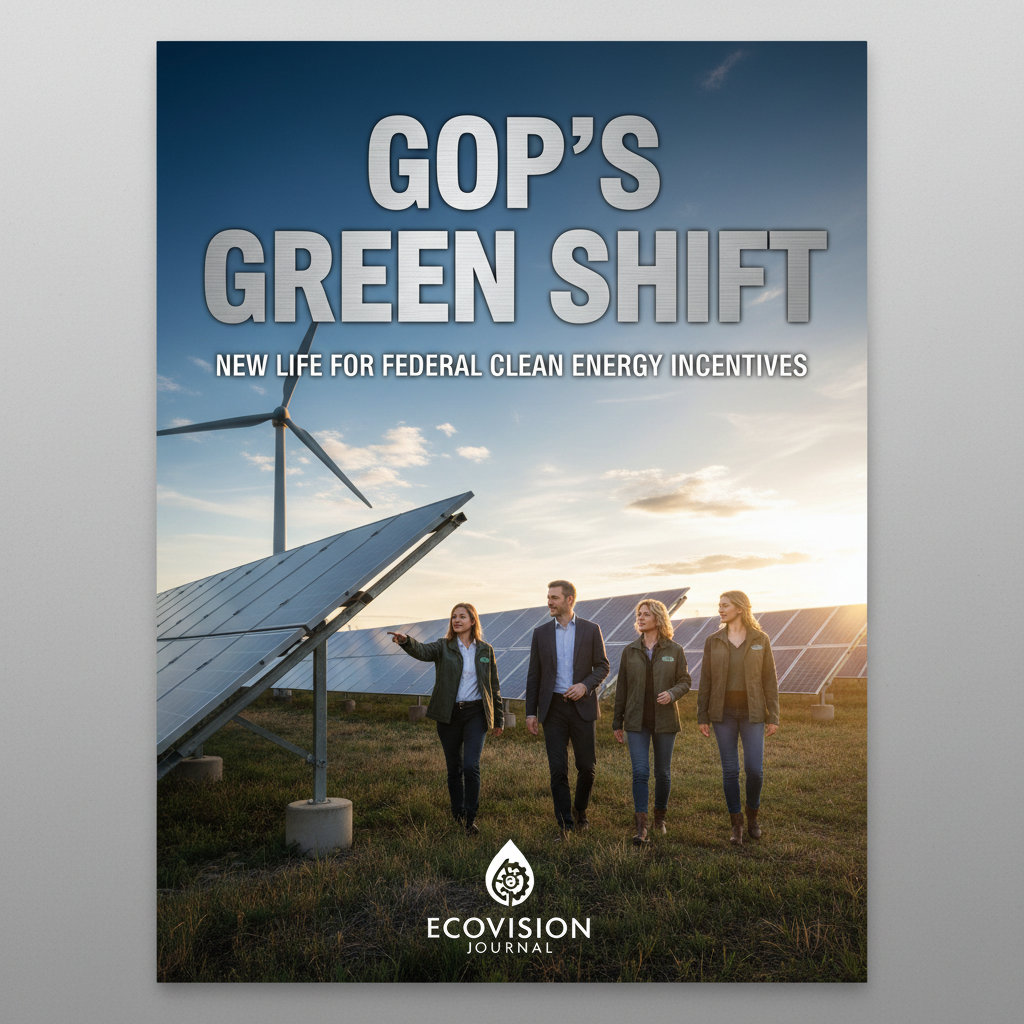
GOP's Green Shift: New Life for Federal Clean Energy Incentives
Key Takeaways
- Four Republican House members propose extending clean energy tax incentives.
- This move acknowledges prior policy failures in fostering green tech.
- Potential bipartisan support indicates a pragmatic shift in energy policy.
- Stable incentives are crucial for reducing costs and accelerating green tech adoption.
- This could unlock greater investment and make sustainable living more accessible.
A critical shift is underway in Washington that could profoundly impact how we power our homes and move through the world. For years, federal support for clean energy has been a political battleground, but a recent development suggests a potential path forward, offering new hope for widespread green technology adoption and sustainable living.
This evolving political landscape directly influences the affordability and accessibility of technologies from rooftop solar to electric vehicles, making this news incredibly timely for anyone invested in a more sustainable future.
TL;DR: Key Facts
- Four Republican members of the US House of Representatives are proposing to preserve and extend federal tax incentives for energy efficiency and clean energy.
- This move acknowledges the perceived failure of prior legislation, referred to as "One Big Beautiful Bill Act," to adequately support these initiatives.
- The proposal signifies a potential bipartisan consensus or at least a significant pragmatic shift within the Republican party regarding clean energy.
- These incentives are crucial for accelerating the adoption of green technologies and reducing household energy costs.
What Happened
In a notable turn of events, four Republican members of the U.S. House of Representatives have put forward a proposal aimed at extending and preserving key federal tax incentives designed to support energy efficiency and clean energy. This development comes as an open admission, as reported, that previous legislative efforts, specifically referred to as "Trump's beloved 'One Big Beautiful Bill Act'," have not achieved their intended goals in fostering the clean energy transition.
The original legislation, while aiming for broad economic reform, evidently fell short in providing the consistent, long-term support necessary for robust growth in the green technology sector. This new proposal from within the Republican caucus indicates a recognition that robust federal incentives are indeed critical for stimulating investment, encouraging consumer adoption, and driving innovation in sustainable energy solutions, moving past ideological barriers towards practical economic and environmental benefits.
Why It Matters
For the Green Tech sector and anyone dedicated to sustainable living, this political "do-over" is immensely significant. Federal tax incentives serve as powerful catalysts, directly influencing the economic viability and widespread adoption of green technologies. When incentives are stable and predictable, they de-risk investments for businesses, encourage manufacturers to innovate, and, most importantly, make sustainable choices more affordable for everyday consumers.
A bipartisan push, even from a segment of one party, signals a maturation in the conversation around clean energy. It suggests a growing recognition that green technologies are not just environmental solutions but also economic drivers, creating jobs, reducing energy costs, and enhancing national energy security. For GreenNest Living readers, this means a potentially more favorable landscape for installing solar panels, upgrading to energy-efficient appliances, purchasing electric vehicles, and investing in other sustainable home improvements. These incentives can transform aspirational goals into achievable realities, lowering upfront costs and accelerating the return on investment for eco-friendly choices.
Furthermore, this shift can provide the long-term policy certainty that the clean energy industry desperately needs to plan for expansion, research, and development. Without consistent support, businesses are hesitant to commit capital, and innovation can stagnate. This renewed interest from a broader political spectrum could unlock significant private sector investment, propelling green tech from niche markets into mainstream acceptance and making sustainable living not just a choice, but an increasingly smart and accessible default.
What You Can Do
As this policy discussion unfolds, here are actionable steps you can take to engage and prepare:
- Research Existing Incentives: Even as new proposals emerge, familiarize yourself with current federal, state, and local tax credits or rebates for energy-efficient home improvements, solar installations, and electric vehicles. Many are still available.
- Contact Your Representatives: Reach out to your local U.S. House Representative and Senators. Express your support for maintaining and expanding federal tax incentives for clean energy and energy efficiency. Your voice matters in shaping policy.
- Plan for Energy Audits: Consider investing in a professional home energy audit. This will identify areas where your home is losing energy and pinpoint the most impactful upgrades you could make, many of which may qualify for future incentives.
- Explore Financing Options: Look into green loan programs or PACE (Property Assessed Clean Energy) financing options that can help fund energy-efficient upgrades, potentially leveraging future tax credits to reduce your net cost.
- Stay Informed and Engage: Follow reputable news sources like GreenNest Living for updates on energy policy. Share this information with friends and family to build broader awareness and support for sustainable initiatives.
- Prioritize Efficiency First: Before considering new energy generation, focus on reducing your overall energy consumption. Upgrading insulation, sealing drafts, and replacing old appliances with ENERGY STAR certified models are foundational steps that maximize the impact of any incentive.
FAQs
Q: What specific tax incentives are being discussed for extension?
A: While the source doesn't detail specific programs, it generally refers to "key tax incentives for energy efficiency and clean energy." This typically includes credits for solar installations, EV purchases, energy-efficient windows, insulation, HVAC systems, and other home improvements.
Q: Why are some Republicans now supporting these incentives?
A: The reported motivation is an acknowledgment that previous legislative approaches have failed to adequately foster clean energy growth. This suggests a pragmatic shift, recognizing the economic benefits, job creation, and energy independence aspects of green technology, rather than purely ideological opposition.
Q: How would extended incentives impact the cost of green tech for consumers?
A: Extended and stable incentives typically reduce the upfront cost of green technologies like solar panels, electric vehicles, and efficient appliances, making them more affordable and accessible to a wider range of consumers. This accelerates adoption and can lead to long-term energy savings.
Sources
This article is based on reporting by CleanTechnica.
Original source
CleanTechnica
Author, Digital Entrepreneur & AI Creator
More from Green Tech
- UK Electric Buses Transform into Grid Powerhouses with V2G — May 13, 2026
- Ocean-Powered AI: Panthalassa's Bold Vision for Sustainable Compute — May 12, 2026
- Winnipeg Powers Up: 250 EV Chargers Accelerate Sustainable Living — May 11, 2026
- Philippines' Wind Power Dream Hinges on Port Infrastructure — May 10, 2026
- Aviation's Carbon Blind Spot: Ryanair's Soaring Emissions Exposed — May 9, 2026