Hawaiʻi's Energy Future: From Fuel Shocks to Stability
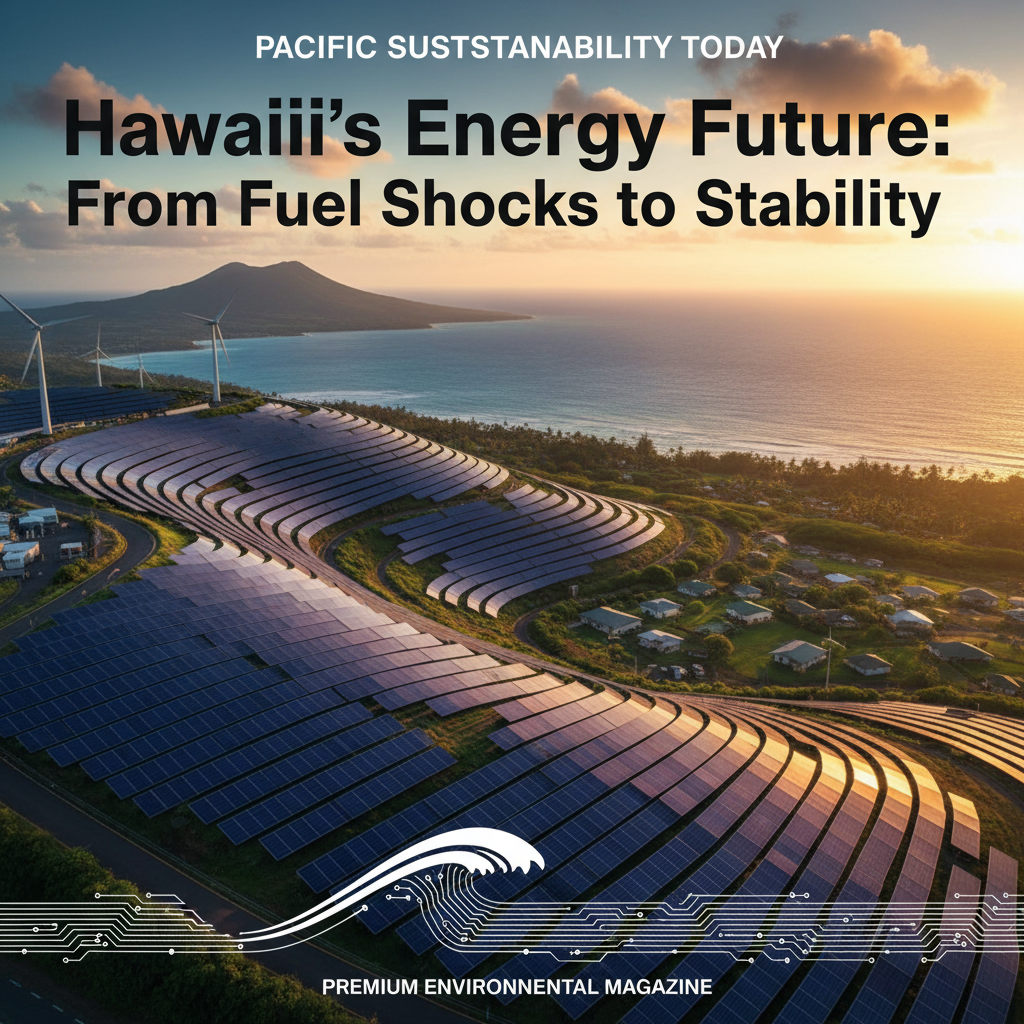
Key Takeaways
- Hawaiʻi is highly dependent on global fossil fuel markets, making it vulnerable to geopolitical events.
- The 2022 energy crisis underscored the financial instability caused by this reliance.
- Global events impacting the Strait of Hormuz directly affect Hawaiʻi's energy costs.
- Achieving energy independence through local, renewable sources is crucial for Hawaiʻi's long-term stability.
- Green tech offers a strategic solution for economic resilience and energy security, setting a precedent for other regions.
In a world increasingly shaped by geopolitical volatility, the distant rumblings from places like Iran or the Strait of Hormuz might seem abstract to many. Yet, for the islands of Hawaiʻi, these events are a direct reminder of their precarious reliance on global fuel markets they simply do not control. This ongoing vulnerability, exacerbated by the 2022 energy crisis, isn't just an environmental concern; it's a fundamental issue of financial stability and security that demands a proactive, green tech solution right now.
As residents of an isolated island state, Hawaiʻi's experience offers a stark lesson for communities everywhere: true resilience in the face of global uncertainty means taking control of your energy destiny through sustainable, local resources. It's a powerful argument for accelerating the transition to clean energy, not just for the planet, but for pocketbooks and peace of mind.
TL;DR: Key Facts
- Hawaiʻi remains highly dependent on global fossil fuel markets, leaving it vulnerable to international geopolitical events.
- Events affecting regions like the Strait of Hormuz directly impact Hawaiʻi's energy costs and stability.
- The International Energy Agency characterized 2022 as the "first truly global energy crisis," hitting fuel-dependent regions hard.
- This reliance on uncontrolled global markets results in significant financial instability for the state and its residents.
- Achieving energy independence through local, renewable sources is Hawaiʻi's strategic path to long-term economic stability and energy security.
What Happened
Hawaiʻi, by virtue of its geographic isolation, has long faced unique challenges in its energy supply. The state currently sources a significant portion of its energy from global fossil fuel markets, making it a direct recipient of price fluctuations and supply disruptions stemming from international events. For instance, tensions or conflicts in regions like the Middle East, particularly those impacting crucial shipping lanes such as the Strait of Hormuz, are not distant headlines but immediate threats to Hawaiʻi's energy security and economic stability.
The severity of this reliance was brought into sharp focus during 2022, a year the International Energy Agency (IEA) explicitly identified as marking the "first truly global energy crisis." This crisis saw energy prices soar worldwide, directly translating into higher costs for Hawaiian businesses and households. Recent reporting on the impact of such "Gulf shocks" further underscores the ongoing vulnerability, highlighting how external forces, entirely beyond the state's control, can dictate its energy landscape and financial well-being.
This situation paints a clear picture: as long as Hawaiʻi procures its energy from volatile global markets, it will remain susceptible to financial instability driven by factors ranging from geopolitical conflicts to supply chain disruptions. The solution, increasingly evident, lies in decoupling from these external forces and cultivating a robust, indigenous energy infrastructure.
Why It Matters
Hawaiʻi's energy predicament is a powerful, real-world case study illustrating why green technology and renewable energy are not merely environmental ideals, but urgent imperatives for economic resilience and national security. For GreenNest Living readers, it highlights the fundamental instability inherent in traditional fossil fuel dependency and champions green tech as the pathway to true energy independence and financial stability.
When a state’s economy is held hostage by global oil prices and geopolitical tensions, the argument for investing in local, clean energy sources becomes undeniable. Green technologies like solar PV, wind power, advanced battery storage, and geothermal systems offer more than just a reduced carbon footprint; they provide energy price stability, predictable operational costs, and freedom from supply chain shocks. This transition means money that once flowed out of the state to purchase foreign oil can instead be reinvested locally, creating green jobs, fostering innovation, and strengthening the local economy.
Furthermore, Hawaiʻi’s journey towards energy independence serves as a crucial blueprint. Many other communities, even those on continents, are similarly reliant on energy imports, making them vulnerable to the same global market volatility. By embracing green tech solutions, Hawaiʻi can demonstrate how a concerted effort to localize energy production not only mitigates climate change but also builds a more secure, prosperous future—one where clean energy becomes the bedrock of financial and societal stability, proving that sustainable living is inextricably linked to economic well-being.
What You Can Do
- Advocate for Renewable Energy Policies: Support local and state policies that promote investments in clean energy infrastructure, such as renewable portfolio standards, incentives for solar and wind, and grid modernization efforts.
- Invest in Home Energy Solutions: Consider installing rooftop solar panels, energy-efficient appliances, or upgrading insulation in your home. These actions reduce your personal energy bill and contribute to reducing overall demand on the grid.
- Support Local Green Businesses: Prioritize businesses that commit to sustainable practices, source their energy cleanly, or actively work to build green infrastructure in your community.
- Reduce Your Energy Consumption: Simple habits like turning off lights, unplugging electronics, and using public transport or carpooling can significantly lower your personal energy footprint and promote broader energy independence.
- Engage with Your Utility Provider: Inquire about their renewable energy options, community solar programs, and demand cleaner, more stable energy sources. Your voice as a consumer holds power.
- Educate and Share: Learn about your local energy mix and the benefits of green tech, then share this knowledge with friends, family, and community members to build collective support for a sustainable energy future.
FAQs
Q: What is the Strait of Hormuz and why is it important for global energy?
A: The Strait of Hormuz is a narrow sea channel between the Persian Gulf and the Gulf of Oman, controlled by Iran and Oman. It's one of the world's most critical chokepoints for oil transport, with a significant portion of the world's seaborne crude oil passing through it daily. Any disruption in this strait, due to political tensions or military actions, can severely impact global oil supplies and drive up prices, affecting energy-dependent regions like Hawaiʻi.
Q: How does Hawaiʻi's energy situation compare to other US states?
A: Hawaiʻi is uniquely disadvantaged due to its extreme isolation and historical reliance on imported fossil fuels, primarily for electricity generation and transportation. This makes it highly vulnerable to global market fluctuations and gives it some of the highest electricity costs in the United States. In contrast, most mainland states have more diversified energy sources, including domestic fossil fuel production and greater interconnections to regional grids, offering more stability and lower costs.
Q: What specific green technologies can help Hawaiʻi achieve energy independence?
A: Hawaiʻi is actively pursuing a diverse portfolio of green technologies. Key solutions include widespread deployment of solar photovoltaic (PV) systems, both rooftop and utility-scale, onshore and offshore wind farms, and geothermal energy. Critical for an island grid are advanced battery energy storage systems, smart grid technologies for efficient distribution, and potentially pumped-hydro storage to manage intermittent renewable supply. Electrification of transportation is also vital to reduce oil dependence.
Sources
This article is based on reporting by CleanTechnica.
Original source
CleanTechnica
Author, Digital Entrepreneur & AI Creator
More from Green Tech
- UK Electric Buses Transform into Grid Powerhouses with V2G — May 13, 2026
- Ocean-Powered AI: Panthalassa's Bold Vision for Sustainable Compute — May 12, 2026
- Winnipeg Powers Up: 250 EV Chargers Accelerate Sustainable Living — May 11, 2026
- Philippines' Wind Power Dream Hinges on Port Infrastructure — May 10, 2026
- Aviation's Carbon Blind Spot: Ryanair's Soaring Emissions Exposed — May 9, 2026