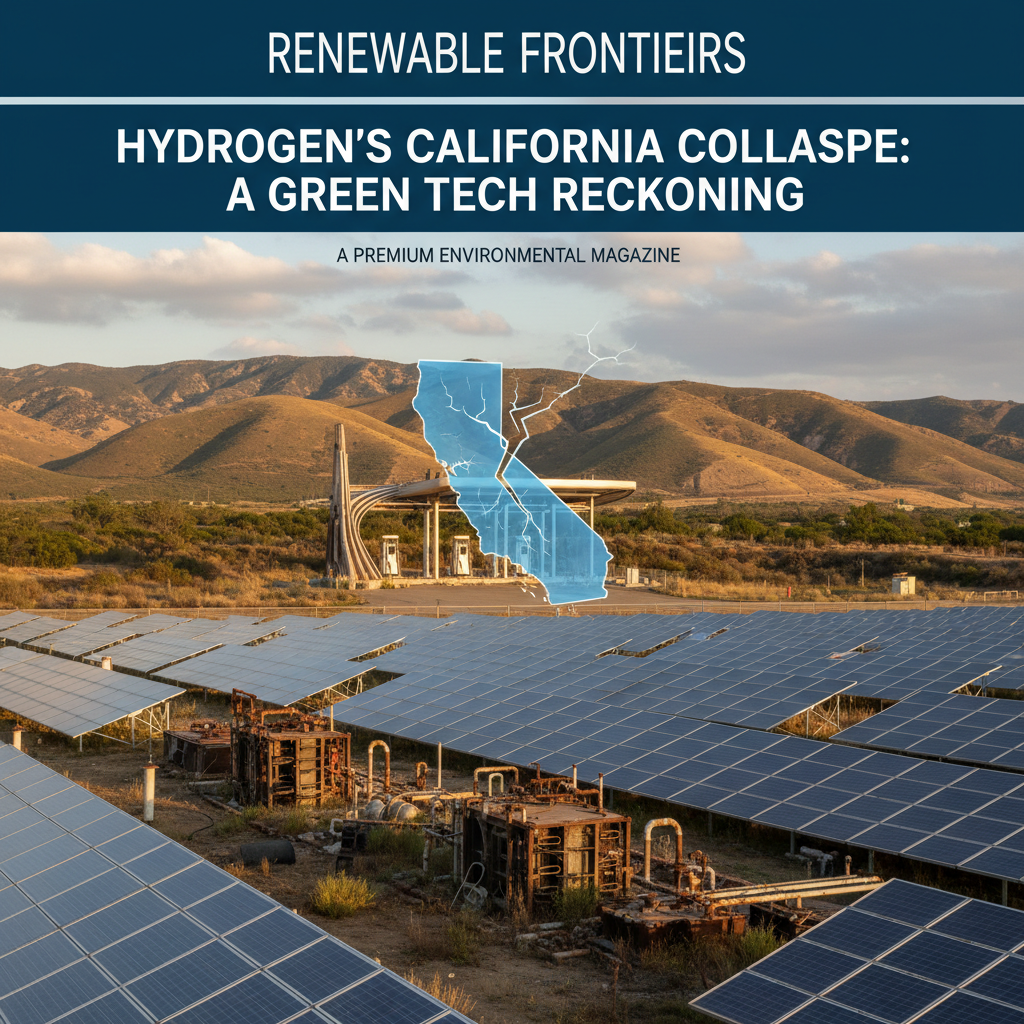
Hydrogen's California Collapse: A Green Tech Reckoning
Key Takeaways
- An explosion in Colton, CA, halted California's hydrogen mobility market on Feb 24, 2026.
- The event underscores critical safety and resilience challenges for emerging green energy infrastructure.
- It reinforces the importance of diversifying sustainable energy investments beyond a single technology.
- Public perception and investment in green tech can be significantly impacted by infrastructure failures.
- Robust safety standards and meticulous deployment strategies are crucial for the long-term success of clean energy solutions.
The sudden, explosive collapse of California’s hydrogen mobility market sends a stark warning that resonates far beyond the Golden State. This isn't just about one fuel's setback; it's a pivotal moment demanding we re-evaluate how we approach the entire green energy transition, emphasizing resilience, safety, and a diversified path forward.
TL;DR: Key Facts
- On February 24, 2026, an explosion at an industrial truck storage yard in Colton, California, critically disrupted the state’s hydrogen mobility market.
- The incident led to an immediate and complete halt of California’s hydrogen infrastructure for mobility.
- This event highlights the significant vulnerabilities and safety concerns associated with the nascent hydrogen fuel infrastructure.
- It underscores the importance of robust safety protocols and diversified investment across various green energy technologies.
- The collapse prompts a re-evaluation of rapid deployment strategies for emerging alternative fuels.
What Happened
Late on the night of Tuesday, February 24, 2026, California’s ambitious hydrogen mobility market experienced an abrupt and devastating blow. An explosion tore through an industrial truck storage yard located at 3994 Miguel Bustamante Parkway in Colton, California. According to fire department representatives responding to the scene, the incident was severe enough to immediately cease operations across the state's hydrogen fueling network.
The direct consequence of this explosion was the complete grounding of California’s hydrogen-powered vehicles and a systemic halt in fuel distribution. This single catastrophic event effectively brought a nascent yet significant segment of the state's sustainable transportation efforts to an unforeseen and grinding halt, raising immediate questions about infrastructure reliability, safety standards, and the long-term viability of single-point energy solutions.
Why It Matters
For advocates of sustainable living and green technology, the California hydrogen infrastructure collapse is far more than an isolated incident; it's a critical teachable moment. This event starkly illuminates the inherent risks of over-reliance on a single, centralized energy infrastructure, especially for emerging technologies. While hydrogen holds promise as a clean fuel, this explosion demonstrates that the rapid scaling of any new energy system must be accompanied by rigorous safety standards, resilient design, and a comprehensive understanding of potential failure points. It’s a wake-up call to invest not just in innovation, but in the robust, distributed infrastructure that can withstand unforeseen challenges and ensure continuous service.
Furthermore, this incident critically impacts public perception and investment confidence in green tech. Such a visible and disruptive failure can breed skepticism, hindering broader adoption of sustainable alternatives. GreenNest Living readers, who are deeply invested in a sustainable future, must understand that the path to a fossil-free world is complex and requires careful navigation. This setback for hydrogen shouldn't be seen as a failure of green energy as a whole, but rather a compelling argument for diversification. Promoting a portfolio approach—championing advancements in battery electric vehicles, advanced biofuels, and other renewable energy solutions alongside hydrogen development—is crucial to building a truly resilient and sustainable energy ecosystem.
This event compels us to ask difficult questions about the speed of deployment versus the thoroughness of safety and stability. For green tech to truly succeed, it needs not just to be clean, but also dependable, safe, and robust. This incident highlights that every emerging green technology, regardless of its environmental benefits, must undergo stringent development and testing to ensure it can serve communities reliably without compromising safety or economic stability. It’s a powerful reminder that sustainable innovation must always be paired with unparalleled reliability.
What You Can Do
- Diversify Your Green Tech Knowledge: Don't put all your hopes on one emerging technology. Research and understand the pros and cons of various sustainable transportation options, including battery electric vehicles (BEVs), plug-in hybrids (PHEVs), and green hydrogen.
- Advocate for Robust Safety Standards: Contact your elected officials to support legislation and funding for comprehensive safety regulations and infrastructure oversight for all new energy technologies, ensuring public safety is prioritized during deployment.
- Support Local & Regional Renewable Energy Projects: Investigate and support local initiatives that promote diversified renewable energy sources, like community solar projects or battery storage solutions, to build a more resilient energy grid from the ground up.
- Educate Your Network: Share accurate, balanced information about the challenges and successes in the green energy transition. Help demystify complex topics like hydrogen safety or EV charging networks to foster informed discussions.
- Consider Infrastructure Resilience in Choices: When making purchasing decisions, whether for a vehicle or home energy system, consider not just the environmental impact, but also the established infrastructure, reliability, and safety track record of the technology.
- Engage with Policy Makers: Participate in local planning meetings or reach out to city council members to express your interest in well-planned, diversified, and safe sustainable infrastructure development in your community.
FAQs
Q: What exactly caused the explosion in Colton?
A: The provided news summary indicates an explosion occurred at an industrial truck storage yard, leading to the collapse of the hydrogen mobility market. Specific details about the cause of the explosion itself were not immediately available in the source, but it significantly impacted the hydrogen infrastructure.
Q: Does this mean hydrogen fuel is inherently unsafe?
A: All energy sources, including gasoline and natural gas, carry risks. This incident highlights the critical need for advanced safety protocols, robust infrastructure design, and rigorous regulatory oversight as hydrogen technology is scaled. It underscores that safety must be paramount in the development of any new energy solution.
Q: How does this affect the broader green energy movement?
A: While a setback for the hydrogen mobility sector in California, this event serves as a valuable lesson for the entire green energy movement. It emphasizes the importance of diversifying sustainable energy investments, ensuring system resilience, and prioritizing safety and robust infrastructure in the transition away from fossil fuels.
Sources
This article is based on reporting by CleanTechnica.
Original source
CleanTechnica
Author, Digital Entrepreneur & AI Creator
More from Green Tech
- UK Electric Buses Transform into Grid Powerhouses with V2G — May 13, 2026
- Ocean-Powered AI: Panthalassa's Bold Vision for Sustainable Compute — May 12, 2026
- Winnipeg Powers Up: 250 EV Chargers Accelerate Sustainable Living — May 11, 2026
- Philippines' Wind Power Dream Hinges on Port Infrastructure — May 10, 2026
- Aviation's Carbon Blind Spot: Ryanair's Soaring Emissions Exposed — May 9, 2026