India's Rhinos Return: Manas Park's Fragile Comeback Story
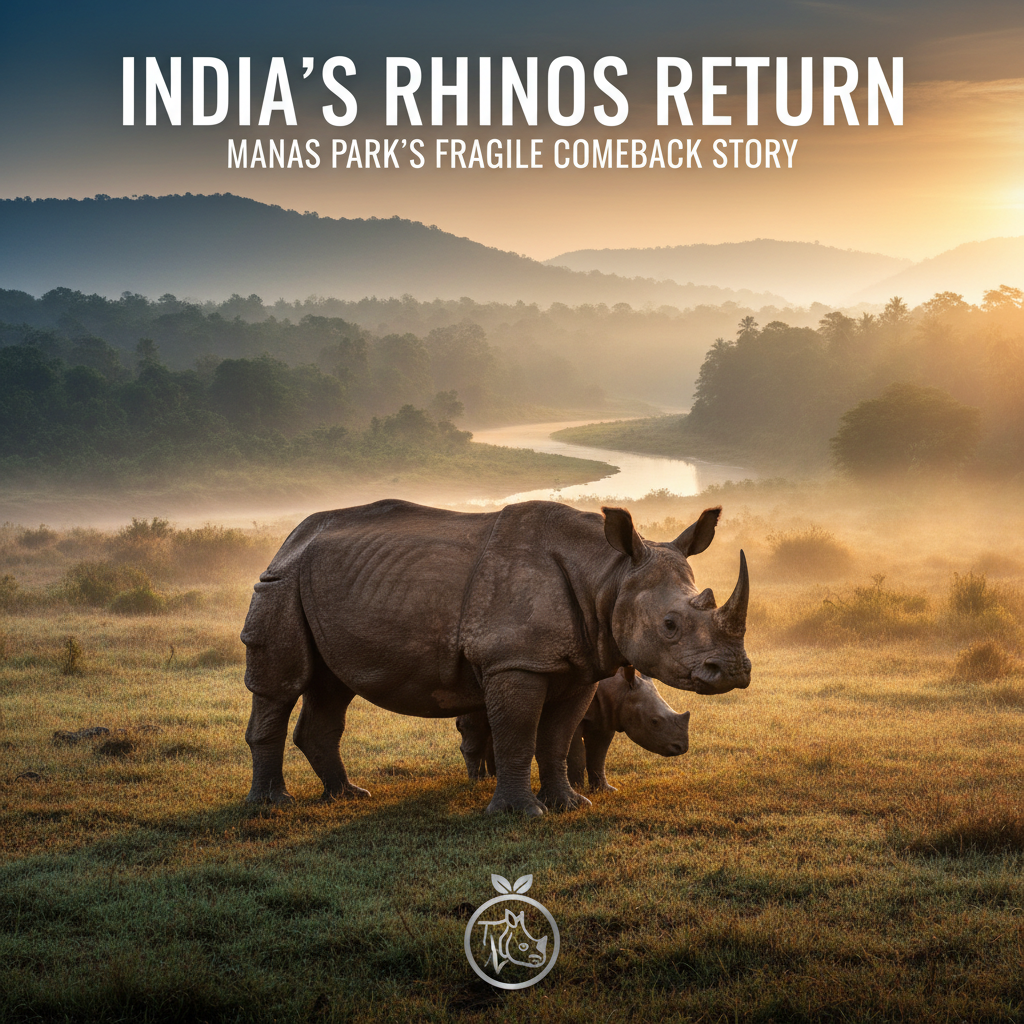
Key Takeaways
- Manas National Park's rhino population, once decimated by poaching, is now breeding successfully after reintroduction efforts.
- The reintroduction campaign has led to the birth of several calves, signifying new life for the species in the park.
- Despite breeding success, the rhinos' recovery still requires active, ongoing support to ensure long-term survival and stability.
- The park, located in India's Himalayan foothills, lost almost all of its estimated 100 rhinos to poaching by the late 1990s.
In a world often filled with disheartening news about wildlife loss, a beacon of hope shines from India’s Manas National Park. The majestic Indian rhinos, once pushed to the brink of extinction by poaching, are not just surviving but thriving and breeding in their reintroduced home. This remarkable recovery underscores a crucial truth: with dedicated human intervention and unwavering support, even the most dire conservation challenges can yield inspiring results.
TL;DR: Key Facts
- Indian rhinos in Manas National Park, decimated by poaching by the late 1990s, are now successfully breeding.
- A determined campaign to reintroduce rhinos to the park has led to the establishment of a new population.
- Several calves have been born, signifying the re-establishment of a new generation within the park.
- Despite this breeding success, the rhino population's recovery still necessitates active, ongoing support to ensure its long-term stability and growth.
What Happened
Manas National Park, nestled in India’s picturesque Himalayan foothills, was historically a haven for Indian rhinos, boasting a population of around 100 individuals. However, the late 1990s saw a devastating wave of poaching that wiped out almost the entire population, leaving the park’s rhino presence almost nonexistent. This tragic loss was a stark reminder of the immense pressure human activities can place on vulnerable species and the fragility of ecosystems when faced with unchecked exploitation.
In the years following this decimation, a determined and collaborative conservation campaign was launched to bring the Indian rhino back to Manas. This involved meticulous reintroduction programs, carefully relocating rhinos to the park with the aim of re-establishing a self-sustaining population. These efforts, a testament to collaborative conservation between government bodies, local communities, and conservationists, have now begun to bear significant fruit, offering a glimmer of hope in the ongoing fight for biodiversity.
The latest reports confirm that these reintroduced rhinos are not only adapting to their ancestral home but are actively breeding. The birth of several calves is a powerful indicator of the program's success and the rhinos' inherent resilience, marking a critical milestone in their recovery journey. However, experts emphasize that this fragile recovery is still in its early stages and requires ongoing, active support to ensure the population's enduring growth and protection against persistent threats, such as continued poaching pressures and habitat management challenges.
Why It Matters
This success story from Manas National Park offers a vital lesson in wildlife conservation and a powerful counter-narrative to the often-grim headlines about biodiversity loss. It demonstrates that with concerted effort, scientific planning, and unwavering commitment, species can be brought back from the brink of extinction. For readers of GreenNest Living, it highlights the tangible impact that dedicated human action can have in restoring natural ecosystems and protecting iconic creatures. This isn't just a win for rhinos; it's a win for the concept of ecological restoration itself, showcasing nature's incredible capacity to rebound when given the chance and human assistance.
The Indian rhino's struggle and partial triumph in Manas also underscore the critical role of protected areas and the continuous need for robust anti-poaching measures. The initial decimation was a direct result of human greed and neglect, illustrating the destructive potential of illegal wildlife trade. Their return, therefore, represents a healing process, not just for the rhinos but for the land itself, as these large herbivores play a crucial role in shaping their grassland and wetland habitats. It reminds us that sustainable living extends beyond our homes to encompass the health of the entire planet and its inhabitants, emphasizing interdependence.
Furthermore, this narrative serves as a powerful call to action and an inspiration. It shows that environmental problems created by humans can, with enough will, innovative solutions, and collaboration, be solved by humans. It provides a blueprint for what is possible when governments, local communities, and conservationists work together towards a common goal. Understanding such successes can empower our readers, showing them that their efforts, no matter how small, contribute to a larger tapestry of environmental healing and resilience, inspiring continued advocacy and engagement for wildlife and nature conservation.
What You Can Do
As readers of GreenNest Living, you have a role to play in supporting such inspiring conservation efforts. Here’s how you can contribute:
- Support Reputable Conservation Organizations: Research and donate to organizations actively involved in rhino protection, anti-poaching efforts, and habitat restoration in India and globally. Your financial contribution helps fund critical fieldwork, patrols, and community engagement initiatives.
- Educate Yourself and Others: Learn more about the challenges facing endangered species like the Indian rhino. Share these stories of both struggle and success with your friends, family, and social networks to raise awareness, foster empathy, and cultivate a sense of collective responsibility for wildlife.
- Choose Sustainable and Ethical Tourism: If you consider visiting wildlife parks, opt for eco-friendly tour operators who prioritize animal welfare, community benefit, and park conservation. Avoid activities that exploit wildlife or contribute to habitat destruction, ensuring your travel leaves a positive footprint.
- Advocate for Policy and Legislation: Support policies and legislation that strengthen wildlife protection laws, combat illegal wildlife trade at both national and international levels, and promote the expansion and effective management of protected areas. Contact your representatives to voice your support.
- Reduce Your Ecological Footprint: Every action counts. By consciously consuming less, recycling more, choosing sustainably sourced products, and reducing waste, you indirectly lessen the pressure on natural resources and habitats worldwide, including those vital for rhinos and other wildlife.
Ciro's Take
As someone deeply invested in the health of our planet, the story of the Indian rhinos in Manas National Park resonates profoundly with me. It’s a powerful, tangible example that hope is not lost, even when we confront the darkest environmental tragedies. To see these magnificent creatures, once utterly devastated by human greed, not just return but begin to flourish, is incredibly moving. It reminds me that conservation isn't just about preserving what's left; it's about actively repairing and restoring what has been broken. This narrative fuels my advocacy, reaffirming that our collective efforts can indeed turn the tide, but also serving as a stark reminder that our vigilance must never wane. This isn't a fairy tale ending; it's a testament to ongoing commitment, and that's precisely the kind of sustainable living story GreenNest Living champions.
FAQs
Q: What is an Indian rhino?
Also known as the greater one-horned rhino, the Indian rhino (Rhinoceros unicornis) is one of the largest rhino species. It's identifiable by its single horn and thick, folded skin that resembles armor plating. They are primarily grazers and found in the grasslands and forests of Nepal and northeastern India, playing a key role in their ecosystems.
Q: What does 'reintroduction' mean in conservation?
Reintroduction is a conservation strategy where animals are released into an area where their species previously existed but had been wiped out or became locally extinct. The primary goal is to establish a new, self-sustaining wild population, often to boost overall species numbers, restore ecological balance, and enhance biodiversity within the habitat.
Q: What are the main threats to Indian rhinos today?
Despite significant conservation successes, Indian rhinos still face severe threats. Primarily, poaching for their horns remains a major issue, driven by illegal trade for use in some traditional medicines and as status symbols. Habitat loss and fragmentation due to human encroachment, agricultural expansion, and infrastructure development also pose ongoing challenges to their survival and genetic diversity.
Sources
This article is based on reporting by Mongabay.
Original source
Mongabay
Author, Digital Entrepreneur & AI Creator
More from Wildlife & Nature News
- Artemis III Astronauts: A New Moonshot for Earth's Green Future — June 12, 2026
- Kyrgyzstan Forges Massive Climate-Ready Haven for Snow Leopards — June 11, 2026
- EU Plans to End Animal Testing: A Green Step Forward — June 9, 2026
- Thai Rivers in Crisis: Communities Demand Action on Heavy Metal Pollution — June 8, 2026