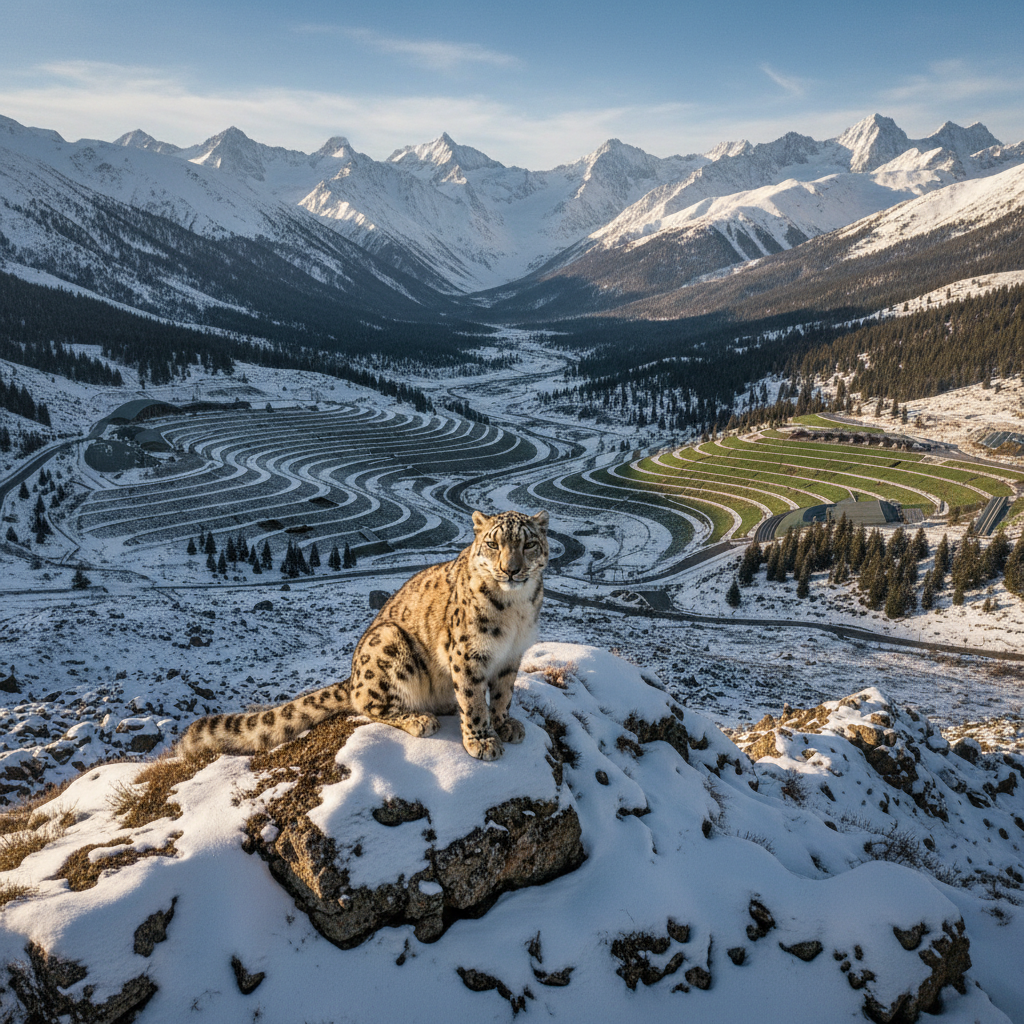
Kyrgyzstan Forges Massive Climate-Ready Haven for Snow Leopards
Key Takeaways
- Kyrgyzstan designated a massive ecological corridor for snow leopards.
- The corridor, named Ak Ilbirs, spans 800,000 hectares (2 million acres).
- It's specifically designed to be 'climate-ready,' anticipating future environmental changes.
- Formalization of the corridor is set for 2025.
- It aims to protect snow leopards and other high-altitude mountain wildlife.
OPENING PARAGRAPH
The majestic, elusive snow leopard, a symbol of high-mountain wilderness, faces escalating threats from a warming planet. But now, Kyrgyzstan is offering a beacon of hope, establishing an unprecedented 'climate-ready' corridor that redefines proactive conservation in the face of climate change. This isn't just about protecting a species; it's about pioneering a new era of habitat resilience.
TL;DR: Key Facts
- Kyrgyzstan has officially designated the Ak Ilbirs ecological corridor.
- Spanning nearly 800,000 hectares (2 million acres), it's a massive protected area for mountain wildlife.
- The corridor is explicitly designed to be "climate-ready," integrating future climate impacts into its planning.
- Its formalization is slated for 2025, marking a significant, forward-thinking conservation milestone.
- Beyond snow leopards, the corridor aims to safeguard biodiversity across the high-altitude landscape.
What Happened
In a landmark move for global conservation, Kyrgyzstan has officially announced the designation of a vast protected area in its high-altitude landscape. This monumental undertaking, known as the Ak Ilbirs ecological corridor, is specifically designed to secure a future for the iconic snow leopard and the diverse mountain wildlife that shares its rugged habitat. This initiative is a proactive response to the increasing pressures faced by these fragile ecosystems.
The Ak Ilbirs corridor is truly impressive in scale, covering an expansive nearly 800,000 hectares, equivalent to about 2 million acres. Its formal establishment is anticipated in 2025, demonstrating a committed and strategic approach to long-term environmental stewardship. What sets this corridor apart is its explicit design philosophy: it is envisioned as "climate-ready," meaning its planning and boundaries account for predicted shifts in climate and their potential impact on species distribution and habitat viability, ensuring long-term resilience.
Why It Matters
This designation by Kyrgyzstan transcends a simple act of land protection; it represents a crucial paradigm shift in how nations approach wildlife conservation in an era of rapid climate change. By intentionally designing the Ak Ilbirs corridor as "climate-ready," Kyrgyzstan is acknowledging the dynamic nature of ecosystems and species movement in response to warming temperatures. This proactive approach ensures that the protected area isn't just a snapshot of current habitat, but a flexible, resilient haven capable of adapting to future environmental challenges.
For GreenNest Living readers, this story highlights the urgency and innovation required to safeguard biodiversity. Snow leopards, as apex predators in sensitive mountain environments, are bellwethers for the health of entire ecosystems. Their protection, especially through a climate-adaptive corridor, sends a powerful message: conservation must be forward-thinking and integrate climate resilience at its core. This model could inspire similar efforts globally, providing critical pathways for species to migrate and adapt, thereby maintaining ecological balance and genetic diversity in a rapidly changing world. It's a testament to the power of foresight in protecting our planet's most vulnerable treasures.
What You Can Do
- Support Conservation Organizations: Donate to or volunteer with reputable organizations focused on snow leopard conservation and climate-resilient habitats, such as the Snow Leopard Trust or WWF.
- Advocate for Climate Action: Support policies and leaders committed to reducing greenhouse gas emissions and investing in climate adaptation strategies both locally and globally.
- Learn and Share: Educate yourself and others about the challenges facing mountain ecosystems and endangered species. Share stories like Kyrgyzstan's initiative to raise awareness.
- Choose Sustainable Products: Opt for goods and services that minimize environmental impact, especially those from companies committed to ethical sourcing and habitat protection.
- Reduce Your Carbon Footprint: Make conscious choices in energy consumption, transportation, and diet to lessen your personal contribution to climate change.
- Promote Ecotourism (Responsibly): If considering travel, choose ecotourism operators who prioritize local conservation efforts and ensure minimal disturbance to wildlife and habitats.
Ciro's Take
As someone deeply committed to environmental advocacy, seeing a nation proactively carve out a "climate-ready" sanctuary for an endangered icon like the snow leopard fills me with genuine hope. This isn't just about drawing lines on a map; it's about intelligent, forward-looking stewardship that acknowledges the undeniable impacts of our changing climate. It's a clear signal that we can design solutions that anticipate future challenges, rather than merely reacting to present crises. For the future of wildlife and nature news, I hope this becomes less an anomaly and more a blueprint, inspiring similar bold, adaptive conservation efforts worldwide. This is the kind of transformative action we need to see more of if we are to truly secure a thriving planet for all species.
FAQs
Q: What makes the Ak Ilbirs corridor "climate-ready"?
A: It means the corridor's design and boundaries have been planned with projections for future climate shifts in mind, allowing for species migration and habitat adaptation as temperatures change, securing long-term viability.
Q: Why are snow leopards particularly vulnerable to climate change?
A: Snow leopards inhabit high-altitude, cold environments. As global temperatures rise, their habitat shrinks, and prey availability changes, pushing them into smaller, fragmented areas and increasing human-wildlife conflict.
Q: How does a protected corridor help species like the snow leopard?
A: Corridors connect fragmented habitats, allowing animals to move freely, access resources, find mates, and adapt to environmental changes, which is crucial for maintaining genetic diversity and population health.
Sources
This article is based on reporting by Mongabay.
Original source
Mongabay
Author, Digital Entrepreneur & AI Creator
More from Wildlife & Nature News
- Artemis III Astronauts: A New Moonshot for Earth's Green Future — June 12, 2026
- India's Rhinos Return: Manas Park's Fragile Comeback Story — June 10, 2026
- EU Plans to End Animal Testing: A Green Step Forward — June 9, 2026
- Thai Rivers in Crisis: Communities Demand Action on Heavy Metal Pollution — June 8, 2026