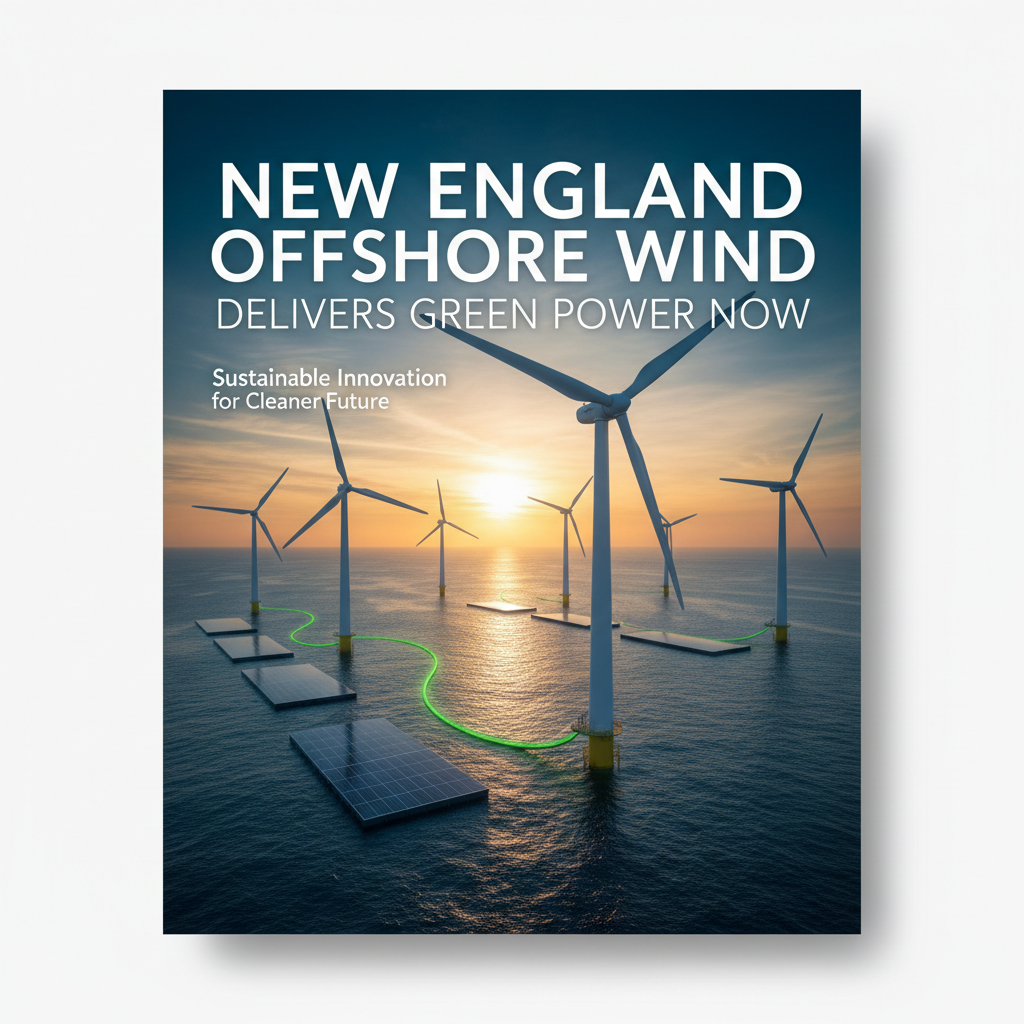
New England Offshore Wind Delivers Green Power Now
Key Takeaways
- Vineyard Wind completed construction
- Revolution Wind now delivering power
- Over 350,000 homes powered
- Major milestone for New England
- Significant boost for US offshore wind capacity
New England has just delivered a powerful surge of optimism for America's clean energy future. This weekend marked a pivotal moment as two major offshore wind projects, Vineyard Wind and Revolution Wind, achieved significant operational milestones, transforming the region's energy landscape. These developments aren't just about turbines in the ocean; they signal a massive leap forward in our collective journey toward sustainable living and a greener economy.
TL;DR: Key Facts
- Vineyard Wind, the nation's first large-scale offshore wind farm, has completed construction.
- Revolution Wind has begun sending power to the electric grid in Connecticut and Rhode Island.
- Revolution Wind is currently delivering clean electricity to over 350,000 homes.
- These projects mark a historic turning point for offshore wind energy in the United States.
- New England is rapidly becoming a leader in renewable energy deployment.
What Happened
The waters off New England are now home to a groundbreaking new era of energy production, marking a historic shift towards a cleaner future. This past weekend, the region celebrated monumental achievements in offshore wind development, with two flagship projects reaching critical operational milestones that underscore the rapid advancement of green technology in the United States.
Vineyard Wind, a pioneering venture often recognized as the nation's first large-scale offshore wind farm, officially announced the completion of its construction phase. Located off the coast of Massachusetts, this ambitious project involved years of meticulous planning, innovative engineering, and dedicated effort from countless individuals. Its full completion is a testament to the viability and scalability of offshore wind technology, setting a precedent for future developments across the country and demonstrating America's capacity to build significant renewable energy infrastructure.
Simultaneously, the Revolution Wind offshore wind farm has commenced delivering electricity to the grid, actively powering homes and businesses in Connecticut and Rhode Island. This significant step means clean, renewable power is now flowing directly into the regional electric grid, with the project slated to power over 350,000 households across both states upon full operation. The successful integration of Revolution Wind's output into the existing power network highlights critical progress in grid modernization and the seamless adoption of utility-scale renewable energy sources. These dual successes not only provide immediate environmental benefits but also solidify New England's role as a frontrunner in the national transition to sustainable energy.
Why It Matters
This isn't merely a regional success story; it's a profound validation of offshore wind as a scalable, reliable green tech solution with far-reaching implications for the entire nation. For too long, the promise of offshore wind has been discussed in theoretical terms, often facing skepticism regarding its feasibility and cost-effectiveness. Now, with Vineyard Wind fully constructed and Revolution Wind actively powering hundreds of thousands of homes, the technology has firmly transitioned from a concept to a concrete, operational reality. This tangible proof demonstrates that with concerted effort, significant investment, and regulatory support, we can indeed build the necessary infrastructure to decarbonize our energy grid on a grand scale, offering a clear path away from fossil fuel dependence.
These projects stand as beacons of cutting-edge engineering and innovation within the green tech sector. They represent a complex interplay of advanced turbine design capable of withstanding harsh marine environments, sophisticated foundation technologies anchoring turbines to the seabed, and intelligent grid integration systems ensuring stable and efficient power delivery. The development has spurred innovation across supply chains, from specialized vessels for installation to advanced materials science for component durability. This fosters a new wave of high-skilled jobs in manufacturing, construction, operations, and maintenance, revitalizing coastal economies and establishing a robust green economy workforce. Moreover, the successful deployment in New England provides invaluable operational data, lessons learned, and blueprints for future projects across the U.S. coastline, significantly de-risking further investment and accelerating national adoption of this vital energy source.
Beyond the technological triumph, these milestones represent a crucial, urgent step in combating climate change and enhancing national energy security. By harnessing the consistent and powerful winds found over the ocean, New England is making significant strides in reducing its reliance on polluting fossil fuels, curbing greenhouse gas emissions, and building a more resilient energy supply. This localized, renewable energy source offers greater independence from volatile global energy markets and strengthens grid reliability against extreme weather events. The environmental benefits are immediate and substantial: cleaner air, a reduced carbon footprint, and a tangible contribution to global climate goals. This tangible impact underscores the vital role green technologies play in achieving a sustainable and prosperous future, demonstrating that large-scale renewable energy is not only feasible but actively delivering profound economic and environmental benefits today, inspiring confidence for future green tech investments.
What You Can Do
- Support Renewable Energy Policies: Research your local, state, and federal representatives' stances on clean energy. Advocate for policies that promote offshore wind, solar, and other renewables.
- Investigate Community Energy Programs: Explore if your utility offers community solar or wind programs, allowing you to subscribe to clean energy even without rooftop panels.
- Reduce Your Own Energy Consumption: Lower your carbon footprint by adopting energy-efficient habits at home, such as using LED lighting, unplugging electronics, and optimizing heating/cooling.
- Educate Yourself and Others: Stay informed about green tech advancements and share positive news with your network, helping to build public support for sustainable solutions.
- Demand Green Energy from Your Provider: If available, choose a green energy tariff from your electricity provider to ensure your consumption is matched with renewable sources.
FAQs
Q: What is offshore wind energy?
A: Offshore wind energy harnesses the kinetic energy of strong, consistent winds found over oceans to generate electricity using wind turbines installed on foundations in the sea.
Q: How does offshore wind benefit the environment?
A: It produces clean electricity without greenhouse gas emissions, reducing air pollution and combating climate change. It also lessens reliance on fossil fuels.
Q: Are there any environmental concerns with offshore wind farms?
A: Potential concerns include impacts on marine ecosystems during construction and operation, and visual impacts. However, careful siting, advanced mitigation strategies, and ongoing research aim to minimize these effects.
Sources
This article is based on reporting by CleanTechnica.
Original source
CleanTechnica
Author, Digital Entrepreneur & AI Creator
More from Green Tech
- UK Electric Buses Transform into Grid Powerhouses with V2G — May 13, 2026
- Ocean-Powered AI: Panthalassa's Bold Vision for Sustainable Compute — May 12, 2026
- Winnipeg Powers Up: 250 EV Chargers Accelerate Sustainable Living — May 11, 2026
- Philippines' Wind Power Dream Hinges on Port Infrastructure — May 10, 2026
- Aviation's Carbon Blind Spot: Ryanair's Soaring Emissions Exposed — May 9, 2026