Stockholm's Electric 'Flying' Ferry Revolutionizes Water Travel
Key Takeaways
- Stockholm's electric hydrofoil ferry cuts emissions by up to 94%.
- The ferry 'flies' above the water, reducing drag and increasing efficiency.
- It offers a quiet, comfortable, and faster alternative to traditional ferries.
- This technology presents a scalable model for sustainable urban water transport worldwide.
- It's a tangible example of green tech combating climate change in everyday life.
In an era where every emission cut counts, a groundbreaking innovation is quietly transforming urban transportation in Stockholm. This isn't just another ferry; it's a 'flying' marvel that epitomizes the very best of green technology, offering a glimpse into a sustainable future for cities worldwide. Its success is a testament to how intelligent design and electric power can redefine our relationship with public transport and the environment.
TL;DR: Key Facts
- An electric hydrofoil ferry is now operating in Stockholm's waterways.
- The ferry 'flies' above the water, drastically reducing drag.
- It slashes emissions by an impressive 94% compared to traditional diesel ferries.
- Commuters experience quiet, comfortable, and faster travel.
- This technology offers a scalable model for sustainable urban water transport globally.
What Happened
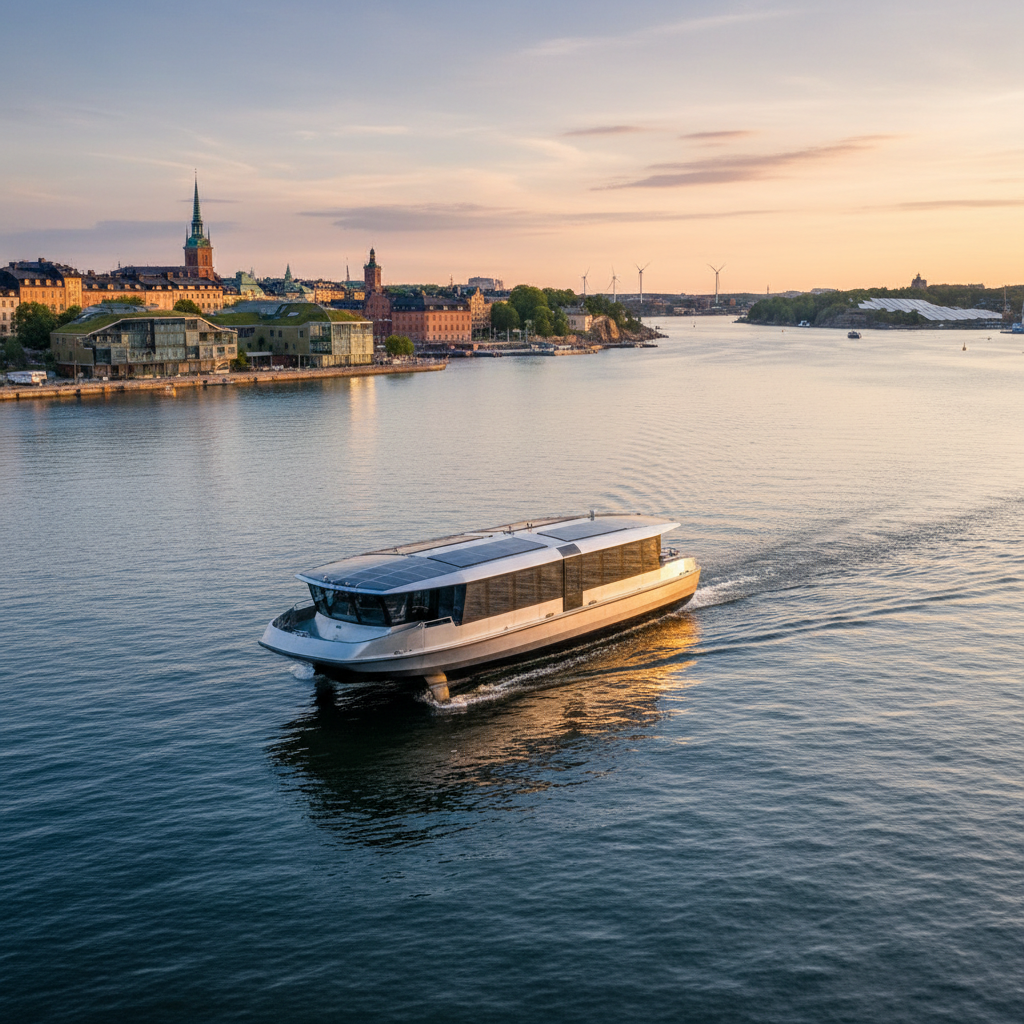
Stockholm is piloting an innovative new mode of public transport: an electric hydrofoil ferry. This state-of-the-art vessel represents a significant leap forward in decarbonizing urban waterways. Unlike conventional ferries, this 'flying' ferry utilizes hydrofoils – underwater wings – to lift its hull out of the water once it reaches a certain speed. This ingenious design dramatically reduces water resistance, leading to exceptional energy efficiency.
A recent report highlights the profound environmental impact of this technology. The electric hydrofoil ferry has been found to cut emissions by up to 94% compared to its diesel-powered predecessors. Beyond its eco-credentials, the ferry also redefines the commuter experience. By 'flying' above the waves, it creates minimal wake, ensures a remarkably quiet journey, and offers enhanced comfort for passengers, all while providing faster transit times across Stockholm's extensive waterways.
Why It Matters
This ‘flying’ ferry isn't just a local success story for Stockholm; it's a beacon of hope and a tangible example of Green Tech's potential to address the climate crisis. In a world grappling with the urgent need to decarbonize transport, this hydrofoil ferry demonstrates that innovative engineering combined with electric propulsion can deliver significant environmental benefits without compromising on performance or passenger experience. It challenges the long-held perception that sustainable solutions must involve trade-offs, proving that they can often be superior in multiple aspects.
For GreenNest Living readers, this innovation underscores a critical message: technology isn't just about incremental improvements; it's about transformative solutions. The efficiency gained by lifting the hull out of the water is a prime example of how rethinking fundamental design principles can unlock massive energy savings. This model holds immense promise for other cities globally that rely on extensive waterways, offering a blueprint for quieter, cleaner, and more efficient urban mobility. It’s a compelling counter-narrative to eco-anxiety, showing concrete progress and demonstrating that a sustainable future is not only possible but actively being built.
The widespread adoption of such technologies could significantly reduce the carbon footprint of urban transport networks, improve air quality in port cities, and mitigate noise pollution – all while enhancing the quality of life for residents. It’s a powerful testament to how smart investment in Green Tech can yield multi-faceted benefits, creating a ripple effect that extends far beyond just carbon reduction.
What You Can Do
Here’s how you can contribute to the advancement of sustainable transport and green technology:
- Advocate for Green Transport: Reach out to your local government or public transport authorities. Express your support for investment in electric ferries, hydrofoils, and other zero-emission public transport solutions in your area.
- Choose Sustainable Commuting: Whenever possible, opt for public transportation, cycling, or walking. If electric transport options are available, prioritize them to support their growth and adoption.
- Support Innovative Companies: Research and support companies that are developing and implementing cutting-edge green technologies in transport. Your consumer choices can send a powerful message.
- Stay Informed and Share: Educate yourself and others about the benefits of green tech innovations like electric hydrofoils. Share positive news stories to inspire action and combat climate fatigue.
- Reduce Your Travel Footprint: Consider carpooling, combining errands, or even exploring remote work options to minimize your reliance on fossil-fuel-dependent transportation.
FAQs
Q: How does a hydrofoil ferry "fly" above the water?
A: A hydrofoil ferry uses special wings, similar to airplane wings, that are submerged beneath the hull. As the ferry gains speed, water flowing over these wings creates lift, raising the main hull out of the water. This significantly reduces drag and increases efficiency.
Q: What are the main environmental benefits of this electric hydrofoil technology?
A: The primary benefit is a drastic reduction in greenhouse gas emissions – up to 94% compared to conventional ferries. Additionally, by 'flying' above the water, it creates minimal wake, reducing erosion along shorelines and disturbing aquatic life less. Its electric propulsion also eliminates localized air and noise pollution.
Q: Can this technology be scaled and adopted by other cities worldwide?
A: Absolutely. The success of Stockholm's electric hydrofoil ferry provides a robust proof-of-concept. Many coastal cities and those with extensive river systems face similar challenges in decarbonizing their transport. This technology offers a promising, scalable model for sustainable urban water mobility that could be adapted globally.
Sources
This article is based on reporting by Euronews Green.
Original source
Euronews Green
Author, Digital Entrepreneur & AI Creator
More from Green Tech
- UK Electric Buses Transform into Grid Powerhouses with V2G — May 13, 2026
- Ocean-Powered AI: Panthalassa's Bold Vision for Sustainable Compute — May 12, 2026
- Winnipeg Powers Up: 250 EV Chargers Accelerate Sustainable Living — May 11, 2026
- Philippines' Wind Power Dream Hinges on Port Infrastructure — May 10, 2026
- Aviation's Carbon Blind Spot: Ryanair's Soaring Emissions Exposed — May 9, 2026