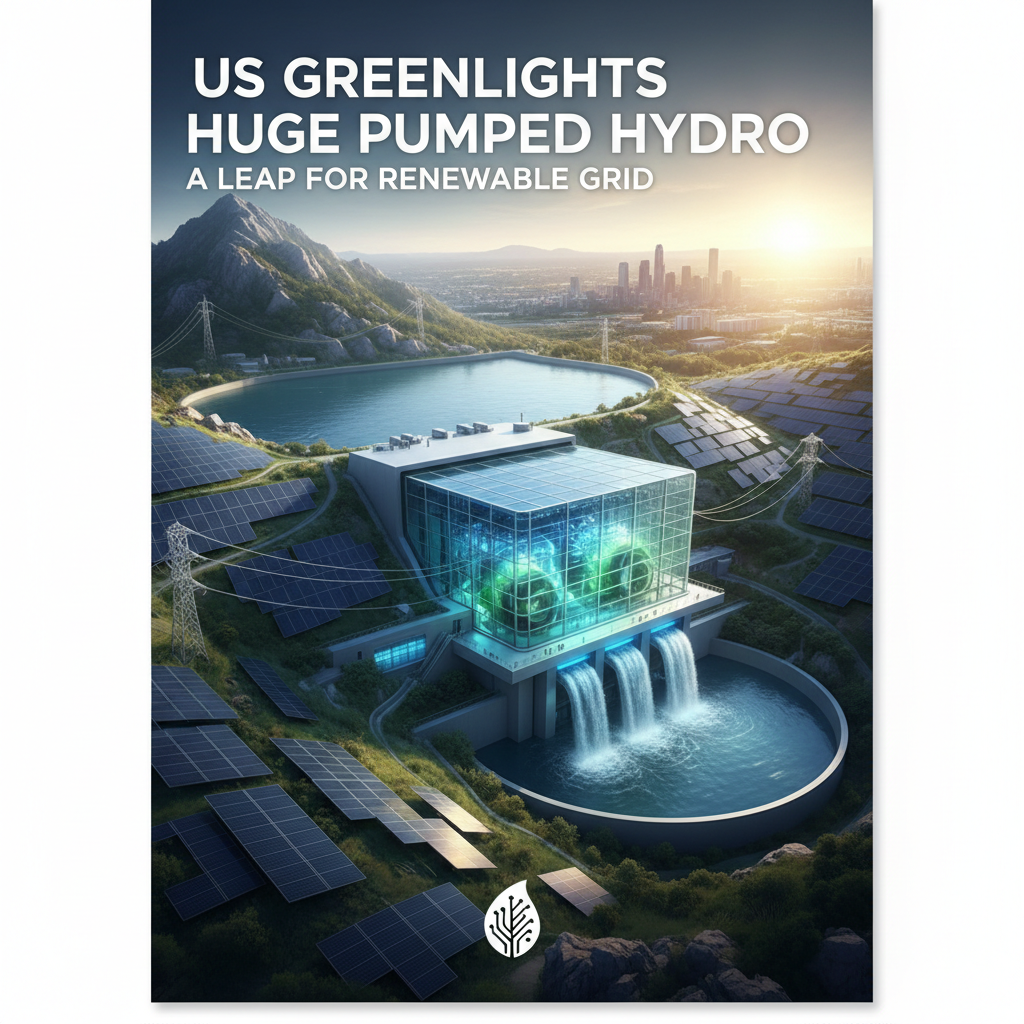
US Greenlights Huge Pumped Hydro: A Leap for Renewable Grid
Key Takeaways
- The Goldendale Energy Storage Project, a 1.2 GW pumped hydro facility, has been greenlit in Washington State.
- Utilizing a brownfield site, this project will significantly boost long-duration energy storage capacity for the US grid.
- Pumped hydro is a proven technology essential for balancing intermittent renewable energy sources like solar and wind.
- Its approval accelerates the nation's transition to a stable, clean energy future and enhances grid resilience.
- The development showcases how large-scale green technology can repurpose land and foster economic growth.
OPENING PARAGRAPH
The journey towards a fully renewable energy grid faces a critical challenge: storage. How do we keep the lights on when the sun isn't shining or the wind isn't blowing? Today, a groundbreaking development out of Washington State offers a powerful answer, pushing the United States closer to a stable, sustainable energy future.
TL;DR: Key Facts
- The massive Goldendale Energy Storage Project, a 1.2 gigawatt pumped hydropower facility, has been greenlit.
- This project will be located in Washington State on a brownfield site, repurposing previously developed land.
- Pumped hydro is a proven technology crucial for long-duration energy storage.
- Its approval represents a significant step forward for integrating intermittent renewable energy sources into the national grid.
- This development underscores a growing commitment to robust green infrastructure in the US.
What Happened
A US developer has received the green light for the Goldendale Energy Storage Project, a monumental 1.2-gigawatt pumped hydropower facility proposed for Washington State. This pivotal approval signals that the project is advancing to its next stages, bringing a substantial new capacity for energy storage to the nation's burgeoning renewable energy profile.
Pumped hydro energy storage works by using excess renewable energy to pump water uphill into a reservoir. When electricity demand is high or renewable generation is low, the water is released downhill through turbines, generating electricity. The Goldendale project's immense capacity will enable it to store and dispatch a significant amount of power, equivalent to the output of a large conventional power plant, helping to stabilize the grid and ensure a reliable supply of clean energy.
The strategic choice of a brownfield site for this development is particularly noteworthy. Brownfields are abandoned or underutilized industrial or commercial properties where redevelopment is complicated by real or perceived environmental contamination. Utilizing such a site for a major renewable energy infrastructure project not only avoids disturbing pristine land but also contributes to environmental remediation and economic revitalization of the area.
Why It Matters
This approval for the Goldendale project is far more than just another infrastructure initiative; it's a foundational step for the future of Green Tech and sustainable living in the United States. The biggest hurdle for widespread renewable energy adoption – the intermittency of sources like solar and wind – is directly addressed by massive, reliable energy storage. Pumped hydro offers long-duration storage capacity that chemical batteries currently struggle to match economically at this scale, providing critical grid stability and resilience needed to support a grid powered predominantly by renewables.
For GreenNest Living readers, this development signifies tangible progress towards a world less reliant on fossil fuels. A stable, renewable-powered grid means cleaner air, reduced carbon emissions, and potentially more predictable energy costs in the long term. The project’s brownfield location further amplifies its positive environmental impact, demonstrating how large-scale sustainable development can breathe new life into neglected sites, turning environmental liabilities into green assets and fostering local economic growth through job creation and investment.
This project highlights the increasing maturity and scalability of green technologies, moving beyond niche applications to large-scale infrastructure solutions. It's a testament to the ingenuity required to build a truly sustainable energy system, proving that with strategic planning and advanced engineering, we can overcome complex energy challenges while respecting our planet.
What You Can Do
- Educate Yourself: Learn more about different types of energy storage technologies and why they are essential for a renewable future.
- Advocate for Green Infrastructure: Support policies and local initiatives that encourage the development of large-scale renewable energy projects and accompanying storage solutions.
- Engage Your Utility: Inquire about your utility's plans for renewable energy integration and energy storage; express your support for these initiatives.
- Support Brownfield Redevelopment: Look for opportunities to support projects that revitalize brownfield sites, turning environmental challenges into community assets.
- Reduce Energy Consumption: The best energy is the energy we don't use. Continue practicing energy efficiency in your home and daily life.
- Invest in Local Renewables (if applicable): Explore options for community solar or rooftop solar paired with home battery storage to contribute to grid stability on a smaller scale.
FAQs
Q: What exactly is pumped hydro energy storage and how does it work?
A: Pumped hydro storage is a type of hydroelectric energy storage. It involves two reservoirs at different elevations. During periods of low electricity demand (or high renewable generation), water is pumped from the lower reservoir to the upper one, storing energy. When demand for electricity is high, the stored water is released from the upper reservoir, flowing downhill through turbines to generate electricity, much like a conventional hydroelectric plant.
Q: Why is energy storage, particularly pumped hydro, so crucial for renewable energy?
A: Renewable energy sources like solar and wind are intermittent, meaning their availability depends on natural conditions (sunshine, wind). Energy storage systems like pumped hydro are vital because they can store excess energy generated during peak production times and release it when generation is low or demand is high, ensuring a consistent and reliable power supply to the grid. Pumped hydro is particularly valuable for its large capacity and long-duration storage capabilities.
Q: What are the benefits of locating a project like this on a brownfield site?
A: Utilizing a brownfield site offers multiple benefits. It reclaims and repurposes land that might otherwise remain underutilized or contaminated, preventing urban sprawl and preserving green spaces. It often has existing infrastructure that can be adapted, and it can stimulate economic development and job creation in areas that may have historically suffered from industrial decline, while also providing environmental remediation.
Sources
This article is based on reporting by CleanTechnica.
Original source
CleanTechnica
Author, Digital Entrepreneur & AI Creator
More from Green Tech
- UK Electric Buses Transform into Grid Powerhouses with V2G — May 13, 2026
- Ocean-Powered AI: Panthalassa's Bold Vision for Sustainable Compute — May 12, 2026
- Winnipeg Powers Up: 250 EV Chargers Accelerate Sustainable Living — May 11, 2026
- Philippines' Wind Power Dream Hinges on Port Infrastructure — May 10, 2026
- Aviation's Carbon Blind Spot: Ryanair's Soaring Emissions Exposed — May 9, 2026