US Greenlights Massive Pumped Hydro Project on Brownfield
Key Takeaways
- A 1.2 GW pumped hydro project is greenlit in Washington State.
- It addresses the crucial need for large-scale energy storage for renewables.
- The project utilizes a brownfield site, promoting sustainable land use.
- Pumped hydro is a proven technology vital for grid modernization.
- This development significantly advances US clean energy goals.
The future of clean energy in the United States just got a significant boost. As renewable sources like solar and wind become more prevalent, the critical need for reliable energy storage solutions intensifies. This week, a groundbreaking pumped hydro energy storage project has taken a major leap forward, promising to revolutionize how the nation stores and deploys clean power.
TL;DR: Key Facts
- A 1.2 gigawatt (GW) pumped hydropower storage project, the Goldendale Energy Storage Project, has been greenlit in Washington State.
- This development is a crucial step towards enhancing the nation's renewable energy profile and grid stability.
- The project is planned for a brownfield site, demonstrating sustainable land reuse.
- Pumped hydro is a proven, large-scale energy storage technology essential for integrating intermittent renewables.
What Happened
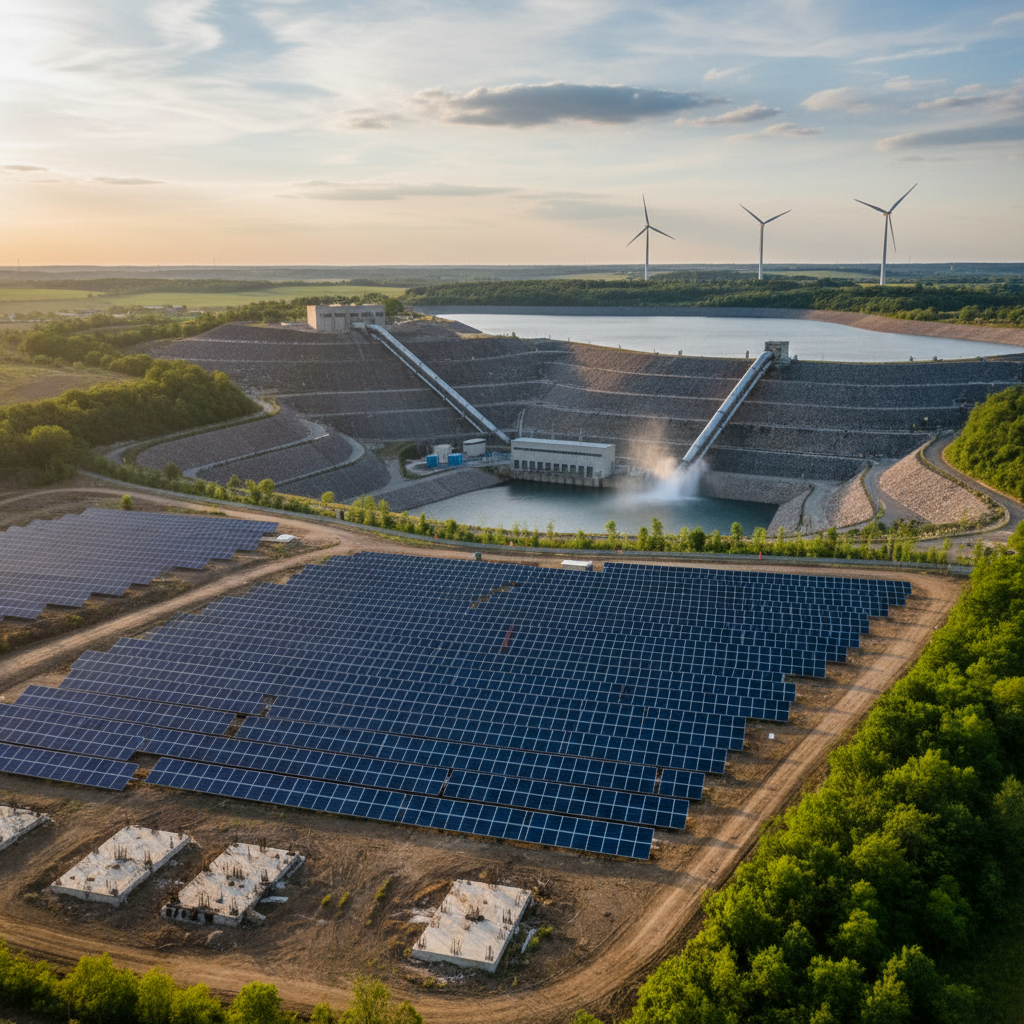
The Goldendale Energy Storage Project, a proposed massive 1.2 gigawatt pumped hydropower facility in Washington State, has received a crucial green light for its development. This pivotal decision brings the United States significantly closer to realizing a more robust and resilient renewable energy infrastructure. The project is designed to utilize pumped hydro technology, a well-established method for large-scale energy storage, where water is pumped uphill to a reservoir during times of excess electricity and released downhill through turbines to generate power when demand is high.
Notably, this ambitious undertaking is slated for development on a brownfield site. Brownfields are abandoned or underused industrial and commercial facilities available for reuse. Developing on such a site not only avoids disturbing pristine land but also repurposes previously contaminated or neglected areas, aligning perfectly with principles of sustainable development and environmental stewardship. The advancement of the Goldendale project represents a tangible commitment to bolstering the nation's capacity to store and deploy clean energy, directly supporting the broader integration of intermittent renewable sources like solar and wind into the national grid.
Why It Matters
This massive pumped hydro project is a game-changer for green tech and sustainable living. The intermittency of renewable energy sources—the fact that the sun doesn't always shine and the wind doesn't always blow—has long been one of the biggest hurdles to achieving a fully decarbonized grid. Large-scale, reliable energy storage is the linchpin that allows us to capture and store excess clean energy when it's abundant and then dispatch it when needed, ensuring grid stability and reliable power for homes and businesses. The Goldendale project's 1.2 GW capacity is equivalent to roughly a dozen large natural gas power plants, but without the emissions, making it a monumental step towards grid modernization and resilience.
Furthermore, the choice of a brownfield site for such a significant infrastructure project underscores a crucial aspect of sustainable development: circular land use. Reusing industrial lands minimizes urban sprawl, reduces pressure on natural ecosystems, and can even help remediate environmental damage from previous activities. For GreenNest Living readers, this project exemplifies how green tech is not just about panels and turbines, but also about smart infrastructure planning and maximizing the efficiency of our resources. It signals a future where our energy demands can be met cleanly, reliably, and with minimal environmental footprint, offering a blueprint for similar initiatives nationwide.
What You Can Do
- Educate Yourself and Others: Understand the vital role of energy storage in a clean energy future and share this knowledge with your community.
- Advocate for Green Infrastructure: Support policies and projects in your local area that promote renewable energy, grid modernization, and sustainable land use, including brownfield development.
- Explore Home Energy Solutions: If feasible, consider home battery storage options (like those paired with solar panels) to enhance your own energy independence and reduce grid reliance during peak times.
- Support Companies Committed to Sustainability: Research and choose utility providers or investment funds that prioritize renewable energy projects and sustainable practices.
- Reduce Your Energy Consumption: The most sustainable energy is the energy we don't use. Implement energy-saving measures in your home and daily life to lessen overall demand.
- Engage with Policy Makers: Contact your elected officials to express your support for investments in large-scale energy storage and brownfield remediation efforts.
FAQs
Q: What is pumped hydro energy storage?
A: Pumped hydro storage is a type of hydropower that stores energy by pumping water from a lower reservoir to an upper reservoir, typically during periods of low electricity demand. When electricity is needed, the water is released back down through turbines to generate power.
Q: Why is developing on a brownfield site important for sustainability?
A: Developing on a brownfield site means reusing previously developed land, often with industrial pasts, rather than converting pristine natural areas. This approach helps prevent urban sprawl, can contribute to environmental remediation, and makes efficient use of existing infrastructure.
Q: How does this project help integrate more renewable energy?
A: Intermittent renewables like solar and wind produce electricity only when conditions are right. Large-scale storage like pumped hydro allows excess electricity generated during sunny or windy periods to be stored and then released when demand is high or renewable generation is low, ensuring a consistent and reliable power supply.
Sources
This article is based on reporting by CleanTechnica.
Original source
CleanTechnica
Author, Digital Entrepreneur & AI Creator
More from Green Tech
- UK Electric Buses Transform into Grid Powerhouses with V2G — May 13, 2026
- Ocean-Powered AI: Panthalassa's Bold Vision for Sustainable Compute — May 12, 2026
- Winnipeg Powers Up: 250 EV Chargers Accelerate Sustainable Living — May 11, 2026
- Philippines' Wind Power Dream Hinges on Port Infrastructure — May 10, 2026
- Aviation's Carbon Blind Spot: Ryanair's Soaring Emissions Exposed — May 9, 2026